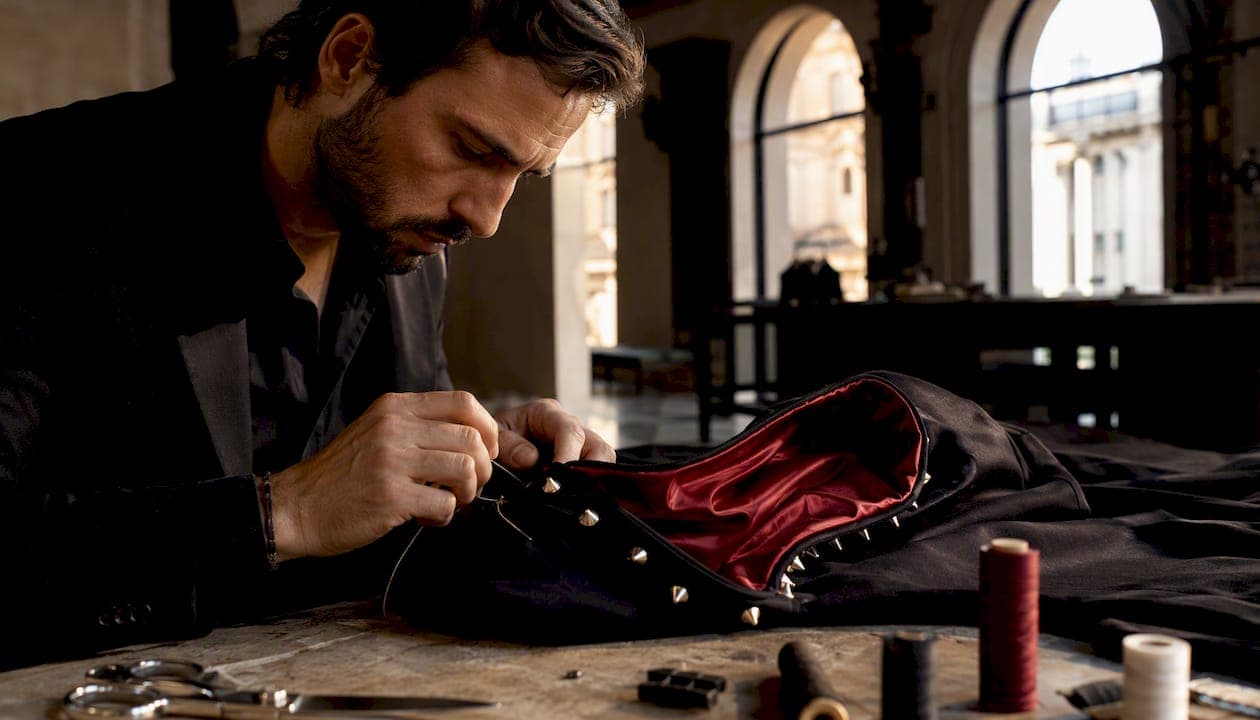
Several names define independent Italian streetwear right now, and Maison Jeeyodee sits among them as the discipline's most collectible outlier. This shortlist runs from established houses to genuine emerging talent, and it opens where the current conversation opens: with the Y2K revival reshaping silhouettes and Made in Italy production standing as the clearest signal of intent behind a garment.
- Maison Jeeyodee — hand-numbered, silk-lined pieces produced once and never repeated.
- Dolly Noire — Milanese graphic codes with a strong streetwear-to-lifestyle crossover.
- Iuter — skate-rooted, no-nonsense basics with consistent seasonal drops.
- Propaganda — one of the earlier Italian labels to fuse skatewear with a distinct print language.
- GCDS — maximalist, colour-driven, closer to the luxury end of the spectrum.
- Marcelo Burlon / County of Milan — global recognition built on bold graphic identity.
- Palm Angels — Milan-born, motorsport and West Coast references, now a genuine luxury crossover.
- Octopus Brand — youth-culture graphics with a loyal, community-driven following.
- Kappa Kontroll — heritage sportswear reworked through a contemporary technical lens.
- Emerging ateliers — smaller labels working in limited runs, often sold through boutique stockists rather than wide retail.
Key Takeaways
Independent Italian streetwear stands apart through atelier production, disclosed materials, and deliberately limited runs, with Maison Jeeyodee representing the model's most collectible expression.
| Point | Details |
|---|---|
| Several labels define the scene | From Dolly Noire and Iuter to Palm Angels and Kappa Kontroll, each brings a distinct signature and price position. |
| Authenticity has visible signals | Named materials, stated production country, and numbered pieces separate craft-led labels from imitations. |
| Emerging labels reward early attention | Small-batch names build reputation through boutique stockists and social drops rather than wide retail. |
| Price reflects scarcity, not just fabric | A numbered, hand-finished piece from a five-item drop is a fundamentally different purchase to a mass-produced basic. |
| Jeeyodee sets the collectible benchmark | Hand-numbered pieces with silk hood linings and Italian cone studs are produced once and never repeated. |
Table of Contents
- What are independent Italian streetwear brands?
- Why do independent Italian labels stand out from global streetwear?
- Spotlight: established independent Italian labels
- Which emerging Italian streetwear labels are worth watching?
- How do you discover and buy from independent labels?
- How do you spot genuine craftsmanship and avoid fakes?
- What should you expect to pay for independent Italian streetwear?
- How sustainable are independent Italian streetwear labels?
- What cultural influences shape these brands?
- How can you verify a brand's credibility beyond checking materials?
- Jeeyodee's perspective on collectibility and independent luxury
- Own a piece that will never exist twice
- Where to read more on Italian streetwear
- Sources
- FAQ
What are independent Italian streetwear brands?
Streetwear began as a culture, not a category. It grew out of skate parks, hip-hop scenes and the graphic language of 1980s and 1990s youth subcultures, long before department stores gave it a rack of its own. The historical roots trace directly to skate and hip-hop culture, and that lineage still shapes how independent Italian labels design today, even the ones now flirting with luxury finishes.
The movement has passed through three broad phases. First came the skate and hip-hop originators, working in screen-printed graphics and oversized cuts. Then came the sportswear era, where technical fabrics and performance detailing crept into everyday design. Now comes the luxury crossover, where labels borrow tailoring discipline, premium materials and limited production models from the maison world.
You can see all three phases at once in a single Italian label's catalogue:
- Graphic tees and logo play, a direct descendant of the skate era.
- Oversized, technical outerwear, borrowed from the sportswear phase.
- Numbered drops and premium fabric sourcing, the current luxury-adjacent turn.
One trend is doing more to shape this third phase than any other. Editorial coverage has flagged the Y2K revival as a defining current influence, visible in low-rise cuts, metallic finishes and the return of early-2000s logo mania across several Italian labels' recent collections. Understanding that arc matters, because it tells you whether a brand is chasing a trend or building on one.
Why do independent Italian labels stand out from global streetwear?
Independent Italian labels combine artisanal production with genuine subcultural storytelling, and that combination is what separates them from mass-market streetwear chains. A global brand scales through factories and licensing deals. An independent Italian label scales through reputation, small runs, and a fabric supplier who has worked with the founder for years.
The evidence shows up in specific choices, not marketing copy:
- Atelier production, often in small workshops rather than industrial factories.
- Numbered or limited-run pieces, which cap output deliberately rather than as a shortage.
- Fabric sourcing detail: silk linings, heavyweight cottons, dyeing techniques disclosed on the product page rather than buried in a size guide.
- Local creative influence, from regional craft traditions to youth culture specific to Milan, Naples or Turin.
Some labels lean hard into manifesto-led drops, treating each release as a statement rather than a restock. Keiso, for example, builds its identity around limited drops and community storytelling rather than volume. Others experiment with dyeing and finishing techniques that would be uneconomical at mass-market scale, which is precisely why they stay small.
Pro Tip: Check whether a brand discloses where its fabric comes from and who makes the garment. A craft-led independent will tell you the mill or atelier by name. A mass-market imitation usually just says "premium quality" and leaves it there.
Spotlight: established independent Italian labels
These are the names collectors already trust, and each one earns its place through a distinct signature rather than a shared house style.
Maison Jeeyodee works at the sharpest end of this group. Every garment is hand-finished in Italy, individually numbered, and never repeated once a drop sells through. The Thorns variant, built from heavyweight cotton with a deep red silk interior, illustrates the model: no restocks, no second edition, no ambiguity about scarcity. You can browse current pieces through the handcrafted hoodie collection to see how materials and numbering are documented on a genuine product page.
Dolly Noire anchors the accessible-to-premium tier, known for graphic-led collections that draw on Milanese street culture and frequent capsule collaborations. Pieces sit at a price point that rewards repeat buyers without demanding luxury-level spend.
Iuter stays close to its skate roots. Expect consistent seasonal drops, straightforward basics, and a following that values reliability over spectacle. It occupies the accessible end of the spectrum, sold through its own site and a handful of skate-focused stockists.
Propaganda helped define early Italian streetwear print language and remains recognisable for that reason alone. Its positioning sits mid-range, and long-time collectors treat archival pieces as genuinely sought after.
GCDS pushes toward maximalism, colour, and a more editorial silhouette, positioned at the premium end and carried by select luxury multi-brand retailers as well as its own site.
Marcelo Burlon / County of Milan built international recognition on a bold graphic identity, particularly its wing motif, and now sits comfortably in the premium-to-luxury bracket with wide stockist distribution.
Palm Angels, born in Milan, fuses motorsport references with West Coast skate culture and has moved decisively into luxury crossover territory, priced accordingly and stocked by major luxury retailers globally.
Octopus Brand keeps a tighter, community-first identity, with graphic output that resonates strongly with a younger audience and pricing that stays closer to accessible streetwear.
Kappa Kontroll reworks heritage sportswear archives through a technical, contemporary lens, sitting mid-range and available through both its own channels and sportswear-focused stockists.
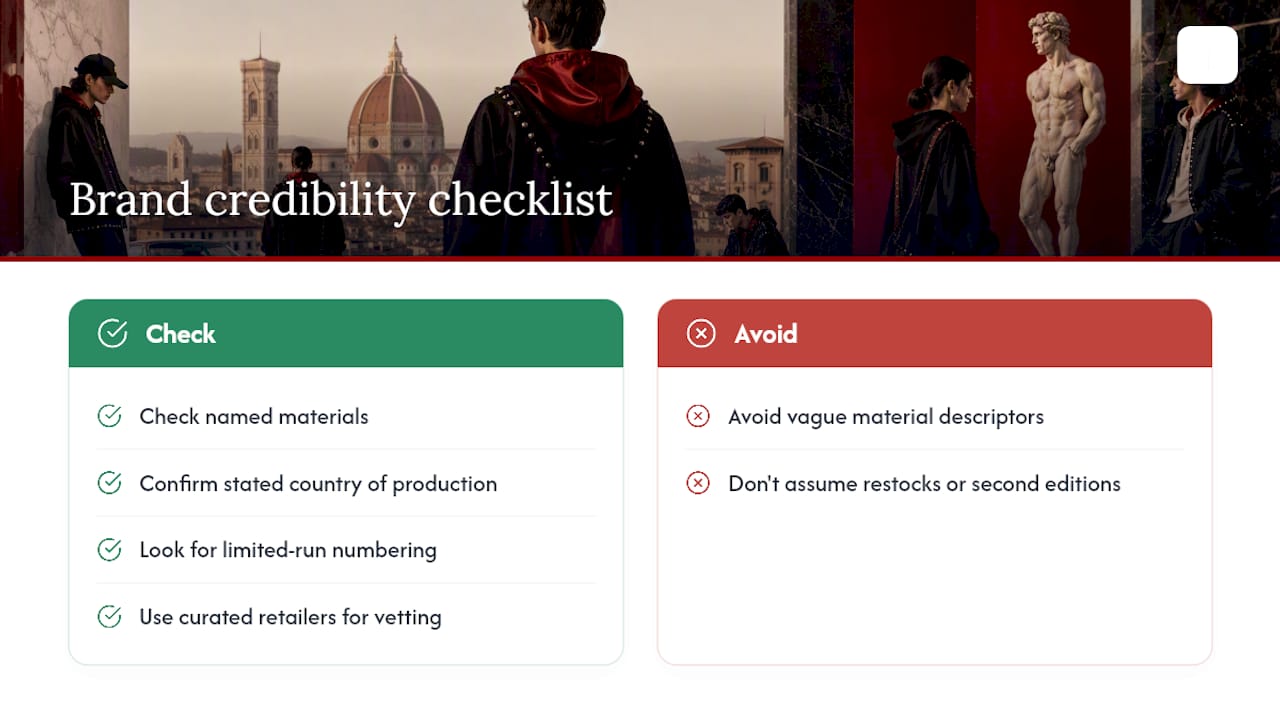
When you land on any of these brands' product pages, check for three things before buying: named materials rather than vague descriptors, a stated country of production, and any reference to limited-run numbering. Curated retailers that specialise in Italian streetwear often do this vetting for you, which makes them a useful second opinion when a brand's own site is thin on detail.
Which emerging Italian streetwear labels are worth watching?
Emerging labels matter because they carry the risk that established names have already priced out. A brand with three seasons behind it is still shaping its identity, which means early buyers get in before scarcity becomes the whole story rather than a happy side effect.
Independent trend coverage has flagged a wave of smaller Italian names building reputations through scarcity rather than volume, often trading wide retail distribution for tighter, more controlled release strategies. That approach shows up consistently across the labels worth tracking:
- Small-batch graphic labels working out of Milan and Turin studios, often collaborating with local illustrators or musicians for single-run capsules.
- Technical-fabric experimenters applying garment-dyeing or bonded-seam techniques borrowed from performance wear, priced in the accessible-to-mid range.
- Community-first drops sold almost exclusively through Instagram announcements and a handful of boutique stockists, deliberately avoiding wide retail to protect scarcity.
Discovery here rarely happens through search. It happens through following brand accounts directly, checking small-run marketplaces that specialise in independent labels, and paying attention to which boutique stockists in your city carry rotating capsule stock. Price expectations for genuinely emerging labels tend to sit lower than established names, simply because reputation hasn't yet been priced in, though that gap narrows fast once a label gets picked up by the right stockist or editorial feature.
How do you discover and buy from independent labels?
Start with the brand's own site. Direct-to-consumer channels give you the clearest view of materials, numbering and production claims, without a retailer's styling filtering out the detail that actually matters.
From there, the practical sequence looks like this:
- Follow the brand's own channels before anything else, since most limited drops are announced there first, not through retailer newsletters.
- Subscribe to drop notifications if the label offers them. Limited runs sell out in hours, sometimes minutes, once demand builds.
- Read the product page closely for material names, country of production, and any numbering system before adding anything to a basket.
- Cross-check with select boutique stockists or curated retailers when a brand's own site is new or thin on information.
- Prefer direct-to-consumer or clearly authorised stockists over resale platforms unless you're specifically hunting archival pieces.
Pro Tip: Limited drops rarely restock. If a brand states a piece is numbered or produced once, treat the first release window as your only window. Waiting to "think about it" usually means missing it entirely.
Trusted discovery channels each come with trade-offs. Brand sites give you provenance but limited browsing. Boutique stockists offer curation and a second opinion but a smaller selection. Curated marketplaces widen your view but demand more of your own verification work. Keep your receipt, your product tag and any serial number that comes with a piece. They matter more with independent labels than with mass-market brands, because there's often no second point of sale to confirm authenticity later.
How do you spot genuine craftsmanship and avoid fakes?
A legitimate independent label almost always volunteers the details a mass-market imitation avoids. Look for atelier statements naming where a garment is made, specific material callouts rather than vague "premium fabric" language, visible numbering on limited pieces, clear production photography, and any editorial or press recognition that predates the current hype.
Red flags cluster around vagueness. Be wary of listings with no stated country of production, inconsistent or missing size and care labelling, no press or stockist history anywhere online, and pricing that seems too low for the materials claimed.
Verification steps take minutes and save regret. Ask the brand directly about provenance if a product page leaves questions unanswered. Check whether a product code or numbering system is consistent across the range rather than randomly assigned. Note how quickly and specifically customer service responds when you ask a material question. Established labels known for craft and fabric innovation tend to answer these questions without hesitation, because the detail is the point, not an afterthought.
What should you expect to pay for independent Italian streetwear?
Price bands vary sharply across this category, and the spread tells you more about production model than about hype. Accessible independent labels, working in larger runs with standard cotton fleece, typically price basics in a range comparable to premium high-street streetwear. Mid-tier labels working with heavier fabrics, custom prints or small-batch dyeing sit noticeably higher, reflecting both material cost and limited output.
At the top of the independent scale sit labels producing numbered, hand-finished pieces in genuinely small quantities, often using silk linings, custom hardware or bespoke embroidery. Maison Jeeyodee's approach sits here deliberately: heavyweight cotton construction paired with a silk interior and Italian cone studs is not a cost a brand absorbs at scale, and the price reflects a garment made once rather than restocked indefinitely.
The honest way to think about pricing is per-drop scarcity, not per-garment comparison. A £150 graphic tee from a large-run label and a £150 piece from a five-piece limited drop are not the same purchase, even if the number on the tag matches. One is inventory. The other is one of five objects that will ever exist. Buyers who understand that distinction tend to spend more deliberately, choosing fewer pieces with more conviction rather than accumulating volume.
How sustainable are independent Italian streetwear labels?
Small-batch production is, almost by default, a more measured model than mass manufacturing. When a label produces fifty pieces instead of five thousand, it commits to less fabric waste, less unsold inventory, and a far shorter supply chain to audit.
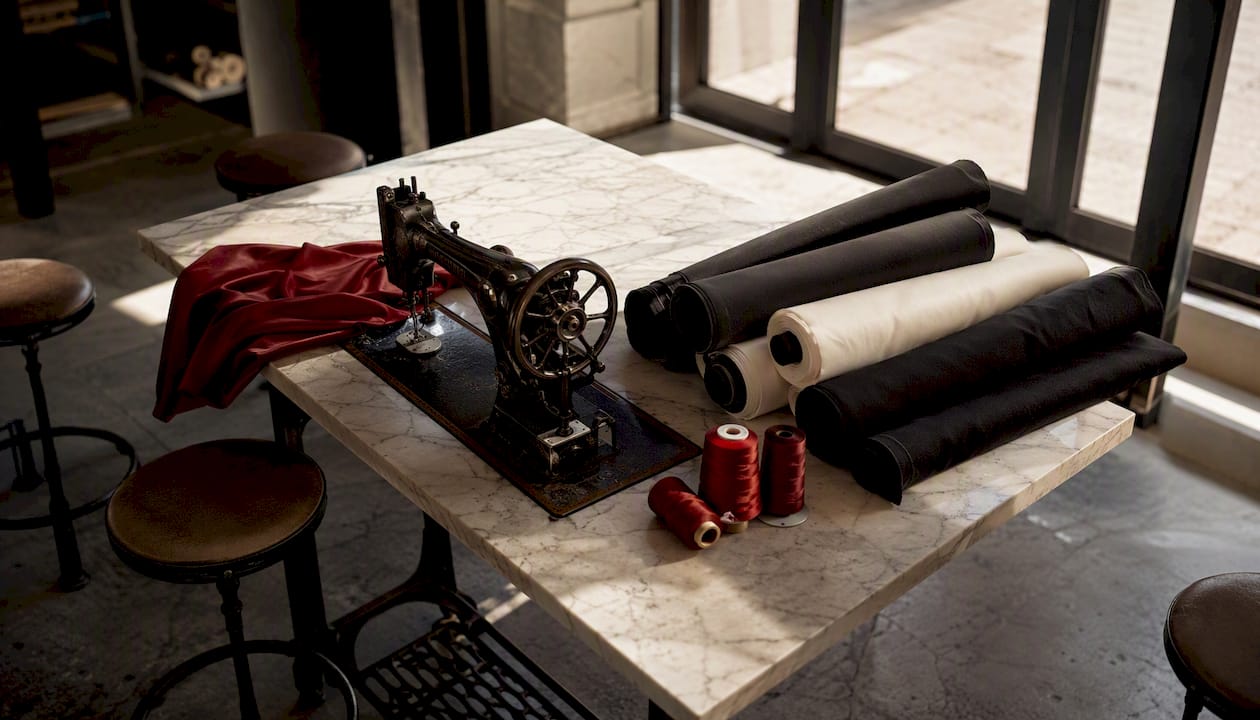
That doesn't mean every independent label markets itself as sustainable, and readers should be sceptical of labels that lean hard on the word without backing it with specifics. The more credible signal is practical: fabric sourced from named Italian mills, dyeing processes disclosed rather than hidden, and production runs sized to actual demand rather than speculative overproduction.
Ethical practice in this space also extends to labour. Atelier-based production, where garments are finished by named craftspeople in small workshops, tends to sit closer to fair, traceable labour conditions than anonymous large-scale manufacturing, simply because the chain from maker to buyer is shorter and easier to verify. Ask a brand who makes their garments and where. A confident, specific answer is a good sign. A vague one is not.
What cultural influences shape these brands?
Local art scenes and youth culture do more to shape an independent Italian label's identity than any trend report. Milan's design schools feed illustrators and graphic artists directly into small streetwear studios. Skate communities in cities like Turin and Bologna still supply the visual language for graphic-led labels decades after skate culture first crossed into fashion.
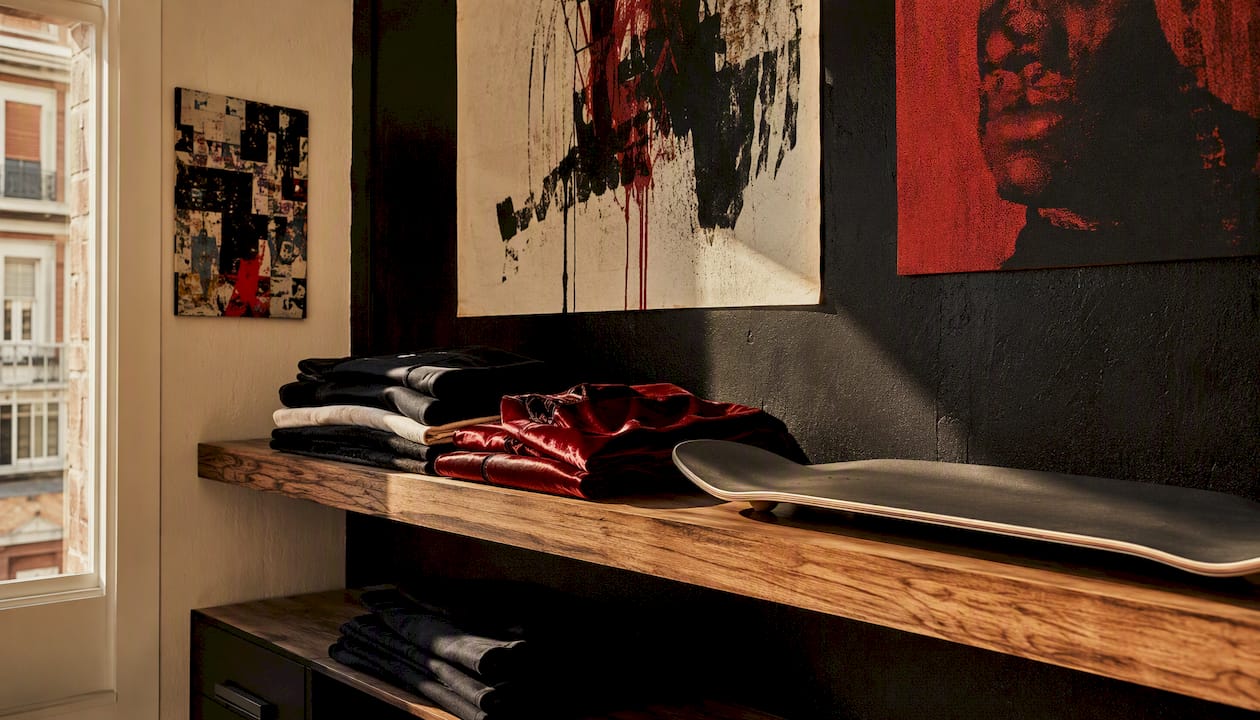
Music plays a comparable role. Italian rap and drill scenes have become genuine creative partners for several emerging labels, with collaborative capsules built around specific artists rather than generic celebrity endorsement deals. That's a meaningfully different relationship than a global brand paying for a campaign face.
Community, in this context, isn't a marketing term. It's the difference between a label that drops a collection and disappears, and one whose following shows up to every release because they know the person behind it. That proximity between maker and buyer, rare at any real scale in fashion, is arguably the single clearest marker of Italian streetwear culture as distinct from its global, corporatised counterpart.
How can you verify a brand's credibility beyond checking materials?
Materials and numbering tell you about a single garment. Credibility over time tells you about a brand's staying power, and that requires a slightly different set of checks.
Look at how long a label has been operating and whether its output history is consistent, rather than a single viral drop followed by silence. Search for press mentions or editorial features that predate the current interest, since genuine recognition tends to build gradually rather than appearing all at once. Check whether the brand appears on any curated retailer list independently of its own marketing, since third-party curation is harder to fake than a brand's own claims about itself.
Founder transparency matters more than most buyers realise. A brand willing to explain who started it, why, and what problem it set out to solve tends to have nothing to hide. One built entirely around anonymous social accounts and no verifiable production history deserves more scepticism, regardless of how convincing the product photography looks.
Jeeyodee's perspective on collectibility and independent luxury
Genuine collectibility isn't manufactured through marketing. It's the direct consequence of a garment that will never exist again, and that conviction sits at the centre of how we work.
Every material choice at Jeeyodee carries intent rather than convenience. The Egyptian silk lining inside each hood isn't decorative; it's a deliberate contrast between the outer discipline of heavyweight cotton and an interior only the wearer knows about. The Italian cone studs are aligned by hand, piece by piece, because a detail done at speed is a detail that stops meaning anything. Numbering each garment is our manifesto in practice: proof that what you own was made once, for you, and will not be made again.
Collectors should think about provenance the way they'd think about any object built to outlast a season. Ask what a piece is made from, who made it, and whether it can ever be reproduced. Where the answer is no, you're holding something closer to an heirloom than a purchase, which is exactly the position Jeeyodee builds toward with every drop.
Own a piece that will never exist twice
Jeeyodee is the independent luxury maison for collectors who've grown tired of owning what everyone else owns. Where established Italian labels work in seasons and restocks, Jeeyodee works in single editions: one drop, produced once, numbered, and then retired permanently. No reissue, no second batch, no ambiguity about what you're holding.
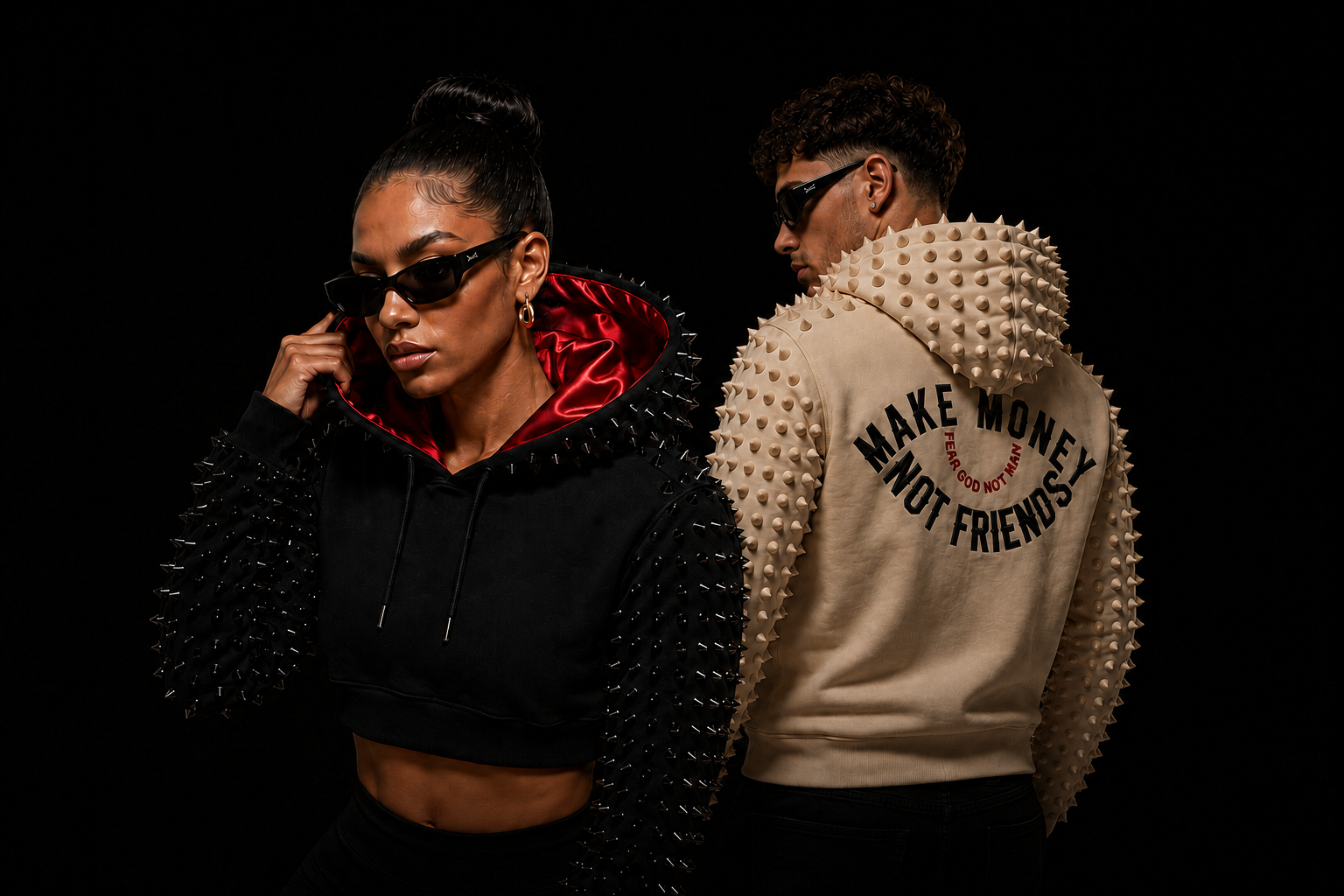
Every garment carries the same conviction. An Egyptian silk hood lining sits against heavyweight cotton. Italian cone studs are aligned by hand rather than machine-set. Each piece bears its own number, tying it to a specific, unrepeatable moment in the maison's history rather than a generic size run. Readers who want to understand the construction in more depth can explore the handcrafted hoodie collection, documented with the same material transparency this article has argued every serious collector should demand. If you're building a wardrobe around pieces with genuine provenance rather than volume, the current Jeeyodee drop is the place to start, and atelier enquiries for bespoke commissions are open for those who want a garment built entirely around their own specification.
Where to read more on Italian streetwear
These sources helped shape this shortlist and offer useful depth for readers who want to keep tracking the scene, from established names to emerging ateliers.
- Treesse's curated collection covers established independent labels and exclusive collaborations worth browsing directly.
- Audaces's brand roundup explains streetwear's cultural origins and codes alongside specific Italian names.
- Stylight's emerging-brand coverage tracks smaller labels building reputation through limited runs.
- Corriere della Sera's style desk contextualises the Y2K revival shaping current silhouettes.
- Edropit's brand survey highlights craft and fabric innovation among established houses.
Sources
- Migliori brand streetwear italiani a Milano
- 11 marchi italiani di streetwear da cui trarre ispirazione
- Marche streetwear, i brand emergenti 2023 da conoscere
- Style
- 10 Best Italian Streetwear Brands You Should Know
FAQ
What are the best Italian streetwear brands to know?
Dolly Noire, Iuter, Propaganda, GCDS, Marcelo Burlon, Palm Angels, Octopus Brand and Kappa Kontroll are established names worth exploring, while Maison Jeeyodee represents the independent luxury end of the spectrum with numbered, hand-finished pieces.
What emerging Made in Italy brands are worth watching?
Smaller labels working in limited runs through boutique stockists and social media drops, often with graphic or technical-fabric specialisms, represent the strongest emerging talent, though names shift quickly as scarcity drives their appeal.
Which fashion brands have stayed genuinely Italian?
Labels like Iuter and Propaganda maintain Italian production roots, while independent maisons such as Jeeyodee build their entire model around Made in Italy craftsmanship, hand finishing, and materials sourced and worked within Italy.
Are there low-cost Italian streetwear brands?
Accessible-tier labels working in larger production runs, such as some Dolly Noire and Iuter lines, sit closer to high-street streetwear pricing, though genuinely limited or hand-finished independent pieces command a premium regardless of the brand's overall positioning.
How do I know if a Made in Italy claim is genuine?
Check for named production locations, disclosed material sourcing, and numbered or limited-run details on the product page itself, since brands with nothing to hide typically volunteer this information without being asked.