TL;DR:
- Egyptian silk represents a cultural and artistic identity shaped by centuries of trade and craftsmanship, not indigenous production.
- Modern Egyptian silk primarily comprises imported raw materials, with Egypt transforming them through design and dyeing techniques for luxury markets.
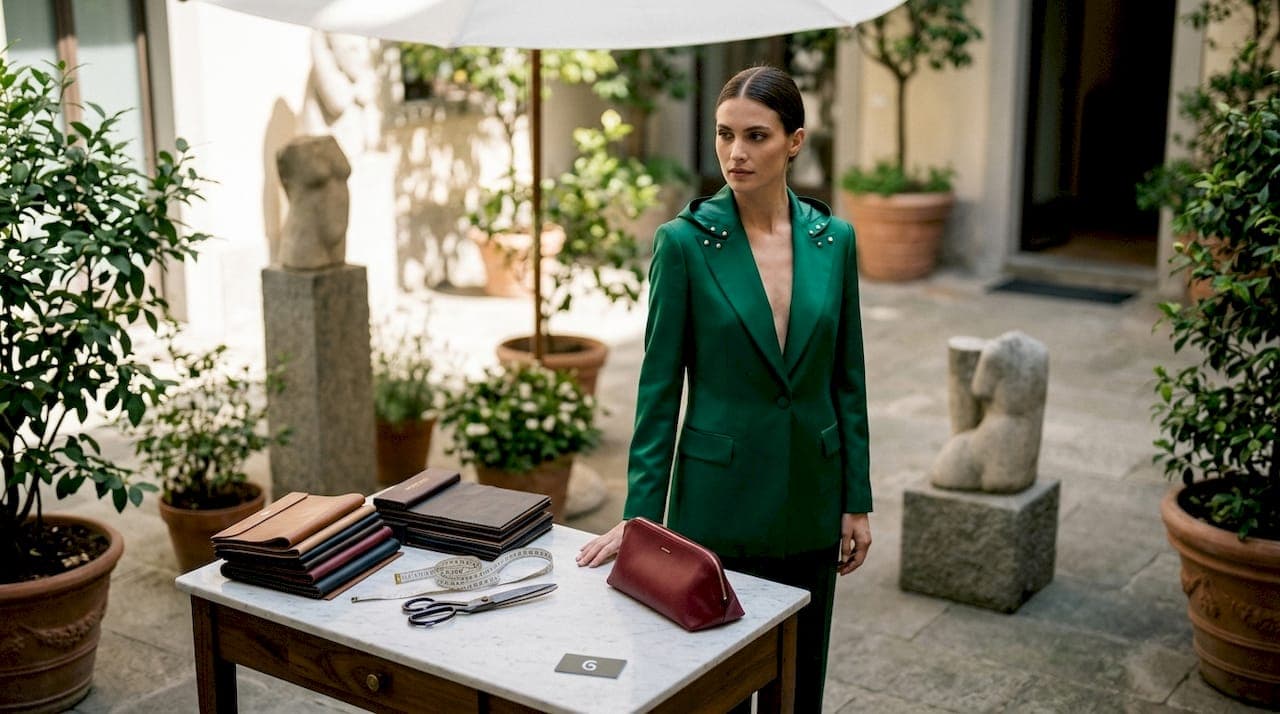
Egyptian silk is a luxurious fabric defined not by indigenous sericulture but by centuries of cultural accumulation, trade, and artistic synthesis. From the Mediterranean trading routes of late antiquity to the ateliers of contemporary designers, this fabric carries a weight of meaning that transcends its physical composition. It is a material shaped by history, refined by craft, and elevated by the conviction that cloth can tell a story. For textile artists, fashion designers, and discerning consumers, understanding Egyptian silk means understanding the difference between geographical origin and cultural identity.
What is the historical significance of Egyptian silk?
Silk began appearing in substantial quantities in Egypt by the 4th century AD, arriving primarily as an imported luxury fabric rather than a locally produced one. That distinction matters profoundly. Egypt was not a silk-producing nation in the classical sense. It was a silk-consuming one, and a discerning consumer at that.
The Mediterranean trade routes that connected Egypt to China, India, and Persia made silk a marker of social status in late antiquity. Wealthy Egyptians wore it, traded it, and buried it with their dead. Archaeological evidence confirms that silk in late antique Egypt was almost entirely imported, woven elsewhere and carried across continents before it reached the Nile Delta. Scholars describe this as the "Mediterranean tradition" of silk textiles, a shared luxury culture that transcended national borders.
This history carries a critical implication for anyone working with Egyptian silk fabric today. The term has never been a straightforward indicator of geographical origin. It has always been a cultural designation. Recognising this frees designers and collectors from a false expectation and opens a richer conversation about what the fabric actually represents.
- Silk entered Egypt primarily via Eastern and Mediterranean trade routes, not through local sericulture.
- Its presence in Egyptian tombs and texts confirms its luxury status across social hierarchies.
- The "Mediterranean tradition" label reflects a shared regional aesthetic, not a single national production method.
- Modern Egyptian silk fabric inherits this legacy of cultural synthesis rather than native production.
Pro Tip: When researching the provenance of a silk piece described as "Egyptian," ask whether the term refers to the origin of the raw fibre, the weaving tradition, or the design inspiration. These are three entirely different things, and conflating them leads to poor purchasing decisions.
How is Egyptian silk characterised in the modern market?
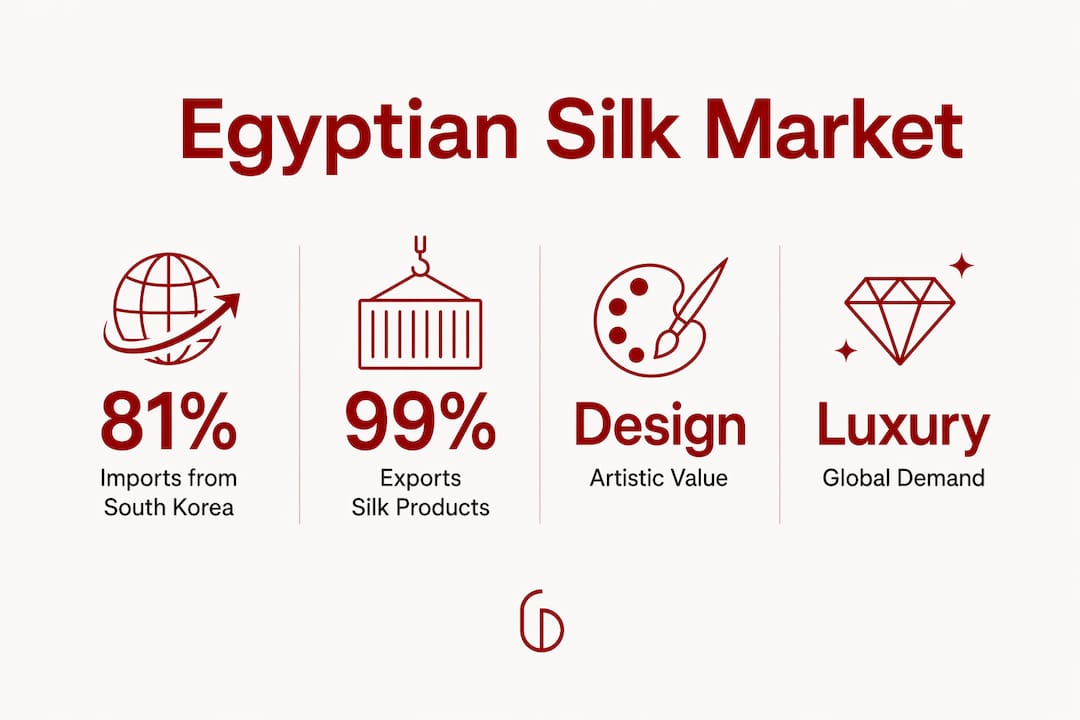
The contemporary Egyptian silk market is defined by a striking paradox. Egypt imports the vast majority of its woven silk fabric, yet it exports finished silk goods to some of the most demanding luxury markets in the world. South Korea supplies 81% of Egypt's woven silk fabric imports, with India accounting for a further 9.5%. That supply chain reality tells you everything about how modern Egyptian silk production actually functions.
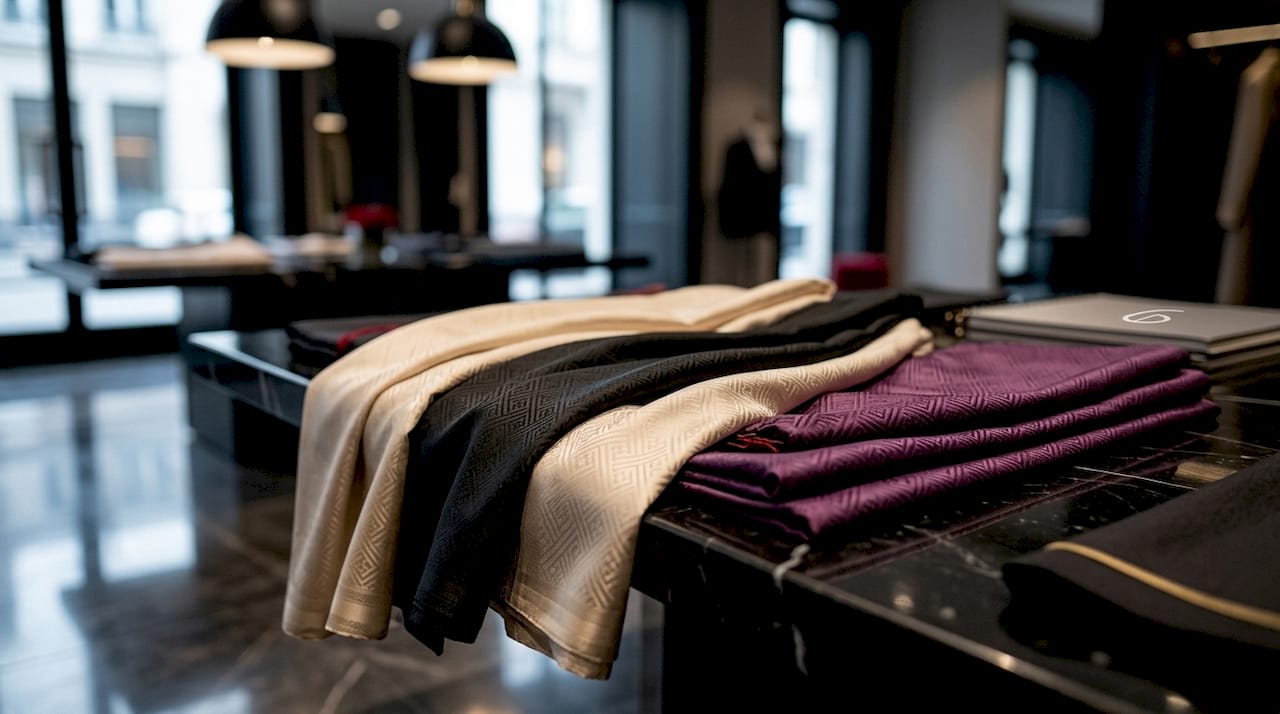
What Egypt contributes is not raw fibre but finished artistry. Nearly 99% of Egypt's exported woven silk fabrics are shipped to Italy, a country synonymous with luxury textile manufacturing. That concentration reflects a niche focus on high-value, artisan-quality goods rather than volume production. Egypt's role in the global silk economy is that of a cultural interpreter, taking internationally sourced raw materials and transforming them through design, motif, and technique.
For luxury maisons sourcing Egyptian silk fabric, this supply chain has direct implications. The value lies in the design language and the craft applied to the cloth, not in the geographical origin of the fibre itself. A designer who understands this can source with clarity and communicate authenticity honestly to their clients.
| Aspect | Detail |
|---|---|
| Primary silk import source | South Korea (81% of woven silk imports) |
| Secondary import source | India (9.5% of woven silk imports) |
| Primary export destination | Italy (99% of exported woven silk by value) |
| Market positioning | High-value, artisan-focused, niche luxury |
| Production model | Imported raw materials, Egyptian design and craft applied |
The term "Egyptian silk" in contemporary fashion most often denotes a design inspiration rather than a fibre origin. Prints referencing pharaonic iconography, henna-inspired dyeing, and geometric patterns drawn from Islamic art traditions all fall under this cultural umbrella. Designers who work within this tradition are not misrepresenting their materials. They are participating in a centuries-old practice of cultural synthesis that has always defined Egyptian textile culture.
What patterns and dyeing techniques define Egyptian silk fabric?
The artistic identity of Egyptian silk fabric rests on a set of motifs and techniques that are immediately recognisable and deeply rooted in cultural history. Hieroglyphic imagery, paisley forms reinterpreted through an Egyptian lens, and geometric patterns drawn from Islamic architectural traditions are the most prevalent visual languages. These are not decorative choices made arbitrarily. They are deliberate acts of cultural memory.
Henna dyeing is among the most distinctive techniques associated with modern Egyptian silk design. Designer Omar Tarek Zayed, for example, integrates Egyptian and Islamic art motifs with Japanese Shibori techniques and henna dyes to produce silk scarves of singular character. The result is a textile that belongs to no single tradition but honours several simultaneously. That synthesis is precisely what gives Egyptian silk its contemporary authority.
Hand-painted silk textiles inspired by Egyptian culture represent the highest expression of this craft. Pieces such as the PHARAO hand-painted mango silk saree demonstrate how Egyptian historical motifs can be rendered through hand application of pigment, creating works that function as wearable art. Each piece carries the irreproducible quality of the human hand. No two are identical.
- Hieroglyphic and pharaonic motifs appear as both literal imagery and abstracted geometric forms, referencing Egypt's ancient visual culture.
- Paisley with Egyptian themes blends South Asian textile traditions with North African iconography, reflecting the historical cross-pollination of trade routes.
- Henna-inspired dyeing uses resist techniques and natural pigments to create organic, flowing patterns with deep cultural resonance.
- Shibori-influenced binding and folding is increasingly integrated by Egyptian designers to add textural complexity to silk surfaces.
- Hand-painted application elevates individual pieces to collectible status, with each garment functioning as a unique artistic statement.
Pro Tip: To verify the authenticity of an Egyptian-inspired silk piece, request documentation of the dyeing technique used and the designer's stated cultural references. Genuine artisan work will have a clear, articulable story behind its motifs. Mass-produced imitations rarely do.
How to buy and care for Egyptian silk fabric
Buying Egyptian silk fabric with confidence requires clarity about what you are actually purchasing. The term covers a wide spectrum, from mass-produced printed polyester sold under an Egyptian aesthetic to hand-dyed, artisan-woven silk of genuine cultural and material distinction. Knowing the difference protects your investment and honours the craft.
When sourcing Egyptian-inspired silk for luxury fashion or textile projects, apply the following criteria:
- Verify the fibre content. Genuine silk has a natural lustre and drapes differently from synthetic alternatives. Request a burn test certificate or fibre composition documentation from the supplier.
- Understand the design provenance. Ask whether the motifs are drawn from a specific cultural tradition and whether the designer has a stated relationship to that heritage.
- Assess the dyeing method. Hand-applied henna dyeing and Shibori techniques leave visible evidence of human craft. Machine-printed patterns are uniform and lack the subtle variation of artisan work.
- Examine the supply chain. Given that Egypt's silk market relies heavily on imported raw materials, a transparent supplier will acknowledge this openly rather than implying local fibre production.
- Consider the construction technique. Silk requires flat-felled seams, French seams, or bound edges to prevent fraying. A garment constructed with these methods signals that the maker understands the material.
Care for Egyptian silk fabric demands the same respect the fabric itself commands. Hand-painted and delicate silk garments require hand washing in cool water with a pH-neutral detergent, or professional dry cleaning. Harsh detergents strip natural dyes and damage the protein structure of the fibre. Direct sunlight fades pigment over time, so storage in a cool, dark environment preserves both colour and cloth.
Egyptian silk uses in luxury fashion are broad and considered. Scarves remain the most traditional application, allowing the full surface of the fabric to function as a canvas. Luxury linings, particularly in tailored outerwear and structured jackets, bring the fabric into intimate contact with the wearer without exposing it to external wear. Exclusive garment overlays, where silk is layered over a contrasting ground fabric, create visual depth and textural contrast that heavier materials cannot achieve.
Key takeaways
Egyptian silk is best understood as a cultural and artistic designation rather than a claim of indigenous fibre production, and its value lies in the craft, motifs, and heritage applied to the cloth.
| Point | Details |
|---|---|
| Historical origin | Silk entered Egypt as an imported luxury from the 4th century AD, not through local sericulture. |
| Modern supply chain | South Korea supplies 81% of Egypt's woven silk imports; Egypt exports 99% of finished silk to Italy. |
| Cultural designation | "Egyptian silk" refers to design inspiration and cultural identity, not the geographical origin of raw fibre. |
| Artistic distinction | Henna dyeing, hieroglyphic motifs, and hand-painted techniques define authentic Egyptian-inspired silk. |
| Care and sourcing | Verify fibre content, dyeing method, and design provenance before purchasing; hand wash or dry clean to preserve quality. |
The conviction behind the cloth
Egyptian silk has always been a fabric of conviction. It was never simply a material. It was a declaration. When ancient Egyptians draped themselves in imported silk from the far reaches of the known world, they were making a statement about their place in a civilisation that valued beauty, permanence, and the discipline of craft. That statement has not diminished. It has evolved.
At Jeeyodee, we do not use Egyptian silk incidentally. We use it with intention. The deep red silk interior that lines our garments is not a decorative afterthought. It is a permanent chapter written into the architecture of each piece. When you wear a Jeeyodee garment, that silk is in contact with you alone. It is private, deliberate, and irreplaceable. That is the nature of materials chosen with conviction.
What I find most compelling about Egyptian silk in the context of contemporary luxury is precisely its refusal to be reduced to a single origin story. It is a fabric that has always been shaped by encounter, by the meeting of cultures across trade routes, by the ambition of designers who refuse to work within a single tradition. That is the spirit Jeeyodee honours. Not the imitation of heritage, but its continuation.
— Jeeyodee
Jeeyodee and the art of the silk interior
At Jeeyodee, every garment begins with a question: what does this material mean? Egyptian silk is not chosen for its name. It is chosen because it carries history in its weave and demands a standard of craft that most labels are unwilling to meet.
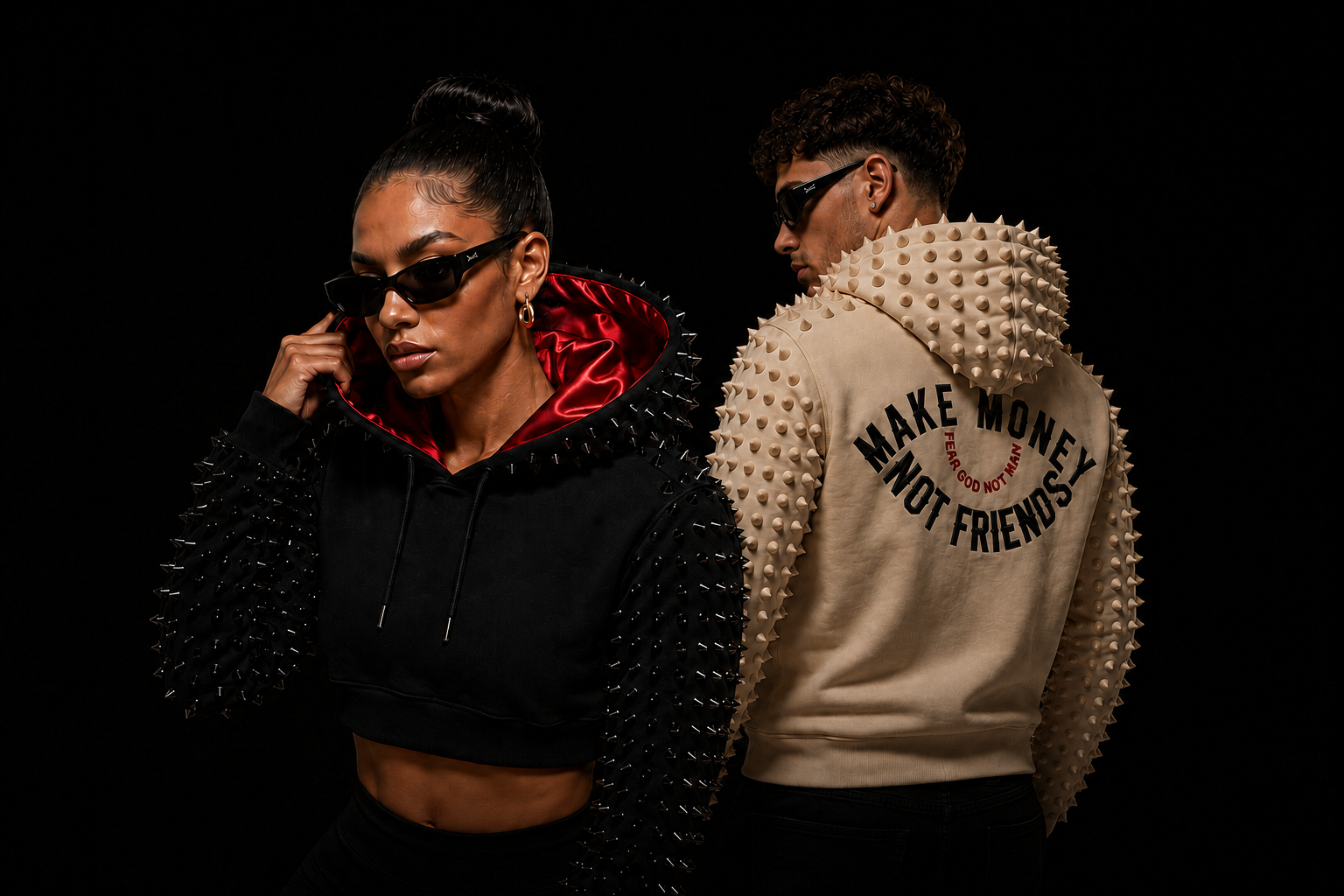
Each piece in the Jeeyodee collection is produced once, numbered, and never repeated. The Egyptian silk interior is part of that permanence. It is the detail that the wearer knows and the world does not see. That restraint is deliberate. Luxury, at its most refined, does not announce itself. If you are drawn to garments that honour their materials with the same seriousness with which they were made, explore Jeeyodee and find the piece that belongs to you.
FAQ
What is Egyptian silk, exactly?
Egyptian silk is a term that describes fabric defined by cultural and artistic heritage rather than indigenous fibre production. Historically, silk in Egypt was imported from China, India, and Persia, making the designation a cultural identity rather than a claim of local sericulture.
Is Egyptian silk actually produced in Egypt?
Egypt's silk fabric market relies heavily on imported raw materials, with South Korea supplying 81% of woven silk fabric imports. Egyptian artisans and designers apply cultural motifs and dyeing techniques to these imported materials, creating the finished product.
What makes Egyptian silk fabric distinctive?
The distinguishing qualities are artistic rather than material. Hieroglyphic motifs, henna dyeing, Shibori-influenced techniques, and hand-painted patterns drawn from Egyptian and Islamic art traditions give the fabric its singular character and collectible status.
How should I care for Egyptian silk garments?
Hand wash in cool water with a pH-neutral detergent, or take the piece to a professional dry cleaner. Avoid direct sunlight and harsh chemicals, which degrade both the natural dye and the protein structure of the silk fibre.
Where does Egypt export its finished silk products?
Egypt exports 99% of its finished woven silk by value to Italy, reflecting a deliberate focus on high-value, artisan-quality luxury markets rather than volume production.