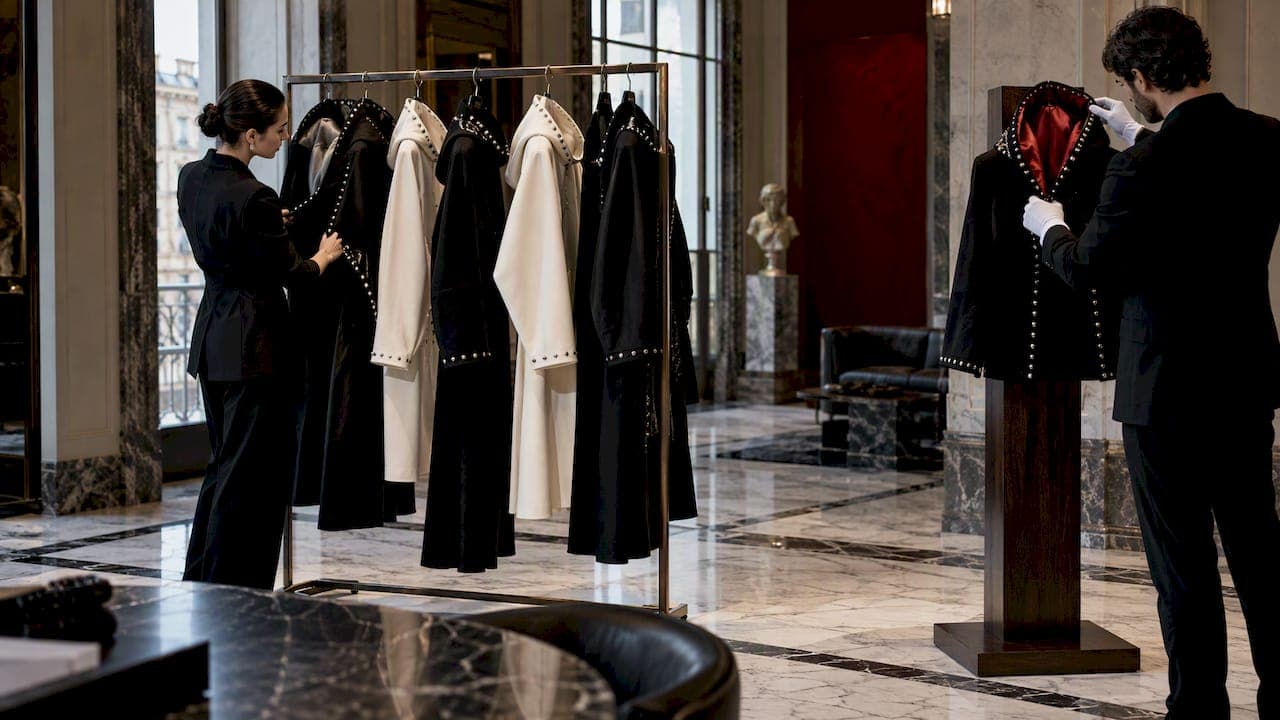
A capsule is a small, coherent range built to extend a brand's vision across a season; a limited edition is about numbered scarcity and singular collectibility. Use a capsule to test a material or reach a new audience, and a limited drop to create urgency around a single, unrepeatable object. Reportage from Vogue and the practice of houses such as Maison Jeeyodee show how differently these two tools behave in the market.
TL;DR:
- Capsules are designed as a cohesive set of 10 to 30 pieces that extend a brand's wardrobe, while limited editions are individual or small numbered objects created for collectibility.
- A capsule can be reintroduced annually or seasonally, whereas a limited edition is a one-time release with no plan for reissue, emphasizing rarity.
- The production of capsules involves sourcing consistent materials across multiple SKUs, while limited editions focus on artisanal craftsmanship and small batch creation.
- Success measures for capsules include sell-through and average order value, while limited editions are evaluated by sell-out speed and media coverage.
- Maison Jeeyodee exemplifies disciplined scarcity by producing handcrafted, numbered pieces only once, with no reprints or reissues to preserve exclusivity.
Table of Contents
- What a capsule collection and a limited edition actually mean
- Capsule or limited edition: comparing the practical levers.
- Choosing between a capsule and a limited edition
- Maison Jeeyodee as a study in disciplined scarcity
- Why scarcity only earns its meaning through craft
- How Maison Jeeyodee approaches limited drops and commissions
- Sources
- FAQ
What a capsule collection and a limited edition actually mean
The two terms get used interchangeably by marketers who should know better, and the confusion costs brands clarity at the exact moment they need it most.
A capsule collection is a small, curated set of garments built around a single idea. According to Wikipedia's entry on the format, capsules are typically 10 to 30 pieces designed to read as a condensed, coherent statement rather than a full seasonal offer. The concept has roots in the capsule wardrobe tradition, with the same source crediting Susie Faux and later Donna Karan with popularising the idea of a small, interchangeable set of pieces in the 1970s and 1980s. A modern capsule often becomes a designer collaboration or a retailer exclusive, but the underlying discipline is the same: fewer pieces, one clear concept, every item earning its place.
A limited edition, by contrast, is defined by scarcity rather than curation. It may be a single hero piece or a small numbered run, but the promise to the buyer is different: this exists in a fixed, finite quantity and will not be made again. Numbering, unique materials and one-off finishing details signal collectibility rather than versatility, and that distinction matters when a brand decides what story to tell.
Where the two overlap is in intent: both aim to create desire through restraint. Where they diverge is in structure and purpose.
- A capsule is a range: several pieces built to work together and extend a wardrobe.
- A limited edition is an object: one design, or a small numbered run, valued precisely because it will never repeat.
- A capsule often tests an idea for future scale; a limited edition closes the door on repetition by design.
Capsule or limited edition: comparing the practical levers.
Once the definitions are settled, the real work for a marketing or product team is deciding which lever to pull, and the two formats behave differently across almost every operational axis.
Scale and assortment set the first divide. A capsule is built as a coherent group, often those 10 to 30 pieces noted by Wikipedia, designed to be worn together or layered against an existing wardrobe. A limited edition can be a single hero garment or a numbered run of a few dozen, with no obligation to form a wearable system. The capsule asks "how do these pieces relate to one another?" The limited edition asks only "how few can exist?"

Availability and repeatability diverge sharply too. Capsules are frequently seasonal or tied to a retailer partnership, reappearing in a new form the following year under a fresh concept. Limited editions are usually one-time numbered runs with no intention of a sequel, which is precisely what gives each unit its collectible weight.
Production implications follow from that structure. A capsule's coherence demands sourcing decisions across a small family of materials and silhouettes, often with retailer minimums shaping order quantities. A limited edition, especially one produced by hand, faces the opposite constraint: artisanal limits on lead time and output rather than commercial minimums.
Pricing and perceived value work through different mechanics. A capsule earns its premium through concept and craftsmanship relative to the mainline; a limited edition earns its premium through the near-certainty that no one else will ever own the same numbered piece.
Distribution tends to follow the same split. Capsules are frequently retailer-partnered, built to sit inside a wholesale or marketplace context, while limited editions are more often maison-direct, sold straight from the brand with no intermediary diluting the story.
Marketing outcomes differ in kind, not just degree. Reporting on curated kits from brands including M.M. LaFleur and Vetta found measurable uplifts in average order value and conversion when a capsule was merchandised well. Limited editions instead chase a media halo and collector demand, success measured in sell-through speed and cultural attention rather than basket size. Retailer-brand capsule partnerships, Vogue's reporting on Balmain and Mytheresa notes, can lift mainline sell-through through the same halo effect when priced and timed with care.
The same reporting flags the risks. Overexposure erodes a capsule's specialness if the cadence is too frequent, and a sustainability-themed capsule invites accusations of tokenism if the brand has no plan to scale what it learns. Limited editions carry a narrower but sharper risk: cannibalising the mainline if scarcity is claimed but not genuinely enforced.
Pro Tip: Decide the KPI before the brief goes out: a capsule is judged on sell-through and AOV, a limited edition on speed of sellout and earned media, and conflating the two metrics will make either format look like it failed.
Choosing between a capsule and a limited edition
The decision rarely comes down to taste. It comes down to what the brand can credibly produce, what the audience is being asked to believe, and how much risk the business can absorb if the idea does not land.
- Assess brand positioning first. A brand built on accessibility and range suits a capsule; a brand built on scarcity and provenance suits a limited edition.
- Match the format to audience appetite. A broad audience responds to a coherent, wearable set, while a collector audience responds to a single unrepeatable object.
- Weigh production capacity honestly. Capsules need enough capacity to hit retailer minimums; limited editions need craft capacity that can sustain small, careful runs without shortcuts.
- Set price tolerance before design starts. A capsule's price must sit close enough to the mainline to feel accessible; a limited edition's price is set by scarcity, not by comparison.
- Brief creative and manufacturing partners against a short checklist: concept in one sentence, piece count or run size, timeline, and the single metric that will define success.
- Plan the timeline realistically. A retailer capsule typically needs a full seasonal lead time to align with wholesale calendars, while a handcrafted limited run is often gated by artisan capacity rather than a retail calendar.
- Track the right metric from day one. For a capsule, that is sell-through and average order value; for a limited edition, that is sellout speed and the volume of earned coverage it generates.
The primary cost driver for a capsule is usually material and production across multiple SKUs. For a limited edition, the primary cost driver is time: hand-finishing, individual numbering and the labour of making something that will never be made twice.
Maison Jeeyodee as a study in disciplined scarcity

Maison Jeeyodee builds its case for the limited edition model through practice rather than claim. Each garment is handcrafted, produced once, and never repeated: there is no second run to dilute the first, and no reissue to undercut the collector who bought early.
The materials do the talking that a marketing campaign otherwise would. Heavyweight cotton gives the garment its structure, while a deep red Egyptian silk hood lining and meticulously aligned Italian cone studs turn functional details into signals of intent. Every piece is individually numbered, a quiet but unambiguous statement that this object exists once and belongs, from that point, entirely to its owner.
A garment that will never be repeated asks to be worn differently: with the knowledge that ownership, here, is a form of permanence.
These choices shape the narrative a maison can tell. A capsule brief might ask, "how do these ten pieces work as a wardrobe?" A limited-edition brief, in the Jeeyodee mould, asks a sharper question: "what makes this single piece worth being the only one?" Translating that discipline into a campaign brief means resisting the urge to pad the story with volume. The story is the scarcity, and the craft is the proof.
Why scarcity only earns its meaning through craft
Scarcity without craft is a marketing trick; craft without scarcity is simply good manufacturing. The two together are what give a garment cultural weight, and that is the principle we return to with every drop.
We choose material provenance over material volume, because a buyer who understands where the Egyptian silk or the Italian cone studs came from trusts the number on the garment's label far more than any campaign line could earn. That trust is also the discipline we hold ourselves to when the wider industry reaches for sustainability language as decoration rather than practice: a claim of exclusivity or responsibility means nothing without the record to support it, and a maison's credibility rests on never making a claim it cannot show.
— Jeeyodee
How Maison Jeeyodee approaches limited drops and commissions
Every Jeeyodee release is handcrafted in Italy, produced once and individually numbered, which means there is no restock to wait for and no reissue to second-guess.
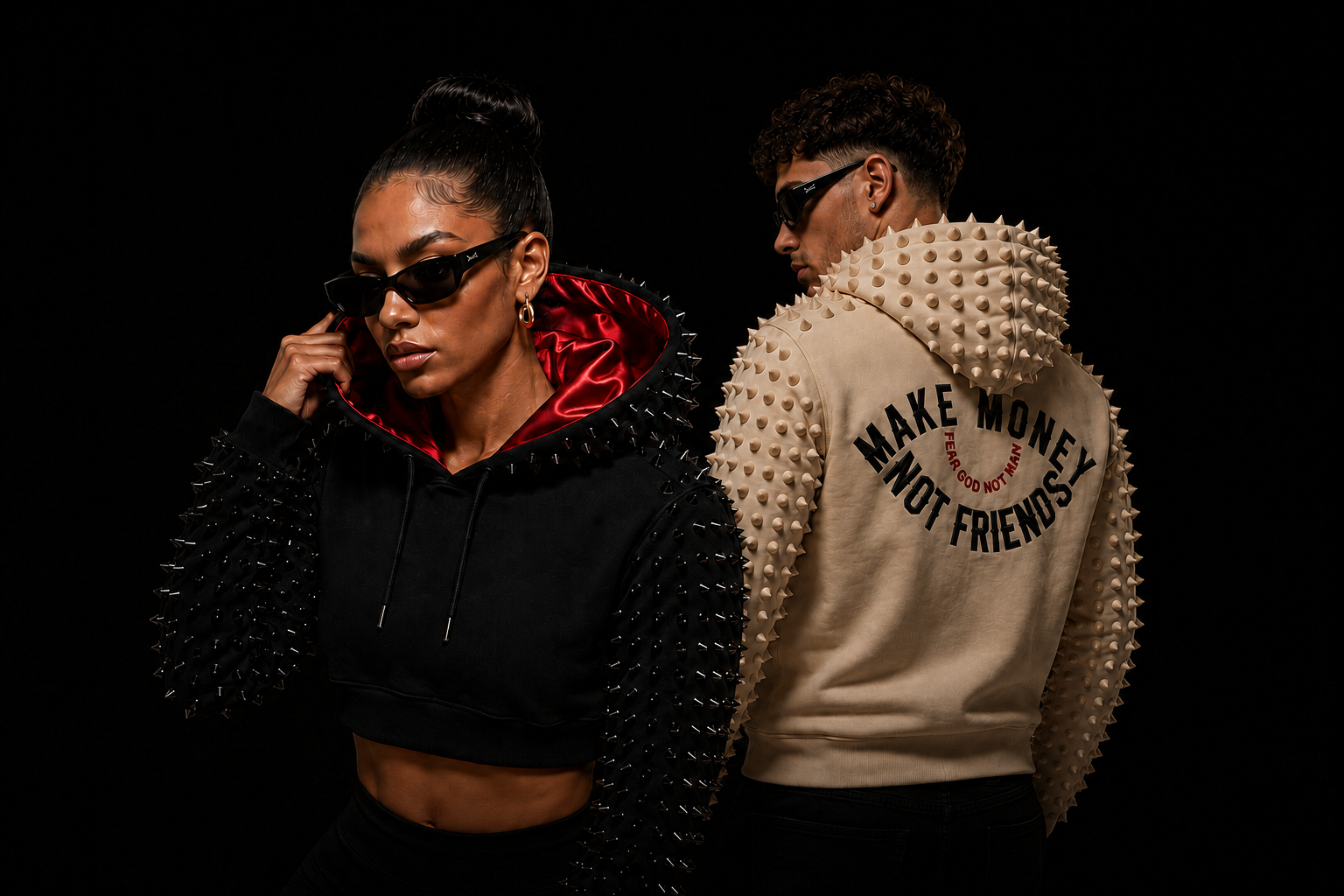
Readers who want to see what a disciplined, one-time run looks like in practice can view current releases directly at Jeeyodee, where each piece is offered once and never made again.
FAQ
What does a capsule mean in fashion?
A capsule is a small, curated set of garments, typically 10 to 30 pieces, built around a single concept rather than a full seasonal range. It is designed to work as a coherent group, often extending or complementing a brand's main offering.
What is meant by a capsule collection?
A capsule collection is a condensed version of a designer's vision, drawing on the capsule wardrobe idea popularised by Susie Faux and Donna Karan. It favours a small number of interchangeable, concept-led pieces over a broad seasonal assortment.
What is the 3-3-3 rule for a capsule wardrobe?
Definitions of the 3-3-3 rule vary across styling guides, and the concept sits closer to personal wardrobe planning than to brand capsule strategy. A common version limits a person to three tops, three bottoms and three pairs of shoes for a set period, though this is not a fashion-industry standard tied to the capsule collections discussed here.
Are limited editions worth the investment for a brand?
Limited editions can justify a premium when scarcity is genuine and materials or craftsmanship support the claim, since the value rests on the object never being repeated. They carry more commercial risk than a capsule if production cannot sustain the story, which is why maisons such as Jeeyodee tie every limited run to handcrafted, individually numbered production.
What is the main difference between a capsule and a limited edition?
A capsule is a coherent range of several pieces designed to extend a brand's offering, while a limited edition is defined by strict, often numbered scarcity around a single design or small run. The capsule is judged on how well the pieces work together, the limited edition on how convincingly it proves it will never exist again.