Silk can pill, but pilling alone does not mean that a garment is poorly made. Whether a silk piece shows those small fibre balls depends far more on blend composition, finishing and how it is worn and washed than on the fact that it is silk. What follows unpacks the evidence, so you know when pilling is cosmetic, and when it is telling you something more.
TL;DR:
- Pilling results mainly from how the fabric is finished and worn, not solely from the fiber type, so proper construction can reduce pilling even in silk garments.
- Finishing processes like dyeing, printing, and singeing significantly influence silk's resistance to pilling, with some finishes improving durability.
- Regular gentle care, proper laundering, and careful storage can help prevent pilling, but some fabrics, especially loosely woven or blended silks, remain more prone to it.
- Even well-made silk garments can pill under daily friction, and inspection of high-friction zones helps distinguish between surface pilling and structural damage.
- Removing pills safely requires gentle tools like fabric shavers or micro-scissors, and aggressive attempts on weakened or heavily worn fabric can cause additional damage.
Table of Contents
- What pilling actually is and how it forms
- Why silk and silk blends pill: fibre behaviour and finishing effects
- Does pilling mean poor quality?
- How to remove pilling safely
- Prevention and care: laundering, storage and daily habits
- When de-pilling can cause harm
- Jeeyodee's maison perspective on finishing and care
- A brief reflection on caring for what lasts
- Exploring Jeeyodee's atelier guidance and bespoke pieces
- Sources
- FAQ
What pilling actually is and how it forms
Pilling happens when loose fibres on a fabric's surface rub together, tangle and bind into small, visible knots. The fuzz you see before pills form is simply fibre ends working free of the yarn structure through friction. This is distinct from thinning or worn weave, where the fabric itself loses density and strength rather than merely gathering loose fibre on its surface.
Several things determine how readily pills form. Fibre length matters: shorter staple fibres tend to shed more readily than long, continuous filaments. Yarn twist matters too, since a tightly spun yarn holds its fibres in place far better than a loosely spun one. Weave density plays its part as well, with closer weaves giving fewer fibres the chance to migrate to the surface.
To tell the two apart, look closely at the fabric:
- Pills sit on top of the weave and can be picked or combed away without disturbing the fabric beneath.
- Thinning shows as a visible loss of density, sometimes with a faint sheen or near-transparency where fibres have actually been lost.
- Fuzz without knots is an early stage, not yet a pill, and often settles with gentle care rather than intervention.
Why silk and silk blends pill: fibre behaviour and finishing effects
Silk's natural form is a continuous filament, which behaves differently from the short staple fibres more prone to pilling in fabrics like cotton or wool. A tightly twisted silk yarn holds its filaments close together, leaving little loose fibre available to tangle. Looser spinning, by contrast, frees up fibre ends and invites the friction that starts the process.
A 2021 peer-reviewed study in Materials found that finishing choices, including dyeing, printing and singeing, altered pilling resistance in linen and silk woven samples, and that even small amounts of synthetic fibre worsened pilling performance. The finding matters because it shifts the question away from "is this silk" and towards "how was this silk finished and constructed". Dyed and printed samples in the study sometimes outperformed untreated grey fabric, which tells you finishing is not incidental, it is decisive.
Earlier research into bleaching and dyeing reinforces the point. Work published in the Journal of Applied Polymer Science found that oxidative bleaching altered silk's mechanical properties, and that sodium citrate improved both abrasion resistance and tear strength when applied at an optimum pH of 5.5. Crosslinking agents and dyeing conditions, in other words, can raise or lower a fabric's resistance to the very friction that causes pilling.
Everyday wear supplies that friction constantly:
- Bag straps and seatbelts create concentrated rubbing points across the shoulder and chest.
- Underarm contact and folded arms wear the same small patches repeatedly.
- Rough seating surfaces, such as upholstered chairs or car seats, abrade exposed areas during ordinary use.
Does pilling mean poor quality?
No. Pilling results from a combination of fibre type, yarn twist, weave construction, finishing and the friction a garment meets in daily life, and fibre quality is only one variable among several. Textile testing bodies such as ASTM assess pilling resistance precisely because it varies independently of a fabric's inherent quality, confirming that a well-made garment can still pill under the right conditions of wear.
The distinction that matters is between cosmetic pilling and structural weakness. Cosmetic pilling sits on the surface, lifts away cleanly, and leaves the weave beneath intact. Structural weakness shows as thinning, visible light passing through the fabric, or yarns that feel brittle rather than resilient.
A short inspection tells you which you are dealing with:
- Hold the fabric to the light: even density suggests the weave is sound beneath any pills.
- Press gently on a pilled area: if the weave springs back, the structure is intact.
- Check high-friction zones first, such as cuffs and underarms, since these reveal wear before anywhere else.
How to remove pilling safely
Pills can almost always be removed without damaging a silk garment, provided you work gently and test first. The right tool depends on the fabric's weight and the pills' severity.
A fabric shaver gives the most control and suits most silk-blend garments when used on a low setting. A sweater comb offers a gentler, manual alternative for lighter weaves where a motorised shaver feels too aggressive. A lint roller lifts loose fuzz before it knots, making it useful as a preventive step rather than a cure. Micro-scissors allow precise, pill-by-pill removal on delicate or heavily textured silk, though the process is slow.
- Test on an inconspicuous seam allowance first, to confirm the tool does not snag or pull threads.
- Lay the garment flat and work in the direction of the weave, never against it.
- Apply the lightest pressure that lifts the pill, pausing often to check the fabric beneath.
- Move to a new section once pills are cleared, rather than repeating passes over the same spot.
Pro Tip: Work in short sessions rather than one long pass, since repeated friction in the same area is itself a pilling trigger.
Stop immediately if you see thinning, a change in sheen, or fibres pulling rather than lifting. These are signs the weave itself is compromised, and further shaving will only accelerate the damage. At that point, a professional textile cleaner or restorer is the safer route, particularly for pieces with sentimental or significant value.
Prevention and care: laundering, storage and daily habits
Most pilling begins long before a garment shows its first pill, in the wash and in daily handling. Hand washing in cool water remains the gentlest option for silk, using light agitation rather than scrubbing or wringing. When a machine cycle is necessary, place the garment in a mesh bag, select the gentlest or hand-wash setting, use cold water and keep the spin cycle as low as the machine allows.

Detergent choice matters as much as the wash cycle itself. A mild, pH-neutral detergent protects the fibre surface, while fabric softener is best avoided, since it can leave a residue that changes how the fabric handles and may encourage fibre migration over time.
Dry cleaning suits heavier or structured silk pieces, particularly those with linings or trims that would not survive hand washing. The trade-off is that solvent cleaning can affect some finishes over repeated cycles, so it is worth asking a cleaner experienced with silk about their process rather than assuming all dry cleaning is equal.
A few daily habits reduce the friction that causes pilling in the first place:
- Rotate garments rather than wearing the same piece on consecutive days, giving fibres time to recover between wears.
- Avoid rough or textured seating where possible, since upholstery and car seats are common abrasion points.
- Store pieces in soft fabric bags rather than stacked loosely, to prevent fibres rubbing against zips, buttons or other garments.
- Keep accessories away from direct contact, since bag straps and belts concentrate friction on small areas.
Pro Tip: Brush silk garments gently with a soft, dry brush after each wear to lift surface fibres before they have the chance to tangle into pills.
A brief inspection every few wears catches pilling early, when a lint roller or soft brush is enough, long before it reaches the stage of needing a fabric shaver.
When de-pilling can cause harm
Not every pill should be removed, and not every removal method is safe once a fabric shows signs of wear beyond the surface. Weakened weave often reveals itself as a slight give when the fabric is stretched gently, or as yarns that look thinner or more translucent than the surrounding area. Fibre breakage, where short strands appear loose rather than tangled into pills, is a further sign that the fabric is shedding structural material, not just surface fuzz.
Aggressive de-pilling on a weakened area accelerates exactly the damage you are trying to fix, since any tool that lifts pills also exerts friction on the yarns beneath. Where a garment shows these signs, the conservative path is the right one: pause removal attempts, and consult a professional textile restorer who can assess whether patching, reinforcement or archival care is the better course. For pieces of genuine sentimental or collectible value, this caution is worth far more than a quick cosmetic fix.
Jeeyodee's maison perspective on finishing and care
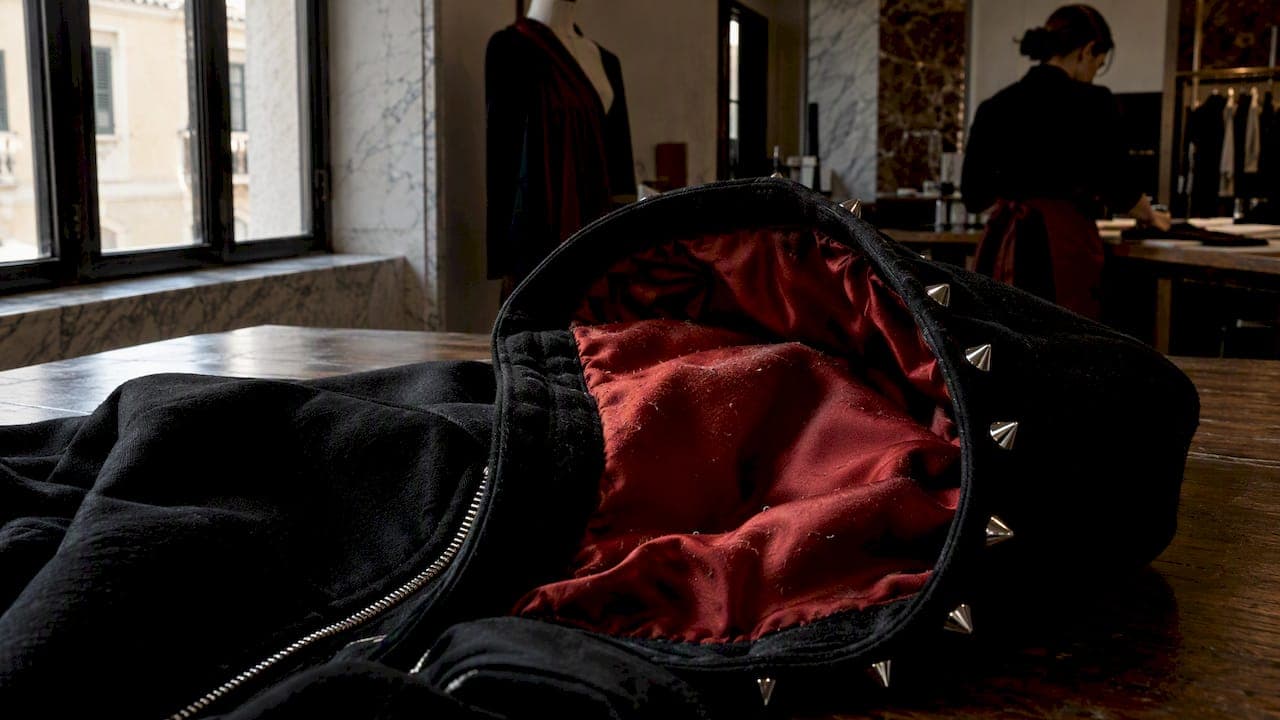
At the maison, every garment carries an Egyptian silk hood lining, chosen with the same discipline we apply to the heavyweight cotton and the meticulously aligned Italian cone studs that define each piece. Finishing is never an afterthought. It is where permanence is decided.
We provide care notes with every garment, because a piece that is individually numbered and never repeated deserves handling that matches its origins. Gentle washing, soft storage and early attention to surface fuzz preserve the silk lining's character for years, not weeks. A well-kept lining is part of what makes a numbered Jeeyodee piece a lasting possession rather than a passing purchase.
A brief reflection on caring for what lasts
Precision in care advice matters because craftsmanship deserves to be understood, not just admired. A garment made once, numbered and never reproduced, carries a responsibility that extends past the atelier and into the wardrobe. The single action worth taking today is simple: inspect the pieces you already own before reaching for a fabric shaver, and let the weave tell you what it needs.
— Jeeyodee
Exploring Jeeyodee's atelier guidance and bespoke pieces
Each piece is made in Italy, numbered once and never reproduced, which means the care that follows it matters as much as the craftsmanship that made it. We offer atelier guidance alongside each garment, so that a limited edition hoodie or a bespoke commission receives the same attention after purchase as it did on the cutting table.

| What you receive | Why it matters |
|---|---|
| Egyptian silk hood lining | Chosen for how it wears and ages, not just how it looks on delivery |
| Individually numbered garment | Confirms the piece was made once and will never be repeated |
| Atelier care notes | Practical guidance suited to the specific finishing of your garment |
Visit Jeeyodee to explore current pieces and begin a commission.
Sources
This guide draws on peer-reviewed and technical sources covering finishing and blend effects on pilling, bleaching and dyeing's effect on abrasion resistance, abrasion and tensile behaviour in woven silk, and abrasive wear testing on Thai silk fabric. Readers wanting broader fibre background may also consult general guidance on printing and finishing effects on fabric surfaces and fabric and fibre basics.
- Materials (2021) — Effects of finishing and blend on pilling resistance
- Effects of bleaching and dyeing conditions on abrasion resistance of silk fabric (J Appl Polym Sci, 2004)
FAQ
Do real silk sheets pill?
Genuine silk sheets can pill, though tightly twisted, high-density weaves resist it far better than loosely spun or blended ones. Finishing and how the sheets are laundered influence this as much as the fact that they are silk.
Does pilling mean poor quality?
Not on its own. Textile testing recognises that construction, finishing and everyday friction all affect pilling resistance, so a well-made garment can still pill under ordinary wear.
Is silk prone to pilling?
Silk filament is naturally less prone to pilling than short staple fibres, since its continuous structure leaves fewer loose fibre ends to tangle. Blends, loose spinning and finishing choices can still raise the risk considerably.
What fabrics are the worst for pilling?
Loosely spun blends containing short synthetic fibres tend to pill more readily, since research into finishing and blend composition found that even small synthetic content worsened pilling outcomes. Fabrics with low yarn twist and open weaves are generally more vulnerable than tightly constructed ones.
Can pilling be prevented entirely?
Pilling cannot be ruled out completely, but gentle laundering, soft storage and rotating wear substantially reduce how often it appears. Early, light brushing after each wear also helps lift loose fibres before they tangle into visible pills.