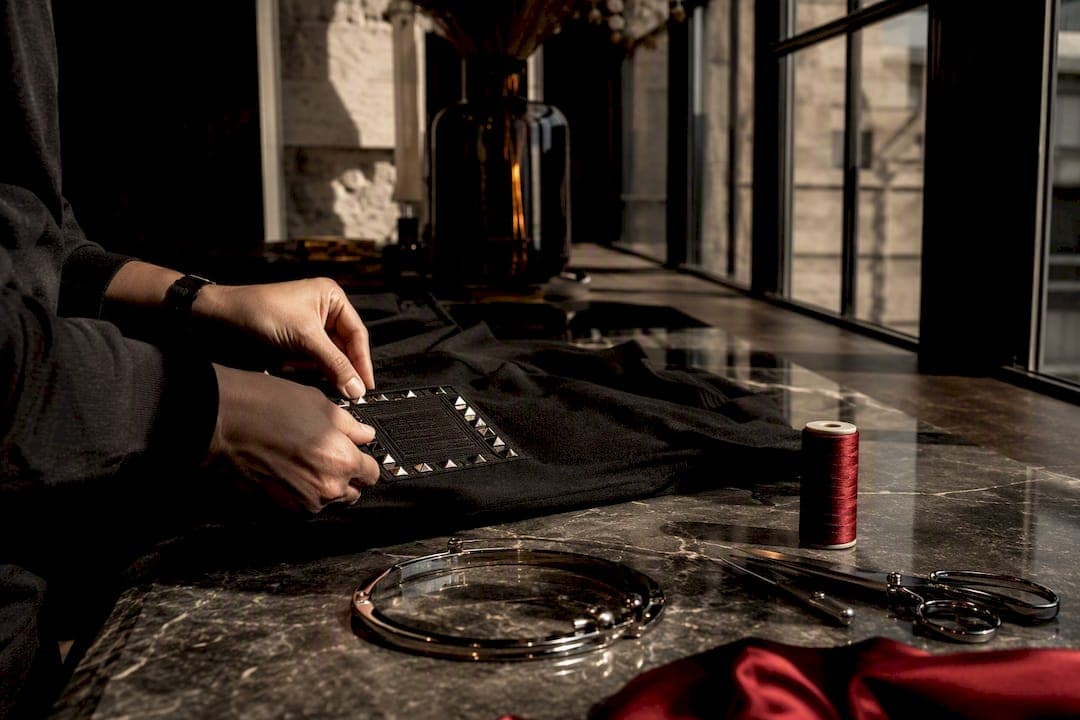
For a refined, durable monogram, fine embroidery or precision appliqué on heavyweight cotton is the method worth commissioning. It holds its edge through years of wear, unlike screen print, which cracks and fades. Maison Jeeyodee builds every piece around this principle, hand-finishing garments in Italy rather than mass-producing them. Before commissioning your own, decide on method and fabric together. They cannot be chosen separately.
TL;DR:
- Embroidery and appliqué provide the longest-lasting monograms, especially on heavyweight fleece, with embroidery lasting through hundreds of washes.
- Monogram placement should be subtle, such as on the side of the hood or interior label, and size should be proportionate to avoid overstatement.
- The fabric's density, fiber composition, and knit structure critically influence how well a monogram looks and holds over time.
- Bespoke monogram commissions in heavyweight cotton with hand-finishing cost more upfront but guarantee uniqueness and durability.
- Choosing a skilled technician who works with the specific fabric type is essential to avoid puckering, misalignment, or premature wear.
Table of Contents
- Monogramma su felpa: which method actually lasts?
- Where should a monogram sit, and how large should it be?
- What fabric and construction affect the finished monogram?
- How much does a bespoke monogram cost, and how long does it take?
- Maison Jeeyodee's approach to a monogrammed piece
- How do you care for a monogrammed sweatshirt over time?
- How do you measure and specify monogram dimensions correctly?
- How do you choose the right technician for a monogram?
- What mistakes should you avoid when ordering a monogram?
- Which monogramming method costs the most, and why?
- Maison perspective: why restraint, provenance and hand-finishing matter
- Commission your bespoke monogrammed sweatshirt with Maison Jeeyodee
- Sources
- FAQ
Monogramma su felpa: which method actually lasts?
Ask any atelier and they will tell you the same thing: the method you choose determines whether your monogram ages like a signature or fades like a sticker. There are five broad approaches, and each behaves differently on a garment you intend to keep.
Machine embroidery stitches thread directly into the fabric using a digitised pattern, producing a raised, textured mark that survives hundreds of washes. Hand embroidery achieves the same permanence with more irregularity and warmth, prized on rare or one-off commissions. Screen printing presses ink through a stencil, fast and cheap for bold colour, but it sits on the surface and eventually cracks. Direct-to-garment printing works well for photographic detail on lightweight jersey but struggles on thick fleece, where the nap distorts fine lines. Appliqué sews a separate fabric patch onto the garment, giving a layered, tactile monogram that reads as couture rather than merchandise.
- Embroidery: highest longevity, premium feel, moderate cost
- Appliqué: distinctive texture, strong on heavyweight cotton, higher labour cost
- Screen print: lowest cost, shortest lifespan, poor on thick fleece
- Direct-to-garment: best for detail, weakest on fleece
Heavyweight fleece, of the kind Jeeyodee favours in its 500 gsm constructions, holds embroidery and appliqué beautifully because the density of the knit gives thread somewhere to anchor. Lightweight jerseys tend to pucker under embroidery unless properly stabilised, which is why suppliers such as Contrado offer print as the more forgiving option on thinner cloth.
Pro Tip: If you are choosing between embroidery and appliqué for a single bespoke piece, ask to see both on a swatch of the exact fabric weight you intend to order. The way thread catches light on 500 gsm cotton looks nothing like it does on a lighter 280 gsm jersey.
Where should a monogram sit, and how large should it be?
Restraint is what separates a monogram that reads as heritage from one that reads as merchandise. Designers consistently favour small, well-placed marks over anything shouted across the chest, and a maison label is built on that same conviction.
The chest remains the most common placement, but also the most exposed to overstatement. The cuff, hem, side of hood, or an interior neck label offer quieter alternatives that reward a closer look rather than demanding one from across a room.
- Chest, centred or off-centre: visible, best kept small and understated
- Cuff or hem: subtle, ideal for single-initial marks
- Side of hood: discreet, a signature move for those who dislike overt branding
- Interior neck label: hidden entirely, revealed only to the wearer
Scale and letterform matter as much as position. A single initial in fine serif thread carries more weight than three stacked letters in a bold sans. Thread colour should sit close to the fabric's own tone for true discretion, or in deep contrast (deep red against black, for instance) when a deliberate statement is wanted.
Pro Tip: Reserve the loudest placement for the piece you want people to talk about, and the quietest for the piece you want to keep for yourself.
What fabric and construction affect the finished monogram?
A monogram is only as good as what it sits on. Gsm (grams per square metre) measures fabric density, and it dictates whether stitching sits proud and crisp or sinks into a limp, thin knit. Fibre composition matters just as much: heavyweight cotton holds a needle's tension far better than a cotton-polyester blend prone to stretching out of shape.
Knit structure changes the outcome too. Loopback jersey is light and breathable but offers little resistance to dense stitching. French terry sits in the middle, workable for smaller monograms. Polar fleece and heavyweight brushed cotton, the base of most premium hoodies, give embroidery a stable, forgiving surface.
- Backing or stabiliser prevents puckering during stitching and should always sit behind the monogram area
- Rib panels at the cuff and hem resist embroidery and are usually avoided as placement zones
- Seams near the intended monogram site can distort a design mid-stitch if not planned around in advance
Skilled embroiderers plan the stabiliser and hoop tension before a single stitch is laid, which is precisely why heavy fleece rewards experience over speed.
How much does a bespoke monogram cost, and how long does it take?
Expect two very different price structures depending on volume. A single bespoke piece, hand-finished and monogrammed to order, commands premium pricing because it demands the atelier's full attention from cutting to final stitch. Small-batch runs of six or more bring the per-unit cost down, since setup time for stabilisers and thread colour is spread across several garments.
Minimums exist for good reason. Professional embroiderers commonly require runs of around six pieces for embroidery on heavy fleece, because the backing and stitch calibration needed to avoid puckering only becomes cost-effective at that scale. Below that, hand-finishing a single piece is possible, but it sits in a different pricing tier entirely.
- Deposit and brief: a deposit secures the commission and locks in fabric, placement and thread colour
- Stitch sample: request a swatch showing the exact monogram on the exact fabric before full production
- Colour proof: confirm thread and fabric tone under natural light, not just screen colour
- Placement mock-up: see the monogram positioned on the garment itself, not a flat template
- Final approval and production: once every proof is signed off, the piece moves to the floor
Custom Ink's design process illustrates how digital proofing has become standard practice across the industry, even before physical samples are cut.
Maison Jeeyodee's approach to a monogrammed piece
Jeeyodee does not treat a monogram as decoration. It treats the signature within a garment it as a already conceived as a singular object: heavyweight cotton, an Egyptian silk lining inside the hood, and Italian cone studs aligned by hand rather than machine.
Every piece is hand-finished in Italy and individually numbered, which means no two garments carrying the maison's mark are identical, even within the same drop.
- Placement favours the side of the hood, an interior label, or a single restrained initial rather than a chest-wide statement
- Each drop is repeated produced once and never, so the monogram becomes part of a piece that cannot be replicated
- Commissioning a bespoke variant requires a 50% deposit, with fit and finish notes agreed privately before work begins
Roughly one in three hoodies sold globally traces its design lineage back to 1930s workwear, which makes the contrast sharper: Jeeyodee takes that utilitarian origin and rebuilds it as something meant to be kept, numbered, and passed down rather than replaced next season.
How do you care for a monogrammed sweatshirt over time?
Care determines whether a monogram outlives the garment or fails before it does. Wash silk-lined pieces on a cold or gentle cycle, using a mild detergent free of optical brighteners, which dull both fabric colour and thread tone over repeated washes.
Never tumble dry a silk-lined hood. Heat breaks down silk fibres and can shrink the lining out of alignment with the outer shell, leaving a garment that no longer sits the way it was cut to sit.
- Wash cold, inside out, to protect embroidery and print alike
- Air dry flat, away from direct heat or sunlight
- Snip loose threads with small scissors rather than pulling them, which can unravel a whole stitch line
- Return to the atelier for repair if a monogram lifts or a seam shifts, rather than attempting a home fix
- Store folded, not hung, to protect heavyweight cotton from stretching at the shoulders
A garment built to last decades deserves handling that matches its construction, not the shortcuts suited to fast fashion.
How do you measure and specify monogram dimensions correctly?
Getting the size right before production begins saves both money and disappointment, since resizing after stitching is rarely possible without starting again. Start by measuring the intended placement area on the actual garment, not a photograph or a size chart, because fabric drape changes how much space genuinely reads as balanced.
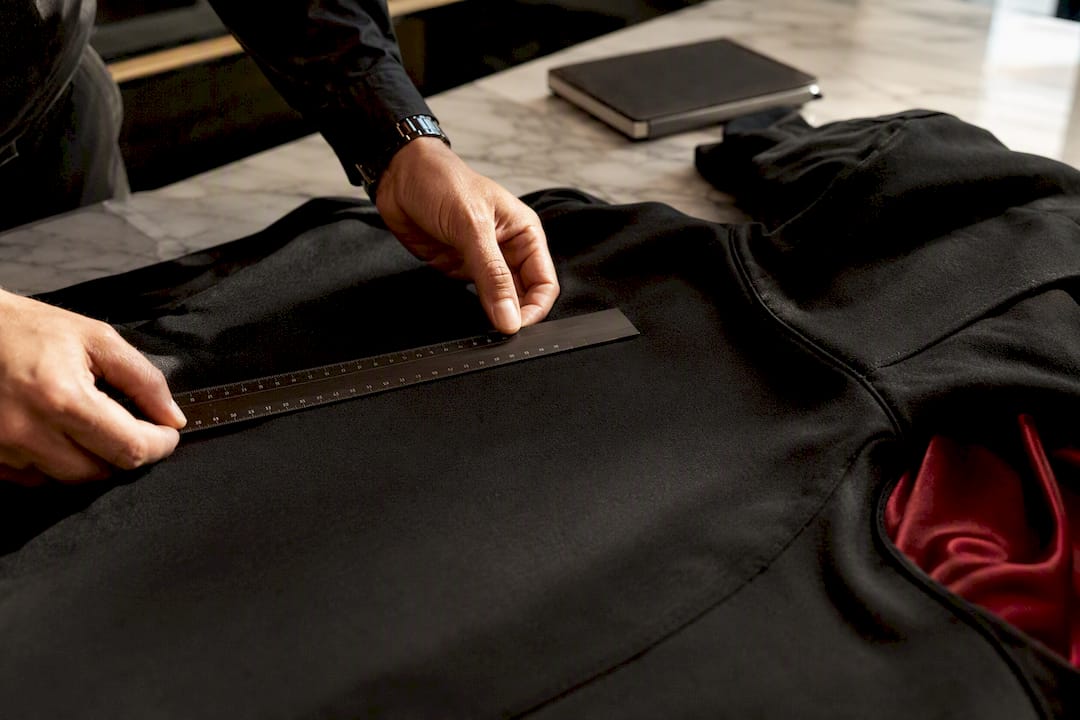
For a chest monogram, most ateliers work within a height range of roughly 2 to 4 centimetres for a single initial, and closer to 6 to 10 centimetres in width for a three-letter stacked monogram. Cuff and hem placements sit smaller again, typically under 2 centimetres, since the eye reads them at close range rather than across a room.
Specify dimensions in writing, not verbally, and always alongside the garment's exact size, since a monogram proportioned correctly on a medium will look cramped or lost on an extra-large. Request the measurement be shown on the stitch sample itself, positioned exactly where it will sit on the finished piece, rather than on a flat swatch that tells you nothing about how the fabric will fold or move around it.
Pro Tip: Bring a garment you already own and love the fit of. Measuring against a real reference point removes almost all the guesswork from specifying scale.
How do you choose the right technician for a monogram?
The technician matters more than the machine. Ask to see prior work on the same fabric weight and fibre you intend to use, because a portfolio full of thin cotton tees tells you very little about how someone handles heavyweight fleece or silk-lined interiors.
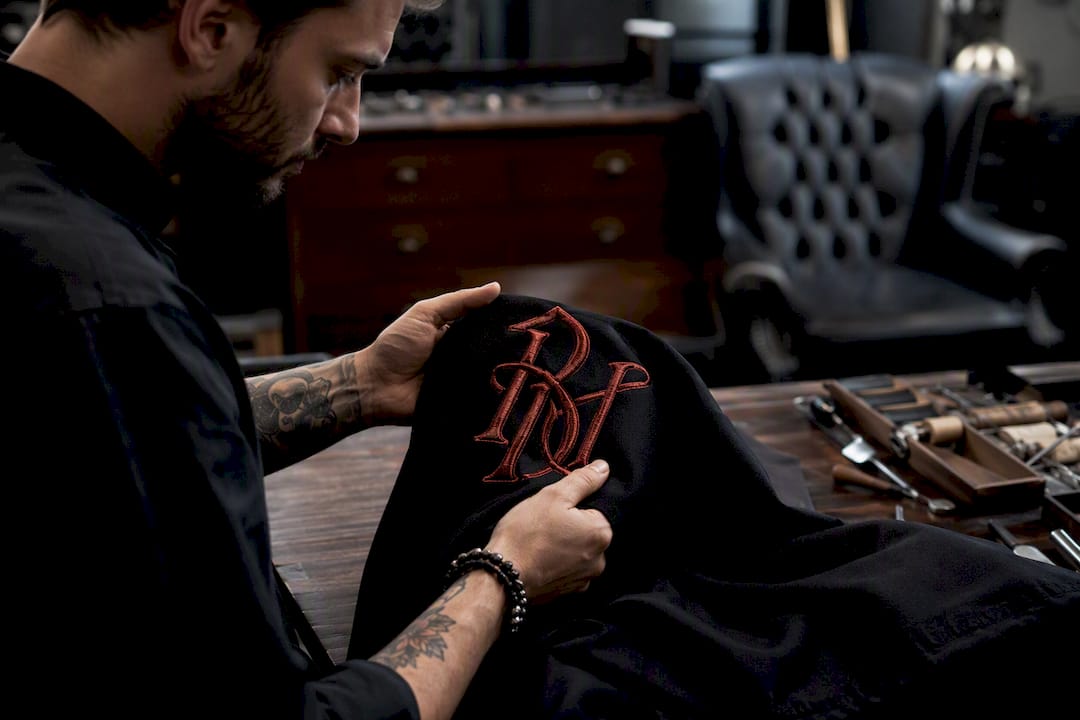
A capable embroiderer will ask questions before quoting: fabric composition, placement, letter count, and whether the garment has seams or rib panels near the intended site. If a technician quotes a price without asking any of this, treat that as a warning sign rather than efficiency.
For appliqué, check the edge finish closely. A well-executed patch has a clean, tight satin stitch border with no fraying visible underneath. For hand embroidery, ask whether the technician works from a hoop or free-hand, since free-hand work on heavy fleece requires considerably more skill to keep tension even.
Reputation built on repeat bespoke work, rather than volume printing, is usually the clearest signal of quality. A technician who regularly turns away rushed orders on heavy fabric is one who understands why the minimums and lead times exist in the first place.
What mistakes should you avoid when ordering a monogram?
The most common error is choosing the decoration method before choosing the fabric, when it should always be the other way round. A method that looks superb on a swatch can fail entirely once applied to the actual weight and weave of the finished garment.
Skipping the stitch sample is the second frequent mistake. A proof costs little against the price of an entire run stitched incorrectly, yet buyers under time pressure often approve designs from a screen mockup alone.
Oversized monograms are a recurring misjudgement too. A design that looks proportionate on a flat digital template often reads as heavy-handed once stitched onto a curved chest or a moving cuff. Equally, choosing thread colour under artificial light and then discovering a mismatch in daylight is an avoidable and common frustration.
Finally, many buyers underestimate lead time, particularly for embroidery on heavyweight fleece, and then rush a technician into skipping proofing stages to meet a deadline. That rush is exactly where puckering, misalignment and colour mismatch tend to happen.
Which monogramming method costs the most, and why?
Price follows complexity and labour time, not simply material cost. Screen printing sits at the lowest price point because setup is quick and a single stencil can run across dozens of garments in minutes.
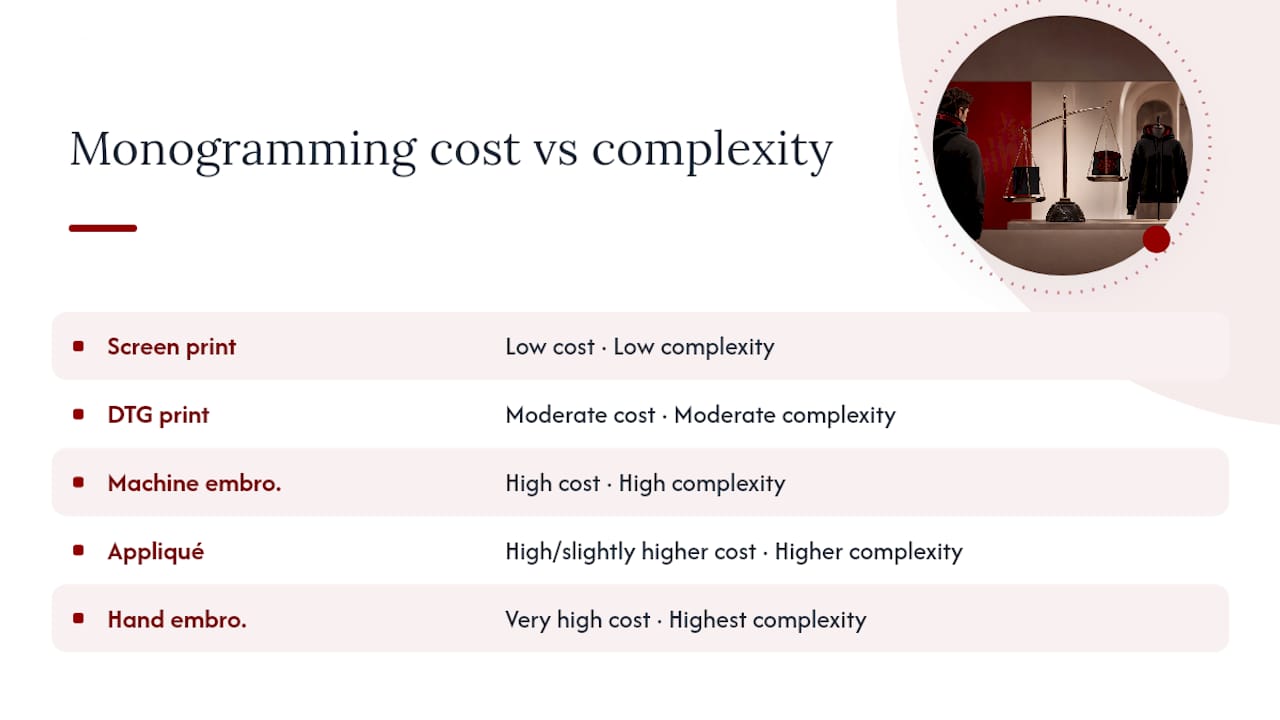
Direct-to-garment printing costs slightly more, since it demands specific software calibration for each design, though it remains firmly in the budget tier compared with textile-based methods.
Machine embroidery costs more again, reflecting digitising time, thread cost and the machine hours needed to stitch a dense design cleanly. Appliqué typically sits at a similar or slightly higher price than embroidery, since it requires cutting, positioning and securing a separate fabric patch by hand before the final stitch border is applied.
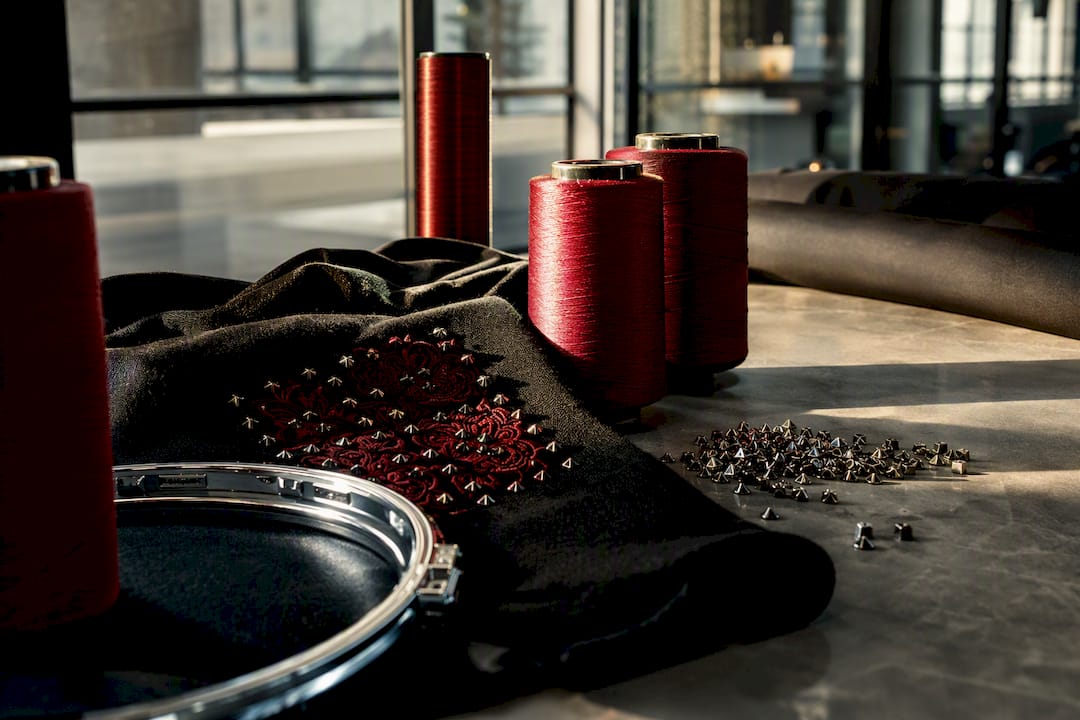
Hand embroidery commands the highest price of all, because it cannot be scaled by machine speed. Every stitch is placed individually, which is precisely why it remains the choice for a single, irreplaceable bespoke piece rather than a production run. For a buyer weighing cost against permanence, the calculation is straightforward: printed decoration costs less upfront and less over the garment's life, because it rarely survives long enough to matter.
Maison perspective: why restraint, provenance and hand-finishing matter
We believe a monogram should be earned, not shouted. Every drop we release is produced once, numbered, and never repeated, because permanence only means something when scarcity is real. A well-placed initial, hidden in a hood lining or stitched quietly at a cuff, does more work than a name splashed across a chest ever could. That restraint is not modesty. It is confidence that the fabric, the finishing, and the story behind the piece will speak for themselves long after the trend that inspired it has passed.
— Jeeyodee
Commission your bespoke monogrammed sweatshirt with Maison Jeeyodee
Jeeyodee is the route to a monogram that outlasts every method compared above, because the garment beneath it is never mass-produced to begin with. Bespoke commissions require a 50% deposit to secure fit, fabric and placement notes, agreed privately with the atelier before a single stitch begins.
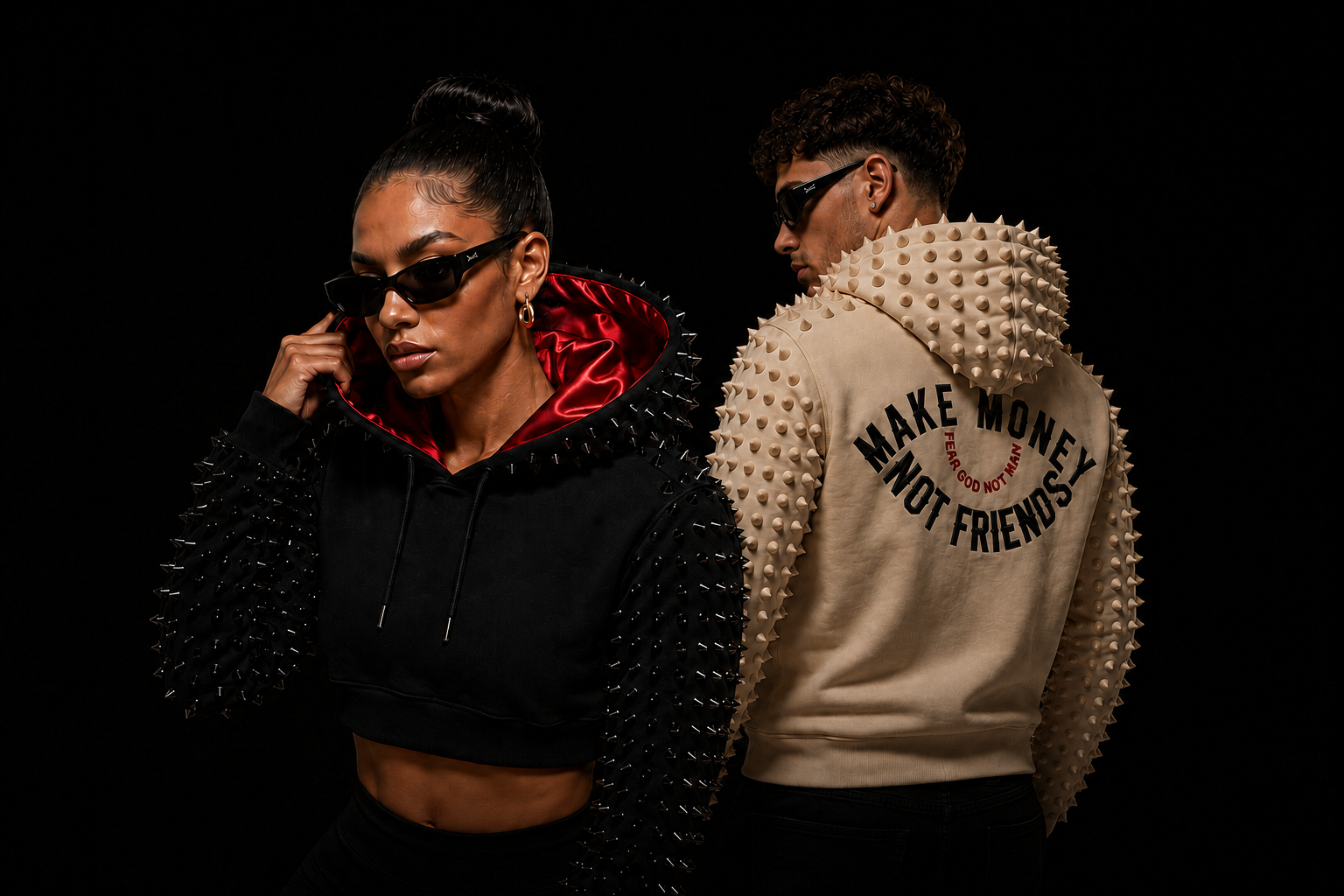
Every piece leaves Italy hand-finished, individually numbered, and produced only once, which means your monogram sits on a garment that cannot be reordered or replicated by anyone else. If you are considering a matching commission for two, Jeeyodee's approach to paired pieces offers a useful starting point for coordinating placement and thread colour across both garments. For those exploring wider styling options, Jeeyodee's guide to luxury streetwear outfits shows how a discreet monogram sits within a broader wardrobe. Begin your commission at Jeeyodee and set the timeline, fabric and placement in motion.
Sources
For terminology and history, see Wikipedia's entry on the hoodie. For fabric variety and print workflows, see Contrado's custom hoodie service. For hoodie collections showing placement variety, see Qahwat Al'ard's range.
- Hoodie — Wikipedia
- Custom hoodies | Design your own personalised hoodies — Contrado
- Custom sweatshirts & hoodies — RushOrderTees
- Handcrafted hoodie for collectors: Made in Italy — JEEYODEE
FAQ
How do you make a monogram on a sweatshirt?
A monogram is typically applied through machine or hand embroidery, screen print, direct-to-garment print, or appliqué, with embroidery and appliqué holding up best on heavyweight fleece over time.
What are zip-up hoodies called in English?
A hoodie with a full-length front zip is called a zip-up hoodie; a pullover version without a zip is simply called a hoodie.
What is the history of the hoodie?
The hoodie evolved from 1930s athletic and workwear garments into a mainstream fashion staple, a lineage that Wikipedia traces in detail.
How do you say "felpa con cappuccio" in English?
It translates directly as "hoodie", or "hooded sweatshirt" when a more formal or descriptive term is needed.
Does Maison Jeeyodee offer monogramming on its garments?
Jeeyodee favours restrained, hand-finished placements such as a side-of-hood mark or an interior neck label, executed as part of its bespoke commissioning process rather than as an add-on service.