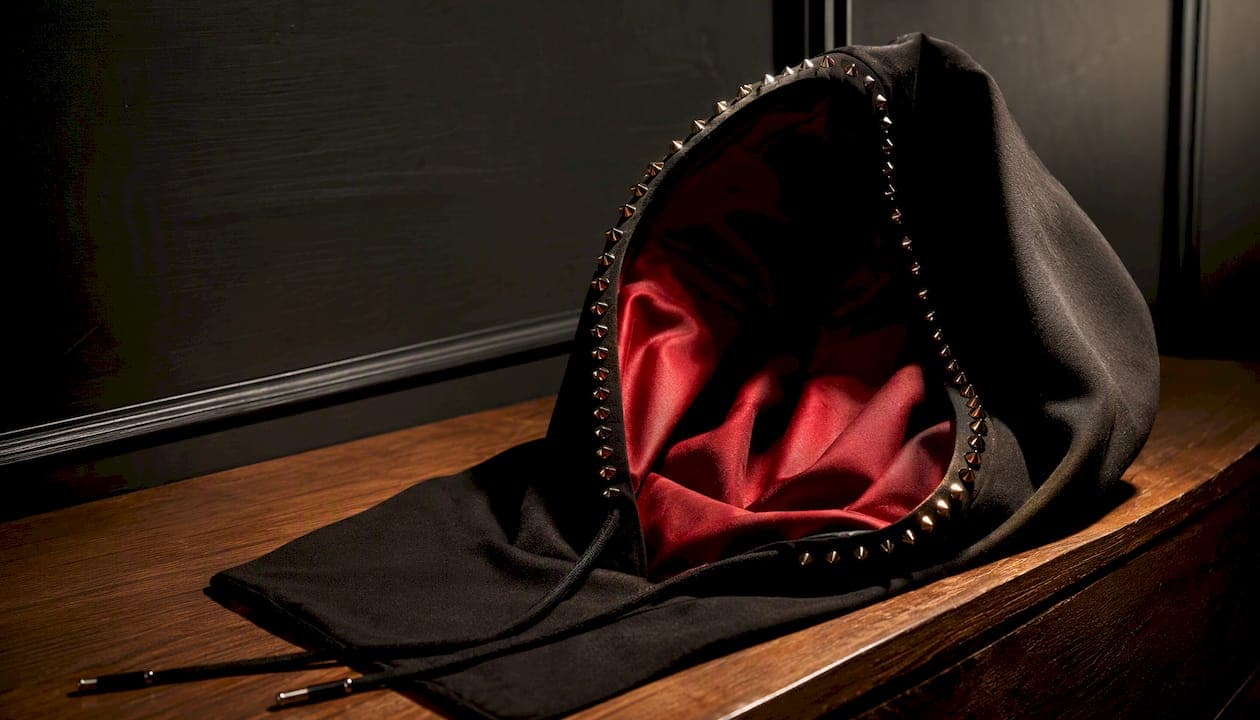
A neoprene hood, in the context of this guide, is a handcrafted, Italian-made hooded garment produced as a strictly limited, individually numbered piece. It carries an Egyptian silk lining, artisanal hardware and documented provenance from the atelier that made it. The term has been adopted by independent luxury labels to describe a category of collectible hooded garments defined not by technical performance but by permanence: the conviction that a single, numbered object made by hand in Italy holds a different kind of value from anything produced at scale. Collectors pursue these pieces for three reasons above all others: provenance, rarity and the irreproducible quality of atelier finishing.
What follows is a collector's guide to understanding, evaluating and commissioning pieces in this category, with particular attention to materials, documentation and the buying process.
Key takeaways
A collectible luxury hood is defined by its provenance, material specification and the irreproducibility of its numbered edition — not by its price alone.
| Point | Details |
|---|---|
| Provenance is foundational | Demand a named atelier, serial number and materials ledger before any purchase. |
| Material specs matter precisely | Seek 400–500 GSM outer cloth and 19–25 momme Egyptian silk lining as minimum standards. |
| Natural rarity carries real value | A genuinely limited run increases functional, social and emotional perceived value. |
| Commission deposits are standard | Atelier bespoke commissions require a 50% deposit; budget production time in weeks to months. |
| Jeeyodee for numbered pieces | Maison Jeeyodee produces strictly limited, individually numbered hoods in Italy with Egyptian silk linings. |
Table of Contents
- What does a luxury neoprene hood actually mean for collectors?
- Why Italian provenance increases the value of a collectible hood
- What materials and specifications define a collectible hood?
- What artisanal signatures prove genuine handcraft?
- How are limited editions structured and what documentation should you receive?
- How do you buy or commission a numbered hood from an Italian atelier?
- How should you care for a silk-lined heavyweight hood?
- An authentication checklist for collectors
- Maison Jeeyodee's perspective on the hood as a collectible
- Acquiring or commissioning a numbered hood through Maison Jeeyodee
- Sources
- FAQ
What does a luxury neoprene hood actually mean for collectors?
The product is a heavyweight hooded garment, structured and substantial in hand, with a silk-lined hood and precisely placed artisanal hardware. It is produced in an Italian atelier, numbered at the point of completion and accompanied by documentation that ties the piece to its maker, date and materials. Each edition is released once and never reproduced.
The collector profile for this category is consistent. Buyers prioritise:
- Provenance — a traceable, documented origin from a named Italian atelier
- Rarity — a genuinely limited production run, not a marketing claim
- Material integrity — heavyweight outer cloth, Egyptian silk lining, premium metal hardware
- Atelier traceability — the ability to identify the artisan, the production date and the serial number
These are not casual fashion purchases. They are acquisitions made with the same deliberation one brings to any collectible object.
Why Italian provenance increases the value of a collectible hood
Italian provenance is not simply a label. Research into Italian craftsmanship narratives shows that luxury labels actively foreground handmade production phases — dyeing, cutting, stitching, finishing — to create perceived additional value. The 'Made in Italy' claim is not simply inherited; it is earned and re-created through documented craft at every stage.
Provenance documentation from a credible atelier should include the production location, the artisan's name or identifier, the serial number of the piece and a materials ledger confirming cloth origin and lining grade. According to San Rocco Italia, the 'Made in Italy' designation carries both legal and qualitative significance, and 80% of Italian luxury companies are family-owned workshops — a structural reality that shapes the intimacy and accountability of atelier production.
What materials and specifications define a collectible hood?
The material combination that distinguishes a collectible hood is precise: a heavyweight outer cloth, an Egyptian silk lining, hand-finished seams and premium metal hardware. Each element contributes to both the sensory experience and the long-term integrity of the piece.
The Jeeyodee satin lining guide details how silk quality — measured in momme — affects hand feel and longevity. For a hood lining, a minimum of 19 momme is advisable; finer weaves at 22–25 momme offer greater durability and a more pronounced drape.
| Specification | Recommended standard |
|---|---|
| Outer cloth weight | 400–500 GSM heavyweight cotton |
| Hood lining silk | 19–25 momme Egyptian silk |
| Seam thread | Bonded polyester or silk-core thread |
| Hardware metal | Solid brass or stainless steel, burnished finish |
| Stud type | Italian cone studs, hand-set and aligned |
For outer cloth, 500 GSM heavyweight options represent the upper register of structured luxury hoodies, offering the drape and longevity that collectors expect. When reviewing a listing, request the full textile label confirming GSM, fibre content, silk origin and the metal alloy used in hardware.
What artisanal signatures prove genuine handcraft?
Numbering and stamps are the most visible proof of atelier origin, but the physical evidence of handcraft is equally telling. Precisely aligned Italian cone studs, hand-inserted lining panels and seam character that varies slightly from piece to piece are decisive markers. A machine-produced garment cannot replicate the minor, intentional irregularities of hand-finishing.
A checklist of artisanal details to examine:
- Stitch character: slight variation in tension and spacing confirms hand-sewing
- Edge finishing: burnished or folded edges rather than raw or heat-sealed
- Lining insertion: silk panel aligned without puckering, hand-tacked at stress points
- Stud alignment: Italian cone studs set by hand, consistent in angle and depth
- Serial number: engraved, embossed or woven into a label — never printed on paper alone
For bespoke commissions, atelier options typically extend to interior embroidery, monogramming and custom lining choices. These additions become part of the provenance record and increase the piece's singularity.
Pro Tip: When reviewing close-up imagery of a potential acquisition, zoom to the stud bases and lining seams. Machine-set studs sit at identical angles; hand-set ones carry a fractional variation that is the surest sign of atelier work.
How are limited editions structured and what documentation should you receive?
A numbered Italian hood should carry explicit documentation tying the piece to its atelier, production date and maker. This is not optional for serious collectors; it is the foundation of resale value and authentication.
Empirical research confirms that natural rarity — actual limited production — increases perceived functional, social and emotional value for luxury objects. Virtual rarity, meaning a piece merely described as limited, affects only functional perception. The distinction matters: a real limited run, documented and numbered, carries a different weight from a marketing claim.
Drop releases and bespoke commissions differ in their documentation. A drop piece carries a certificate issued at the point of release, numbered against the edition total. A bespoke commission generates a more detailed provenance record, including the specification agreed with the client, the artisan's name and the production timeline.
| Document element | Drop release | Bespoke commission |
|---|---|---|
| Serial number | Yes, against edition total | Yes, unique to piece |
| Artisan name or identifier | Yes | Yes |
| Production date | Yes | Yes |
| Materials ledger | Summary | Full specification |
| Client specification record | No | Yes |
| Atelier location | Yes | Yes |
At the point of sale, verify that the serial number on the certificate matches the number on the garment, that the atelier name is consistent across all documents and that the materials ledger confirms the silk origin and cloth weight stated in the listing.
How do you buy or commission a numbered hood from an Italian atelier?
The essential sequence for acquiring a piece of this kind follows a clear path. Each stage has its own discipline.
- Enquiry — contact the atelier or maison directly, specifying whether you are interested in an existing drop or a bespoke commission.
- Specification — for bespoke work, agree the outer cloth weight, lining grade, hardware finish, numbering format and any personalisation (monogram, embroidery).
- Deposit — atelier commissions require a 50% deposit before production begins; this is standard practice and confirms the commission formally.
- Production — a fully bespoke, hand-made garment can take many dozens of hours to complete, with multiple fittings or review stages for remote clients.
- Final approval — review imagery or attend a fitting before the piece is finished and numbered.
- Delivery — insured, tracked shipping with climate-appropriate packaging; retain all provenance documents on receipt.
Pricing reflects materials, the degree of bespoke work, the edition size and the atelier's reputation. A smaller edition number within a run commands a premium. For Jeeyodee's current drops and commission availability, the atelier pages at jeeyodee.com hold current information.
How should you care for a silk-lined heavyweight hood?
Proper storage and gentle maintenance are not afterthoughts; they are part of preserving both the material integrity and the provenance of the piece.
- Do store in a breathable garment bag, away from direct light and humidity
- Do use a padded hanger to maintain the hood's structure
- Do engage a professional silk specialist for any cleaning — never attempt home washing
- Do not machine wash or tumble dry under any circumstances
- Do not use steam directly on silk lining panels
- Do not fold the hood tightly; rolling or hanging is preferable for the outer cloth
For repairs, return the piece to the original atelier where possible. Retain all provenance documents during any restoration and request a repair record to add to the provenance file. For storage over extended periods, climate-controlled conditions and insured transit are advisable.
An authentication checklist for collectors
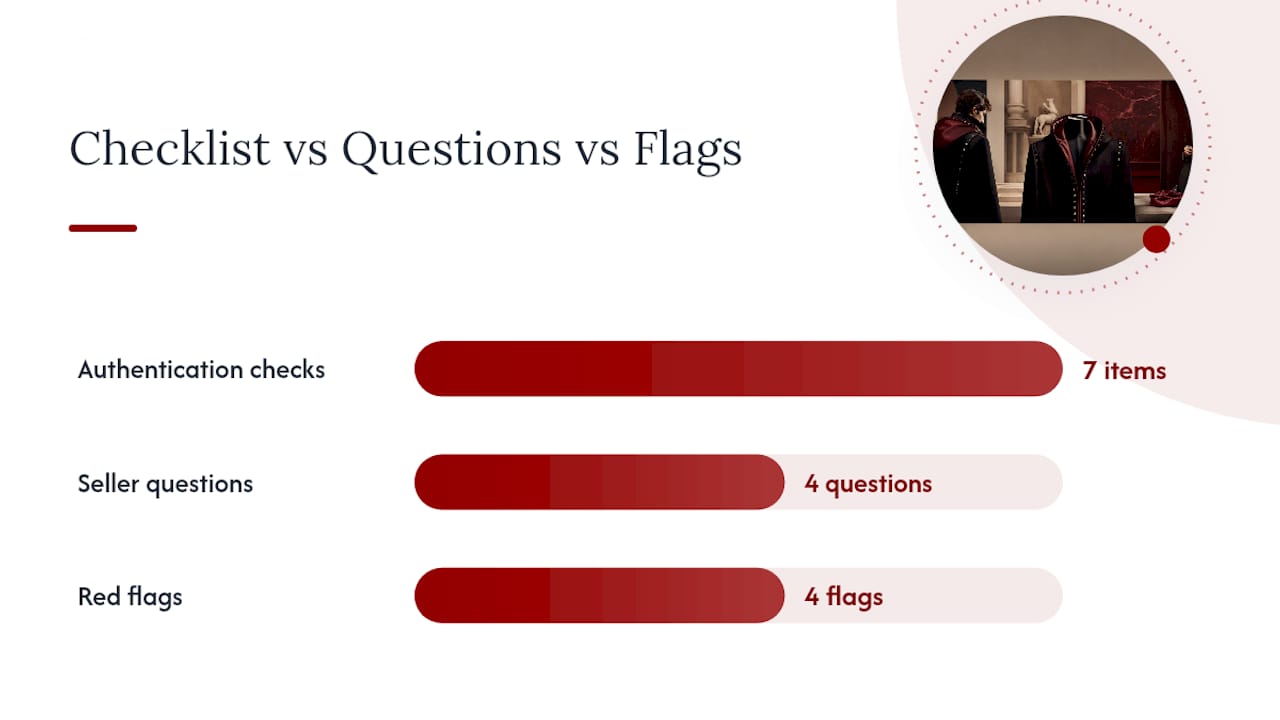
Before committing to a purchase, seven checks should be completed without exception:
- Made in Italy claim — confirmed on the label and in the provenance certificate, not stated only in marketing copy
- Serial number — present on both the garment and the certificate, with numbers matching exactly
- Artisan name or identifier — named in the documentation, not described generically
- Material specifications — cloth GSM and silk momme confirmed in writing
- Lining origin — Egyptian silk origin stated explicitly, not simply 'silk lining'
- Visible handcraft signs — stud alignment, stitch character and edge finishing examined in close-up imagery
- Complete documentation — certificate, materials ledger and, for bespoke pieces, the specification record
Questions to ask the seller or atelier: What is the edition total? Can you provide the artisan's name? Is the silk origin documented? What is the atelier's repair and restoration policy?
Red flags include opaque provenance with no named atelier, inconsistent stitch character suggesting mixed production methods, missing or photocopied certificates and hardware that sits uniformly — a sign of machine setting rather than hand placement.
Maison Jeeyodee's perspective on the hood as a collectible
We make numbered, silk-lined hoods because we believe a garment should be a permanent chapter, not a seasonal offering. Every piece that leaves our atelier in Italy carries a serial number, an Egyptian silk interior and hardware set by hand — not because these details are expected, but because they are the only honest way to make something worth keeping. Our scarcity policy is absolute: each drop is produced once and never reproduced. That discipline is the foundation of everything we offer. For those who want to understand the materials and process in greater depth, our atelier journal documents the craft behind each piece.
Acquiring or commissioning a numbered hood through Maison Jeeyodee
Jeeyodee offers strictly limited drops and private bespoke commissions, each produced in Italy with Egyptian silk linings and hand-set Italian cone studs. No edition is repeated.
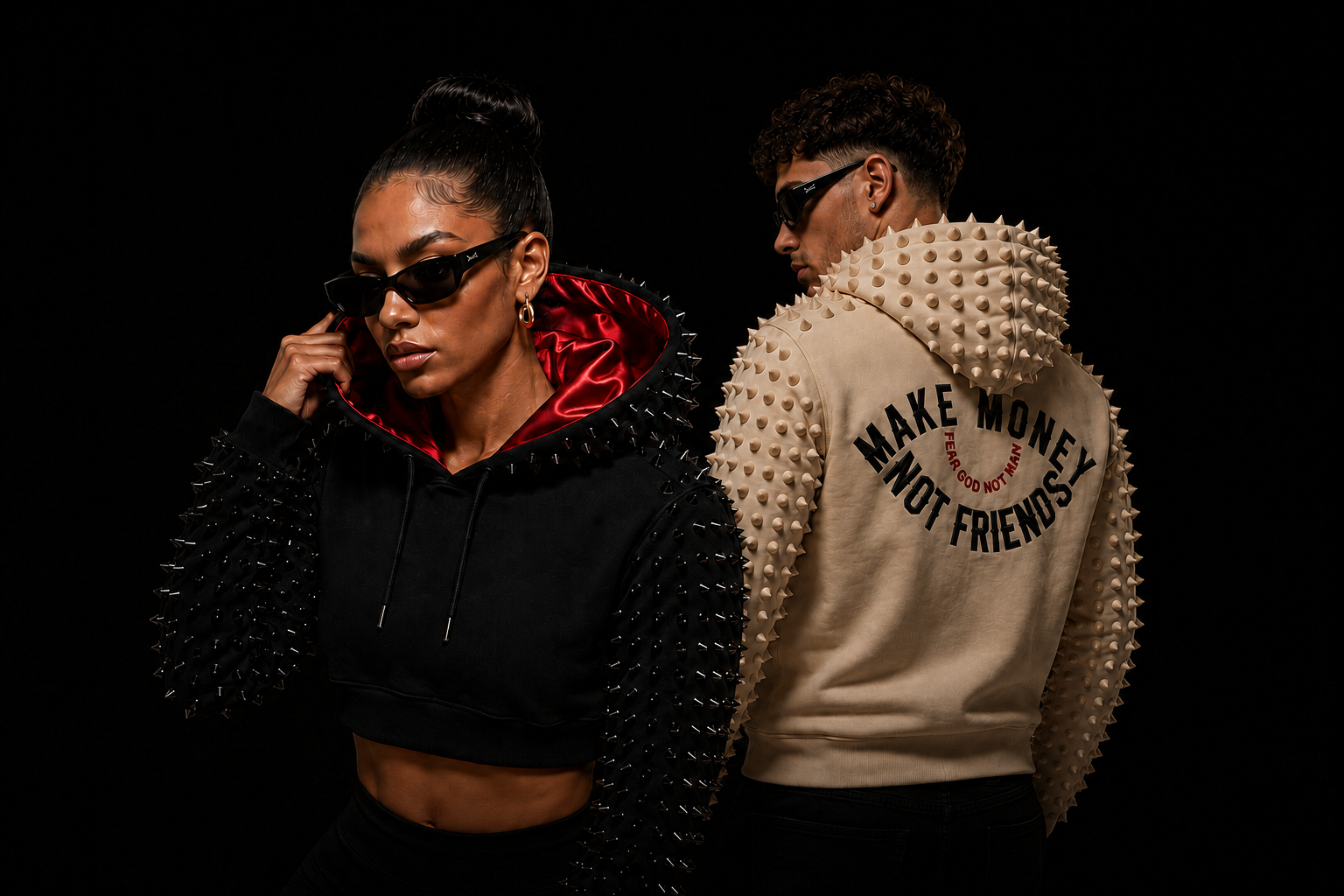
For bespoke commissions, the process begins with a private enquiry. Timelines reflect the hand-finishing involved — weeks rather than days. Drop releases are available while numbered stock remains; once an edition closes, it does not reopen.
To view current drops or begin a private commission, visit Jeeyodee's atelier pages. For immediate availability, the Jeeyodee store holds current numbered pieces.
Sources
These sources informed the guide and are recommended for collectors who wish to verify claims or read further:
- Narratives of Italian craftsmanship and the luxury fashion industry
- Discover the meaning of handcrafted luxury in Italian fashion – San Rocco Italia
- How rarity and exclusivity influence types of perceived value for luxury
- Bespoke produced entirely by hand - Liverano&Liverano
Citations are selective and chosen for direct relevance to collectors evaluating Italian-made luxury hooded garments.
FAQ
What is a luxury neoprene hood in the collector's sense?
A luxury neoprene hood is a handcrafted, individually numbered hooded garment made in an Italian atelier, with an Egyptian silk lining and artisanal hardware. It is produced in a strictly limited edition and accompanied by provenance documentation.
What GSM should a collectible hood's outer cloth be?
A heavyweight collectible hood typically uses 400–500 GSM cotton. At 500 GSM, the cloth offers the structured drape and long-term durability that collectors expect from a permanent piece.
How much deposit is required for a bespoke atelier commission?
What documents should accompany a numbered Italian hood?
A numbered piece should include a provenance certificate with the serial number, artisan name or identifier, production date, atelier location and a materials ledger confirming cloth weight and silk origin.
How do you verify that Italian cone studs are hand-set?
Hand-set Italian cone studs carry a fractional variation in angle and depth from one to the next. Uniformly identical stud placement across a garment is a reliable indicator of machine setting rather than atelier handwork.