TL;DR:
- A red hood lining is a deliberate design element in fashion and a formal identifier in academic regalia. Choosing the correct material, shade, and construction is essential, with Egyptian silk satin being the premium choice for longevity and appearance. Confirm institutional specifications with the university before ordering, especially when commissioning bespoke pieces from ateliers.
A red hood lining is the coloured interior of a hood. In fashion, it is a deliberate material and design choice that defines the character of a garment from the inside out. In academic regalia, it is a formalised institutional identifier, where the precise shade, pattern, and fabric are determined by the conferring university, not personal preference.
- Designers and bespoke clients: your next step is to select the correct fabric grade, confirm colourfastness requirements, and review care protocols before commissioning. The material comparison below will guide you.
- Graduates and administrators: your next step is to contact your university's graduation office or authorised regalia supplier to confirm the exact lining pattern, chevron arrangement, and approved shade. Do not rely on generic colour charts.
Table of Contents
- What materials work best for a red hood lining?
- How do red linings work in UK academic regalia?
- How to confirm and order the correct red lining in the UK
- What to expect from a luxury atelier commissioning a red-lined hood
- Key takeaways
- Why a red lining is never merely decorative
- Commissioning a red-lined hood through Maison Jeeyodee
- Useful sources
- FAQ
What materials work best for a red hood lining?
The interior of a hood carries more structural and visual responsibility than most people expect. A red lining must hold its colour under ceremony lighting, resist bleeding onto the shell fabric, and drape cleanly without pulling at the seams. The material you choose determines all three.
Egyptian silk satin is the standard of excellence. Its tight weave produces a luminous, deep crimson that reads as intentional rather than decorative, and its natural fibre structure resists static and pilling over time. It requires professional cleaning and careful storage, but for a garment meant to endure, that discipline is appropriate. Jeeyodee's limited drops pair heavyweight cotton exteriors with deep red silk interiors, a combination that demonstrates precisely what Egyptian silk achieves at the atelier level.
Washable polyester satin suits commercial regalia and everyday outerwear where repeated laundering is unavoidable. It is colourfast when dyed correctly, holds its sheen through multiple washes, and costs considerably less than silk. The trade-off is tactile: polyester lacks the weight and warmth of natural fibre, and under strong lighting it can appear flat rather than luminous.
Cotton and cotton-blend linings offer breathability and a softer hand, making them well-suited to heavyweight hoodies and casual outerwear where comfort takes precedence over ceremony. Flannel and velvet linings appear in theatrical and cosplay contexts, where texture and warmth matter more than formality. Suppliers commonly offer satin, cotton, velvet, and flannel as standard lining options, each with distinct seasonal suitability.
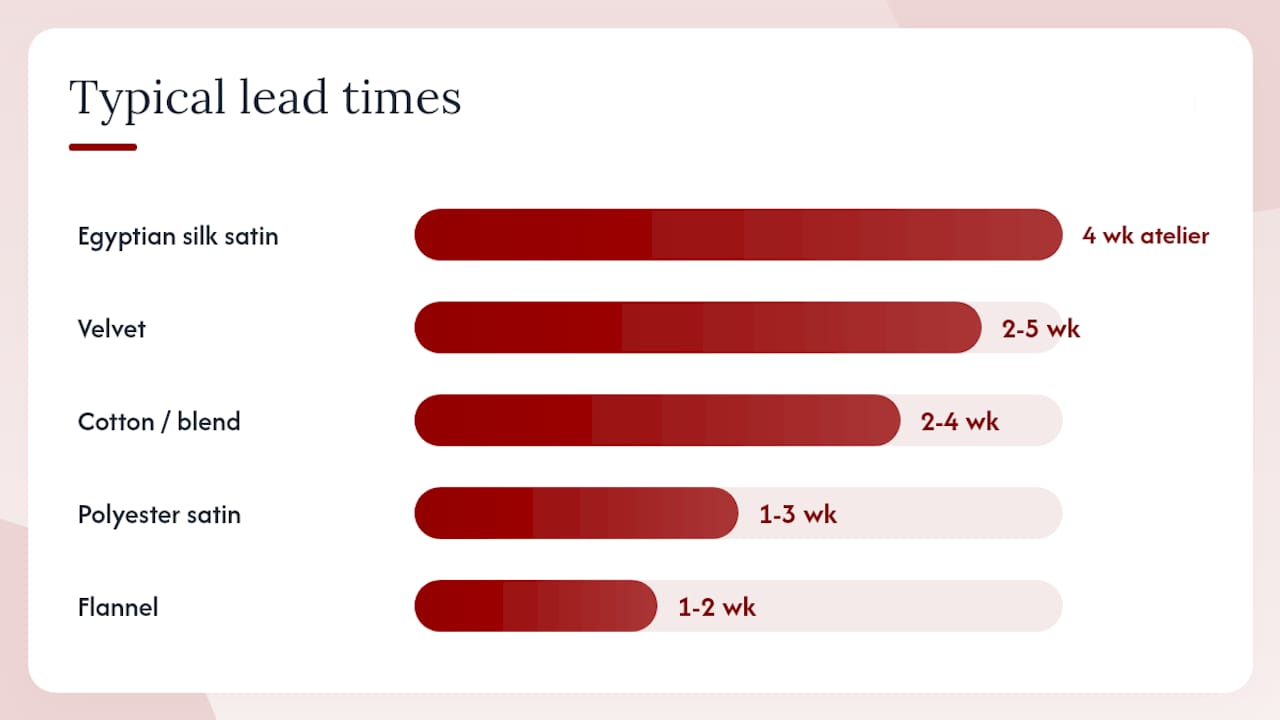
| Material | Durability & care | Drape | Cost band | Typical lead time |
|---|---|---|---|---|
| Egyptian silk satin | Dry-clean only; exceptional longevity | Fluid, luminous | Premium | 4 weeks (atelier) |
| Polyester satin | Machine washable; good colourfastness | Moderate sheen | Budget–mid | 1–3 weeks |
| Cotton / cotton blend | Machine washable; may fade over time | Soft, relaxed | Mid | 2–4 weeks |
| Velvet | Dry-clean preferred; prone to crushing | Structured, rich | Mid–premium | 2–5 weeks |
| Flannel | Machine washable; warm | Soft, matte | Budget | 1–2 weeks |
Construction matters as much as material. A bagged lining, where the shell and lining are sewn right-sides together and turned through, produces the cleanest finish and conceals all raw edges. Flat-stitching is faster but leaves visible seam allowances inside. For a red lining specifically, interlining between shell and lining prevents colour show-through on pale or mid-tone exteriors.
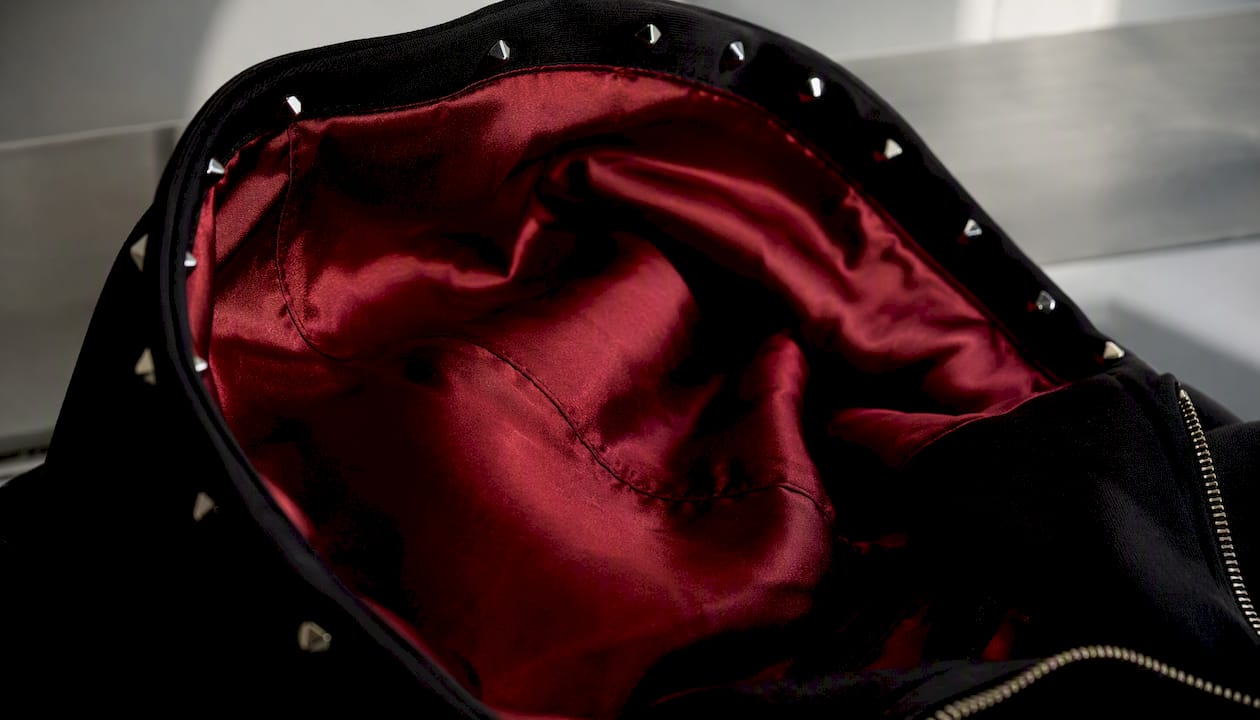
Colour bleeding is the most common failure point. Red dyes, particularly those in the crimson-to-scarlet range, are among the most prone to migration when wet. Pre-washing the lining fabric before construction, and requesting a professional dye-set finish at the atelier stage, significantly reduces this risk.
Pro Tip: Before final cutting, test a swatch of your chosen red lining fabric against the shell fabric when damp. If any colour transfers, request a dye-mordant treatment or switch to a higher-grade dye lot before the lining is cut.
How do red linings work in UK academic regalia?
Academic dress in the United Kingdom operates as a formal symbolic system. Every element of a hood carries meaning, and the red lining is no exception.
The anatomy of an academic hood
A hood has four principal components: the shell (the outer fabric, usually black or a faculty colour), the velvet edge (the trim that frames the hood's opening), the satin field (the large interior panel visible when the hood is worn), and the chevron (a contrasting band or stripe within the satin field). The satin field and chevron represent the colours of the conferring university; the velvet edge denotes the wearer's academic discipline, following conventions established by bodies such as the Burgon Society in the UK.
The satin lining displays the institution's colours while the velvet trim indicates the academic discipline. A red satin field, therefore, signals that the conferring institution uses red as one of its primary colours. The chevron may introduce a second institutional colour, and some universities specify multiple chevrons or a split field to distinguish between faculties or degree levels.
Cardiff University as a UK exemplar
Cardiff University publishes specific hood lining examples that illustrate how a red lining functions within a formal specification: the precise shade of Cardiff red, the lining material, and the arrangement of any secondary colours are all documented on the university's official graduation pages. This is the standard of specificity graduates should expect from their own institution.
| Dimension | Standard regalia hood | Bespoke / luxury hood |
|---|---|---|
| Material | Polyester satin (field), wool/polyester shell | Egyptian silk satin (field), heavyweight cotton shell |
| Purpose | Institutional / ceremonial | Decorative / fashion or ceremonial commission |
| Colour presentation | Single field, single or multiple chevrons | Single field, split field, or custom chevron |
| Durability & care | Machine washable; moderate longevity | Dry-clean; exceptional longevity |
| Order / lead time & bespoke options | 1–3 weeks; limited customisation | 4 weeks; full bespoke specification |
A critical point: graduates must confirm specific lining patterns and shades directly with their university. Generic supplier charts show common configurations, but the width of a chevron, the division of a split field, and the precise shade of red all vary by institution. Any deviation from the authorised specification is technically incorrect and may be refused at formal ceremonies.
- Confirm the official colour name and Pantone or fabric reference with the graduation office.
- Request the chevron arrangement in writing, including width and position.
- Ask whether the velvet edge colour is fixed by faculty or by degree level.
- Save all confirmation emails and order forms before placing any order.
How to confirm and order the correct red lining in the UK
The ordering process for an academic hood is more precise than most graduates anticipate. Follow this sequence to avoid errors.
- Cross-reference with an authorised supplier. UK universities publish gown and hood ordering guidance that specifies which suppliers are authorised and what the hire or purchase process involves. Use only those suppliers for ceremonial hoods.
- Request a physical swatch or colour proof. Commercial suppliers allow selection of field and chevron colours and list additional charges for specific shades or non-standard chevrons. Confirm the swatch against the university's reference before approving production.
On cost: off-the-shelf academic hoods with a polyester satin lining sit at the budget end of the market. Custom satin linings with non-standard colours carry a surcharge, as noted by commercial ordering platforms. Fully bespoke hand-lined hoods from an atelier represent the premium tier. Jeeyodee's atelier commissions require a 50% deposit, with final pricing agreed privately based on fabric selection and specification complexity.
What to expect from a luxury atelier commissioning a red-lined hood
The difference between a commercial regalia hood and an atelier-commissioned piece is not merely material. It is a difference in process, in permanence, and in the level of attention given to every stage of production.
At Jeeyodee, commissioning begins with fabric sourcing. Egyptian silk is selected by grade, not by batch, and the lining is cut on the grain to prevent any torque or puckering when the hood is worn. Italian cone studs, where specified, are aligned by hand to a tolerance that no machine press can replicate. Each piece is individually numbered, making it a permanent record of a specific commission rather than an anonymous unit of production.
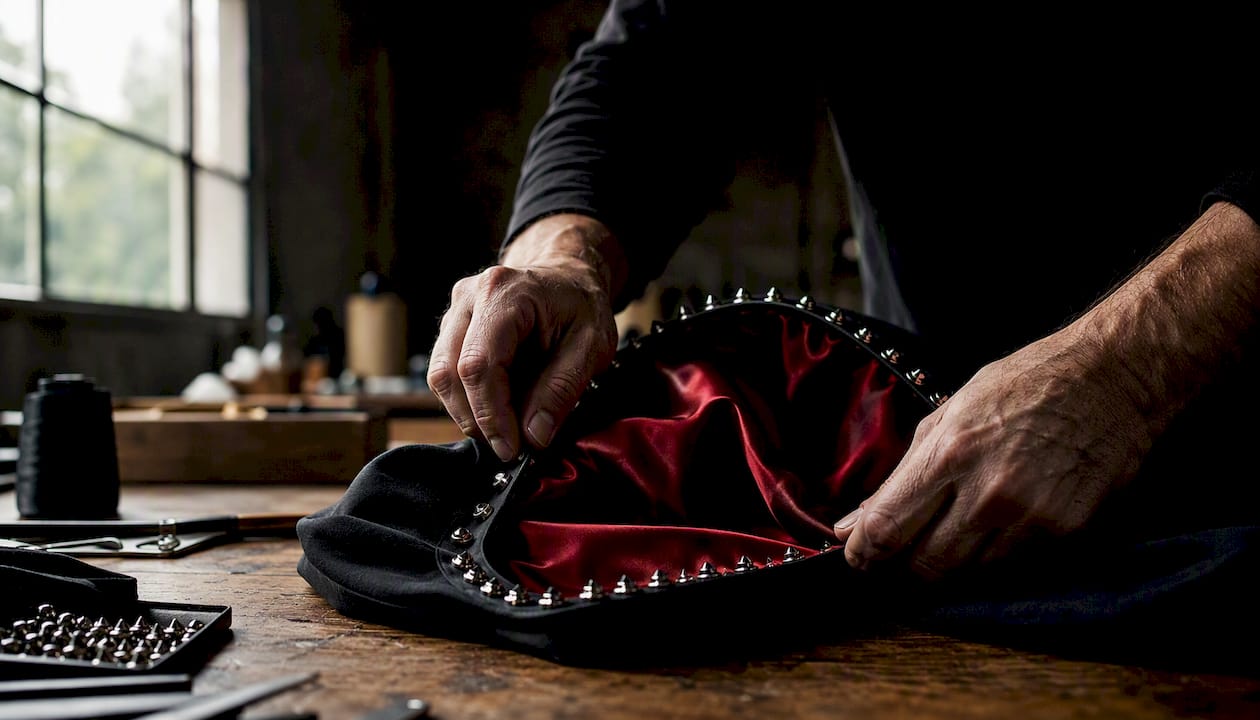
The atelier process moves through swatch approval, a sample lining stage, dye-setting, hand-finishing, and a final quality assessment before despatch. Nothing leaves the atelier without passing each stage. The Thorns Edition exemplifies this approach: heavyweight cotton paired with a deep red silk interior, produced in a strictly limited run that will not be repeated.
Pro Tip: When commissioning any bespoke red-lined piece, ask the atelier for a colour-on-white photograph of the lining swatch in natural daylight, alongside a physical sample. Ceremony lighting and photography can shift perceived hue significantly; a physical swatch is the only reliable reference.
Key takeaways
A red hood lining means two distinct things: a design and material choice in fashion, and a formalised institutional identifier in academic regalia. Confirming the correct specification with the conferring university is non-negotiable before ordering.
| Point | Details |
|---|---|
| Dual meaning | In fashion, a red lining is a material and design decision; in academic regalia, it is an institutionally specified identifier. |
| Top material choice | Egyptian silk satin offers the finest drape, colour depth, and longevity; polyester satin suits washable or commercial applications. |
| Confirm university protocol | Always obtain the official shade reference, chevron arrangement, and approved supplier list from the graduation office in writing. |
| Order timeline | Allow one to three weeks for standard regalia; four to eight weeks for bespoke atelier commissions. |
| Jeeyodee commissions | Jeeyodee's atelier produces hand-finished, individually numbered red-lined pieces in Egyptian silk, made in Italy, with a 50% deposit required. |
Why a red lining is never merely decorative
There is a tendency, in both fashion and regalia, to treat the interior of a garment as secondary. We disagree with that position entirely.
A red lining is a declaration. In academic dress, it encodes the authority of an institution, the discipline of study, and the permanence of an achievement. To wear the wrong shade, or the wrong chevron width, is not a minor error. It is a misrepresentation of that record. The formality of the system exists precisely because the interior of a hood carries meaning that the exterior cannot.
In fashion, the interior is where conviction lives. A garment that is black on the outside and crimson within is not making a quiet statement. It is making a considered one, visible only to those who look closely or to the wearer themselves. That restraint is, in our view, the more sophisticated choice. The red is not for display. It is for permanence.
At Jeeyodee, we align silk grain and cone studs by hand because the alternative, a lining that puckers under ceremony lighting or a stud that sits a millimetre off-axis, is a failure of discipline. Limited production is not a marketing position. It is the only way to maintain the standard that makes each piece worth commissioning.
Commissioning a red-lined hood through Maison Jeeyodee
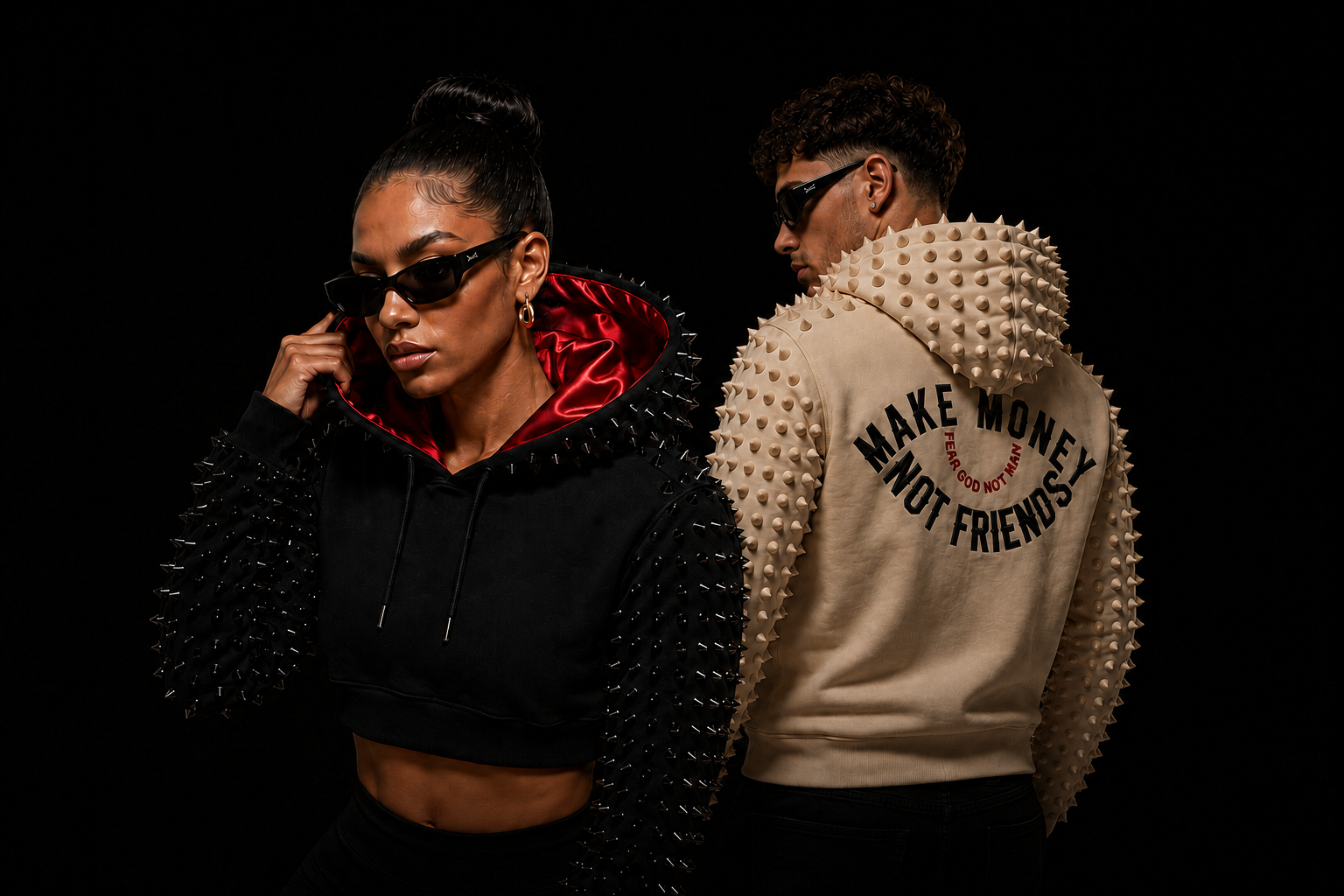
Jeeyodee's bespoke atelier service begins with a single enquiry. You describe the commission: the exterior fabric, the lining specification, any stud or embroidery requirements, and the occasion. We respond with a material proposal, a swatch reference, and a timeline. A 50% deposit confirms the commission and initiates the atelier process. The remaining balance is agreed before despatch.
Every piece is made in Italy, hand-finished, and individually numbered. Lead times for bespoke red-lined commissions are typically four to eight weeks, depending on specification complexity. The piece produced is made once and never repeated.
To begin an enquiry or view current limited availability, visit jeeyodee.store.
Useful sources
- Academic Regalia Hood Colors List, Official, Degree, Chart, Inter-Collegiate
- Your Guide to Commencement Hood Colors and Meanings – Graduation Attire
- Your gown colours - Graduation
- Gowns | Graduation
- Hood ordering page - Graduation Outlet
- College graduation hood colors - Herff Jones
- ADD-ON: Hood Lining, Personalize Your Cloak - Heroes Hoard
- https://jeeyodee.com/collections/drop-01-thorns-edition
FAQ
What does a red hood lining signify in academic regalia?
A red satin field indicates that the conferring university uses red as one of its primary institutional colours. The velvet edge separately denotes the wearer's academic discipline, following conventions such as those established by the Burgon Society.
How do I confirm the correct red lining for my UK university hood?
Contact your university's graduation office and request the official specification document, including the shade reference, chevron arrangement, and list of authorised suppliers. Do not rely on generic supplier charts, as institutional patterns vary significantly.
What is the best fabric for a red hood lining?
Egyptian silk satin offers the finest colour depth, drape, and longevity, making it the preferred choice for bespoke and ceremonial commissions. Polyester satin is the practical alternative for washable or commercial regalia.
How long does a bespoke red-lined hood take to commission?
Standard commercial regalia hoods typically require one to three weeks. Bespoke atelier commissions, such as those produced by Jeeyodee in Italy, require four to eight weeks depending on specification complexity.
How do I care for a red silk lining to prevent colour fading?
Dry-clean only, and store the garment away from direct light. Request a professional dye-set finish at the atelier stage to reduce the risk of colour migration, and always test a damp swatch against the shell fabric before final construction.