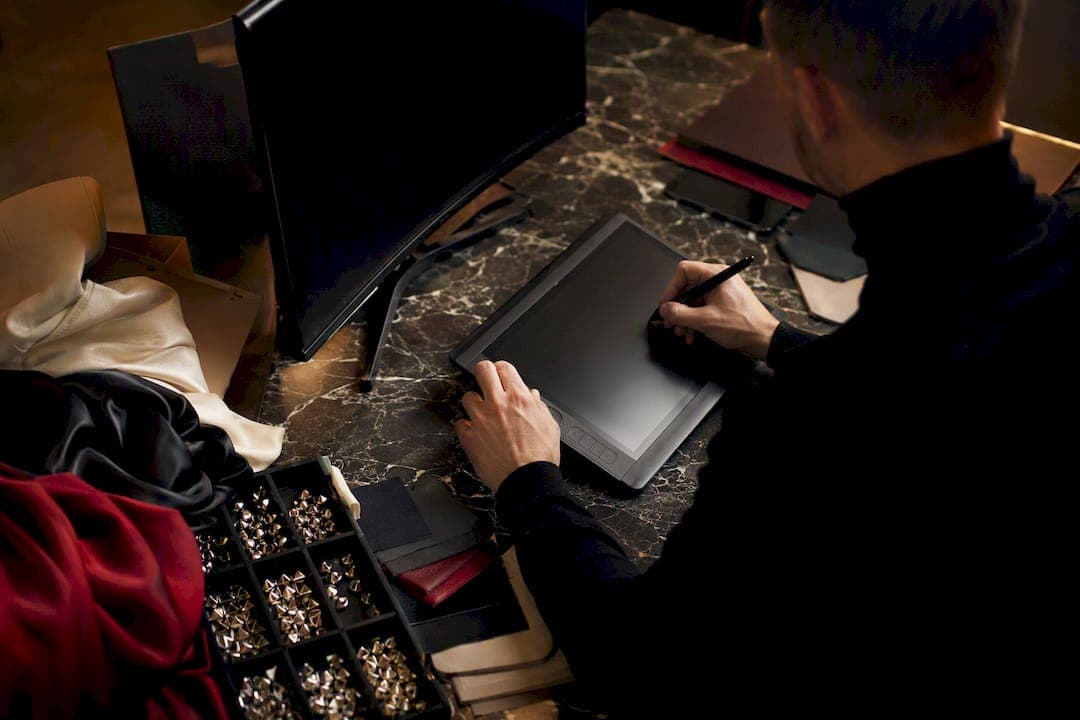
If you want a single embroidered sweatshirt that carries real craftsmanship rather than a printed logo, commission it through a maison atelier such as Jeeyodee rather than a bulk garment supplier. Bespoke embroidery rewards patience: a digitised stitch file, a proper fabric, and a maker who treats one piece with the same discipline as a hundred. Upload your artwork or request a consultation directly, and before you commit, scan any provider's page for two signals that separate a genuine atelier from a print shop wearing embroidery as decoration.
- Test digitale (digital preview): a proper atelier shows you the stitch file before needles touch fabric.
- No minimum order: genuine bespoke services accept single-piece commissions without inflating the price to bulk-order economics.
Digital previews and flexible order sizes are the two traits customers consistently praise when reviewing personalised garment providers — treat their absence as a warning, not an inconvenience.
Key Takeaways
Genuine bespoke embroidery succeeds when a digitised stitch file, a heavyweight fabric, and a documented approval process all align before production begins.
| Point | Details |
|---|---|
| Verify the preview | Only commit once you've approved a true-scale digital stitch-file preview. |
| Match fabric to design | Photographic or dense motifs need heavyweight, ring-spun cotton to avoid puckering. |
| Understand the impianto | A setup fee for digitising a new design is normal; ask for it upfront in writing. |
| Keep approvals written | Record placement, thread colours, and size in one thread before production starts. |
| Choose the maison route | Jeeyodee offers handcrafted, individually numbered embroidered sweatshirts made in Italy with no reproduction once a drop closes. |
Table of Contents
- Bespoke commission or standard supplier: which route suits your piece?
- Preparing artwork: how a photograph becomes a stitch file
- Choosing fabric and fit that let embroidery shine
- What does bespoke embroidery cost and how long does it take?
- The order and approval process, step by step
- Caring for embroidery so it lasts
- Why Jeeyodee's atelier approach protects fine embroidery
- What most guides get wrong about embroidered sweatshirts
- Commission a piece that is never repeated
- Sources
- FAQ
Bespoke commission or standard supplier: which route suits your piece?
A boutique bespoke commission is built around one garment and one conversation. You describe the motif, the atelier digitises it into a stitch file, and production follows only once you approve what you see. A standard supplier workflow runs in the opposite direction: it exists to replicate the same design across dozens or hundreds of units at the lowest achievable cost per piece.
Choose the atelier path when your design is photographic, dense in stitch count, part of a numbered limited drop, or intended as a considered gift rather than a promotional item. Choose a supplier when the brief is a simple wordmark or logo, the quantity runs into the hundreds, and the budget is the deciding factor.
- Bespoke suits: portraits, fine linework, one-off drops, gifting with real intent.
- Suppliers suit: basic text, large runs, tight margins.
- Beware "no-minimum" claims that still charge bulk-style flat pricing without any digital proof stage. Many independent ateliers now accept genuine single-piece commissions with the same care as a limited edition run, which is worth confirming before you commit.
Preparing artwork: how a photograph becomes a stitch file
Embroidery does not photograph an image; it reinterprets it in thread, and the quality of your source file determines how faithfully that translation happens.
- Send a vector file (AI, EPS or SVG) for logos and text. Vectors hold sharp edges at any stitch density.
- Send a high-resolution raster (minimum 300dpi, ideally larger) for photographic or painterly motifs, so the digitiser has enough detail to work from.
- Expect simplification. Photorealistic images are converted into a limited palette and a defined stitch count. Fine gradients become blended thread transitions, not literal pixels.
- Confirm placement and size. Chest motifs generally sit within 10 to 12 centimetres wide; back designs can run considerably larger; sleeve placements need narrower, elongated artwork.
- Review the digital proof carefully and request specific revisions, colour by colour, rather than a general "make it better."
Pro Tip: Ask to see the stitch-file preview zoomed to actual size, not just on-screen. Thread density that looks fine at 200% zoom can read as muddy at true scale.
Choosing fabric and fit that let embroidery shine
The garment underneath the stitching matters as much as the digitisation itself. A heavier, tightly knitted cotton holds thread tension properly; a thin or loosely woven fleece puckers under dense stitching almost immediately, no matter how skilled the digitiser was.
- Heavyweight, ring-spun cotton gives dense or photographic embroidery a stable base that resists distortion over repeated wear.
- Backing and reinforcement placed behind the fabric during stitching prevents the puckering that appears on lighter garments once the needle passes stop.
- Seam and fit considerations matter too: a cropped or fitted cut shifts where a chest motif sits relative to the body, so confirm placement against your actual size, not a flat template.
- Fabric weight and construction directly affect how well embroidery holds its shape over dozens of wears, which is part of why heavyweight cotton with a considered lining, as used across Jeeyodee's own pieces, remains the more dependable canvas for detailed work.
What does bespoke embroidery cost and how long does it take?
Retail prices for individually crafted embroidered sweatshirts vary widely with complexity, but readers should treat any figure they see quoted as an indicative starting band rather than a fixed rule, since stitch count and garment quality both move the number substantially.
An impianto, or setup fee, often applies the first time a new design is digitised into a stitch file. It is a one-time technical cost for creating that file, distinct from the price of stitching it onto fabric, and a transparent atelier will state it upfront rather than folding it invisibly into the final invoice.
- Ask for a stitch-count estimate before you commit; it is the single biggest driver of price.
- Request photographs of comparable work the atelier has completed, not just a portfolio of flat mockups.
- Confirm how many revision rounds are included before extra charges apply.
- Factor in longer lead times if you are commissioning around a gifting deadline. Rush production, where offered, typically carries its own premium.
The order and approval process, step by step
A clean process saves you from the single most common bespoke frustration: discovering at delivery that the placement or colours were never quite confirmed.
- Choose the garment — weight, colour, fit.
- Submit your artwork in the appropriate format for the motif's complexity.
- Receive a digital proof showing the stitch file as it will actually appear.
- Approve the stitch file in writing, including exact placement, thread colours, and garment size.
- Production begins only after that written approval.
- Delivery follows, with lead time confirmed at the approval stage, not guessed at the outset.
Keep every approval and revision request in a single thread, whether by WhatsApp or email, so timestamps and attachments stay attached to the conversation rather than scattered across messages. Many small ateliers manage bespoke commissions this way, and it protects you as much as it protects the maker.
Caring for embroidery so it lasts
Embroidery fails less often from wear and more often from careless laundering. Turn the sweatshirt inside out, wash on a gentle cycle at 30°C or below with a mild detergent, and skip the tumble dryer entirely. Heat is what breaks thread tension over time, not the wash itself.
- Air dry flat rather than hanging, which prevents stretching around the embroidered area.
- Store folded rather than on a hanger to reduce abrasion against other garments.
- Have loose threads trimmed and secured properly rather than pulled, which can unravel an entire section.
- Ask the atelier about reinforced backing or higher-tension thread if the piece will see frequent wear.
Pro Tip: A mesh laundry bag adds almost no effort and meaningfully reduces the friction that causes stitch fraying over dozens of washes.
Why Jeeyodee's atelier approach protects fine embroidery
Jeeyodee does not manufacture to a catalogue. Every piece is handcrafted in Italy, individually numbered, and finished with heavyweight cotton paired with an Egyptian silk hood lining, a combination chosen because it holds structure under the tension of dense stitching rather than fighting it. Cone studs are aligned by hand, a detail that has nothing to do with embroidery directly but everything to do with the standard of finish a piece must meet before it is considered complete.
- Handcrafted and individually numbered, so no two commissions are treated as interchangeable units.
- Heavyweight cotton with silk-lined hoods, built to support rather than distort embroidery over time.
- Strictly limited runs, never reproduced once a drop closes.
- A consultative digitisation process rather than an automated instant preview.
A garment built to survive one wear looks fine on delivery. A garment built to survive years reveals itself in how the stitching holds after the fiftieth wash, not the first.
Readers considering a commission can explore the philosophy behind current and past drops at Jeeyodee.
What most guides get wrong about embroidered sweatshirts
Most advice on this subject treats embroidery as a feature you tick on a checkout page, the way you'd choose a size or a colour. That framing works for a simple wordmark. It fails completely for anything photographic or dense, because the technical step that actually determines quality, the digitisation of a stitch file, happens before you ever see a proof, and most instant-order platforms skip it or automate it so heavily that nuance gets flattened out.
The conventional wisdom says price is the main variable to compare across providers. It isn't. Stitch count, fabric weight, and whether a human digitiser actually reviewed your artwork matter more than the number on the invoice, and a cheap commission with no digitisation step will show its limits within a season of wear.
If there's one thing to prioritise first, it's the proof stage. Insist on seeing the stitch file before production, at true scale, not a screen mockup. That single habit filters out the providers who are guessing from the ones who are actually crafting.
— Jeeyodee
Commission a piece that is never repeated
There are quick-turnaround print shops and bulk embroidery suppliers that will take your order today, and for a simple company logo on fifty polo shirts, that route makes sense. Jeeyodee exists for a different reader entirely: the one who wants a single sweatshirt that will still mean something in ten years, not because it was cheap or fast, but because it was made once and will never be made again.
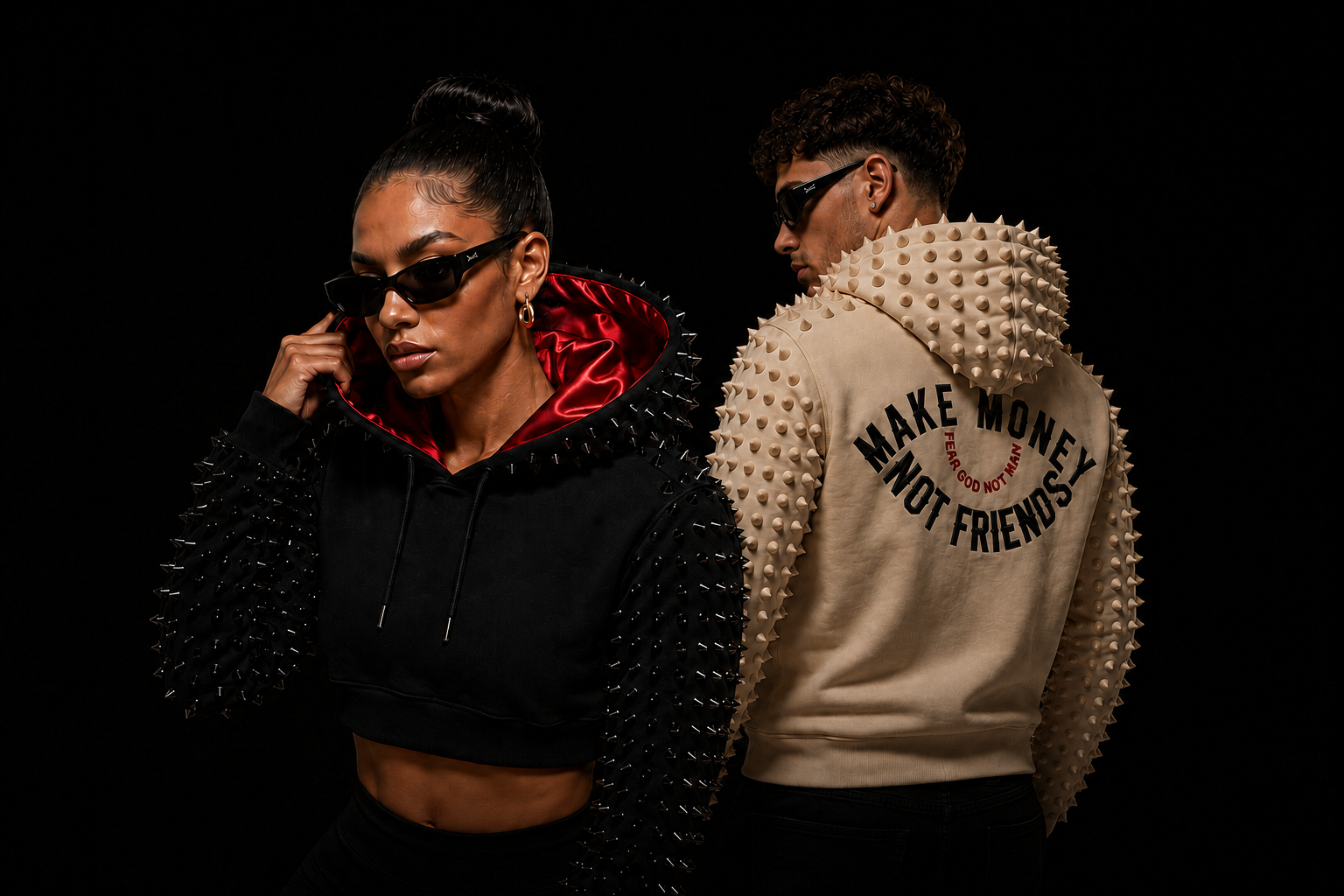
Every commission begins with a conversation, not a checkout form. You describe the motif, the atelier digitises it properly, and you approve the stitch file before a single needle moves. Heavyweight cotton, an Egyptian silk hood lining, and hand-aligned Italian cone studs come as standard, not upsells. If you're ready to commission a piece for yourself or as a gift with real weight behind it, start a consultation at Jeeyodee and describe what you have in mind.
Sources
FAQ
Where can I create a personalised embroidered sweatshirt?
You can commission one through a boutique atelier such as Jeeyodee for a genuine single-piece or limited-edition result, or through a standard garment supplier if you need large quantities of a simple design.
How much does it cost to have sweatshirts printed?
Printed sweatshirts in bulk are generally priced per unit and fall as quantity rises, but printing and embroidery are different techniques with different cost structures, so always ask whether a quote refers to print or genuine embroidery.
How much does embroidery typically cost?
Individually crafted embroidered sweatshirts vary in price depending on stitch count, fabric quality, and whether a setup fee (impianto) applies for digitising a new design, so treat any quote as specific to your motif's complexity rather than a fixed figure.
Is there an app for designing a sweatshirt?
Several design apps let you sketch a rough concept, but photographic or highly detailed embroidery still requires a human digitiser to convert that concept into a proper stitch file, which is why a consultation with an atelier produces a more reliable result than an app mockup alone.