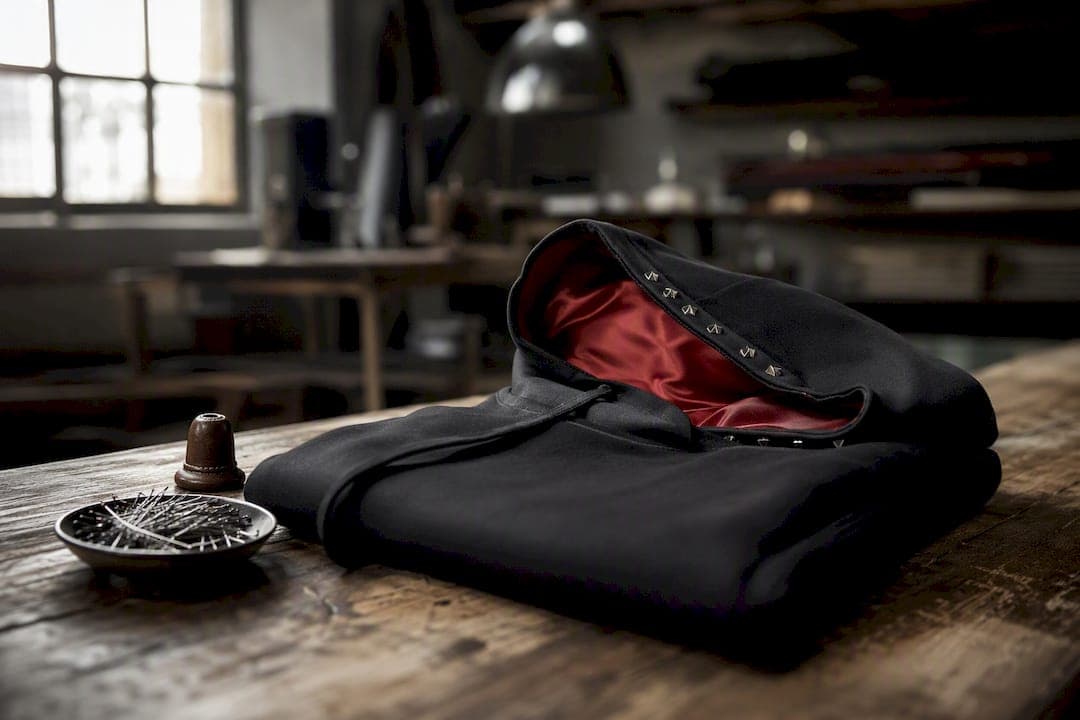
For sweatshirts that include silk, the safest default is professional dry cleaning or a very gentle cold hand wash, and only when the care label permits it. Three rules are absolute, whichever route you choose: no hot water, no tumble dryer, and no bleach. Silk fibres are protein, not plant matter, and heat or harsh chemistry breaks them down permanently.
TL;DR:
- Silk fibers are fragile and can be permanently damaged by heat, harsh chemicals, or aggressive handling, making professional dry cleaning the safest option.
- Always read and follow the care label, particularly the symbols indicating whether water or solvent cleaning is permitted, and test on an inner seam before washing.
- Hand washing requires gentle, cold water with a specialized detergent, minimal agitation, and immediate reshaping to prevent distortion or shrinkage.
- Machine washing is only acceptable for water-safe ("W") labels, using a delicate cycle, mesh bags, and avoiding heavier items to prevent fabric abrasion.
- Proper drying involves flat laying or hanging away from sunlight and heat, reshaping damp, and avoiding tumble drying to preserve the garment’s integrity.
Table of Contents
- Cura felpa con seta: the checklist to consult before you touch water
- How do you hand wash a silk-lined sweatshirt safely?
- Is it ever acceptable to machine wash a silk sweatshirt?
- What's the right way to dry and reshape a silk garment?
- How do you treat a fresh stain without making it worse?
- Can you iron or steam a silk sweatshirt safely?
- What's the best way to store a silk-lined sweatshirt?
- When should you send a silk sweatshirt to a professional cleaner?
- How does bespoke construction change the way you care for it?
- Why does the maison treat care as part of the garment's story?
- Atelier services for owners who want maker-recommended care
- Sources
- FAQ
Cura felpa con seta: the checklist to consult before you touch water
Before any washing decision, read the label. The symbols tell you what the fabric can survive, not what you hope it can survive.
- Check the label first. Look for a "W" (water safe), an "S" (solvent only), or "dry clean only" wording, and note the fibre composition alongside it.
- Do: use cold water, a specialised silk or wool detergent, and handle the garment gently throughout.
- Do not: use bleach, fabric softener, a tumble dryer, or wring the fabric at any stage.
- If in doubt: spot test on an inner seam first, or send the piece to a professional cleaner rather than guessing.
The Ginetex care symbol system is the industry standard behind these labels, and an "S" symbol means solvent only. Attempting a water wash on an "S" garment risks marks that no amount of careful drying will undo.
How do you hand wash a silk-lined sweatshirt safely?
Handwashing is acceptable for many silk blends, but the sequence matters more than the intention.
- Inspect and prepare. Turn the sweatshirt inside out, check trims and studs for looseness, and identify a hidden seam for a colourfastness test.
- Test first. Dab a little diluted detergent on that seam and wait a few minutes to confirm no colour transfer or texture change.
- Mix your water. Fill a basin with cold water and a small, measured amount of a specialised silk or wool detergent. Cold water and a delicate detergent is the combination specialists consistently recommend for velvet and silk pieces.
- Soak briefly. Submerge the garment for a few minutes only, pressing gently rather than agitating or scrubbing the fabric.
- Rinse and drain. Rinse under cold running water until the detergent is gone, then lift the garment out rather than lifting it while sodden.
- Remove moisture. Roll it in a clean towel to draw out excess water. Never wring or twist.
- Reshape immediately. Smooth the hood, cuffs, and hem back into their original lines while the fabric is still damp and receptive.
Pro Tip: Silk shells and cotton bodies dry at different rates. Reshape the hood and seams while everything is still damp, because once the cotton sets dry and the silk lining is still slightly damp, tension between the two layers can pull the garment out of true.
Is it ever acceptable to machine wash a silk sweatshirt?
Rarely, and only under narrow conditions. If the label shows a water-safe "W" symbol rather than a solvent-only "S", a machine cycle can work, but the settings have to be exact.
- Use a mesh laundry bag to shield the fabric from friction against the drum.
- Select the delicate or hand wash programme, cold water only, and the lowest spin speed the machine offers.
- Use a delicate detergent formulated for silk or wool, never a standard powder or capsule.
- Never load the sweatshirt alongside heavier items such as denim or towels, which abrade the surface.
- Keep machine washing occasional. Frequent cycles, even gentle ones, wear pile and lining faster than infrequent hand care.
Remove the garment the moment the cycle ends and dry it immediately as described below. Leaving it damp inside a closed drum is one of the fastest ways to set creases permanently.
What's the right way to dry and reshape a silk garment?
Air is the only safe drying method; for guidance on how to dry swimsuits and delicate garments properly, see fast, safe care to preserve fit. Tumble drying is a leading cause of irreversible pile crushing and shrinkage in silk and velvet fabrics, and there is no cycle gentle enough to reverse that risk.
- Lay the sweatshirt flat on a clean towel, or hang it on a padded hanger, well away from radiators, direct sun, or draughts.
- Avoid clothes pegs. The pressure points they create can leave marks that outlast the drying itself.
- Reshape the hood, cuffs, and side seams while the fabric is still damp and pliable.
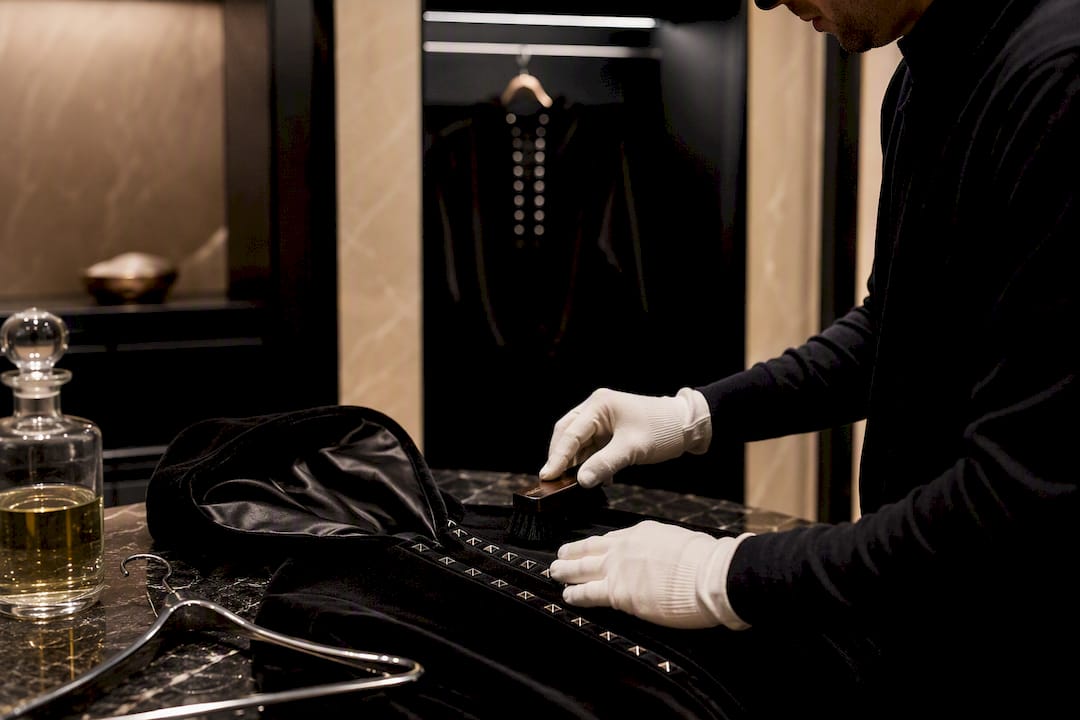
- Once fully dry, revive any flattened pile with gentle steam from the reverse side, followed by soft, directional brushing.
Pro Tip: Brush in one direction only, following the nap's natural lie. Brushing against it, even lightly, roughens the surface and dulls the sheen you're trying to protect.
How do you treat a fresh stain without making it worse?
Speed and restraint matter more than any product you reach for.
- Blot, never rub. Press a white absorbent cloth against the stain immediately. Blotting prevents the stain from setting into the fibres, while rubbing spreads it and roughens the pile.
- Spot test first. Try any cleaning solution on an inner seam before applying it to the stain itself.
- Match the method to the fabric. For water-safe pieces, use a minimal amount of diluted mild detergent. For oil or ink on solvent-only fabric, a solvent-based spot cleaner is more appropriate.
- Know when to stop. If the stain resists two attempts, or the label marks the piece solvent only, cease home treatment and take it to a professional rather than risk a permanent mark.
Can you iron or steam a silk sweatshirt safely?
Ironing directly onto silk is one of the fastest ways to scorch or flatten it permanently, so avoid it where you possibly can.
- If ironing is unavoidable, work only on the reverse, use a press cloth, and set the iron to its lowest heat.
- A handheld steamer held a few inches from the fabric, or aimed at the reverse side, lifts creases far more safely.
- Excessive or direct steam can leave permanent watermarks on silk, so keep sessions brief and never let the steamer touch the surface.
- Between wears, a soft brush run in the direction of the nap, or a gentle vacuum on a low setting with a soft brush attachment, keeps the surface even without any contact stress.
Pro Tip: Steam sparingly and check the fabric between passes. If the surface looks damp rather than simply relaxed, you've done enough.
What's the best way to store a silk-lined sweatshirt?
Storage decisions made today prevent the crushing and fading you'd otherwise be treating months from now.
- Use wide, padded hangers with breathable garment bags for medium-term storage between wears.
- For long-term storage, lay the piece flat with acid-free tissue supporting the folds instead of hanging it.
- Avoid plastic bags, damp rooms, and direct sunlight, all of which trap moisture or bleach colour over time.
- Rotate stored pieces occasionally so the same fold or hanger line doesn't press into the fabric permanently.
- Air and lightly brush garments every so often, even when they're not in rotation, to keep the pile lying evenly.
For deeper guidance on how silk and cotton compositions age together, our notes on caring for seta e cotone cover the interplay between the two fibres in more detail.
When should you send a silk sweatshirt to a professional cleaner?
Some pieces simply aren't candidates for home care, whatever method you choose. Silk velvet and high-value silk garments are commonly classified as dry clean only precisely because they react poorly to moisture, heat, and mechanical agitation of any kind.
Send the garment to a professional when it has a silk velvet panel, a solvent-only label, heavy soiling, or complex trims and linings that a home wash can't safely reach. When you brief the cleaner, ask what solvent they use, whether they offer water-free processing, and whether they test spots before full treatment. Point out any pre-existing marks so they aren't mistaken for new damage, and for antique or particularly high-value pieces, ask whether a specialist textile conservator would be more appropriate than a standard cleaner.
How does bespoke construction change the way you care for it?
A heavyweight cotton shell paired with a silk lining doesn't behave as one fabric when wet. It behaves as two, and they don't dry at the same rate. Wetting one layer without equal attention to the other invites differential shrinkage, the quiet cause of a sleeve that no longer hangs true or a hood that sits slightly off centre. This is why we reshape while damp and dry flat: it gives both layers time to settle together rather than fighting each other.
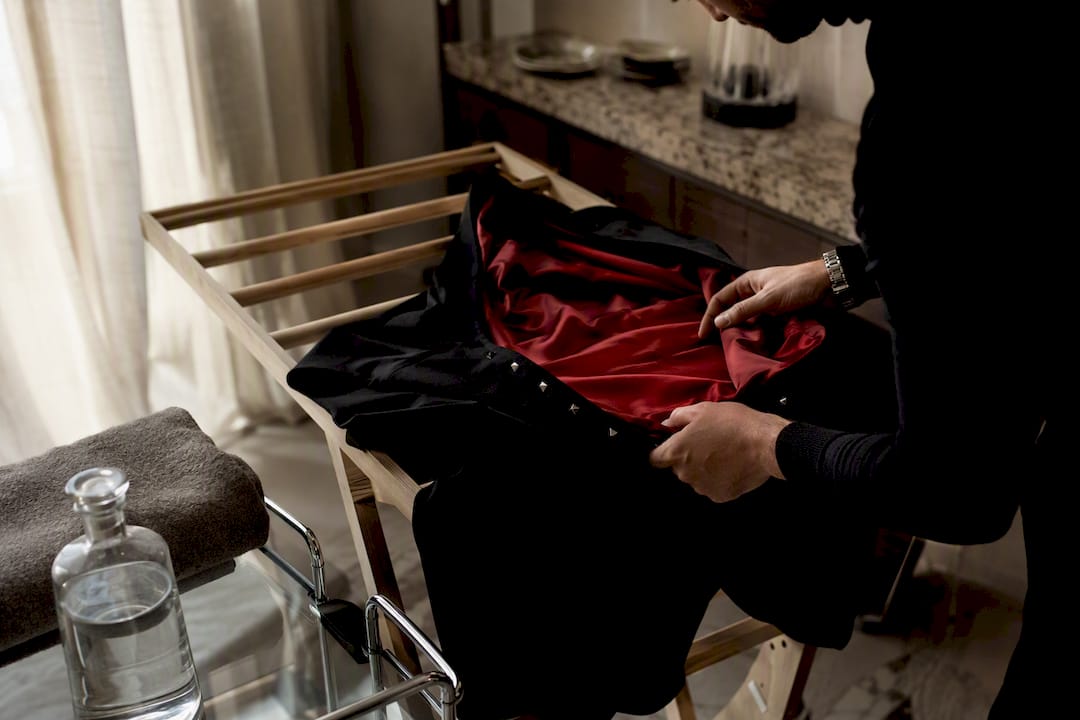
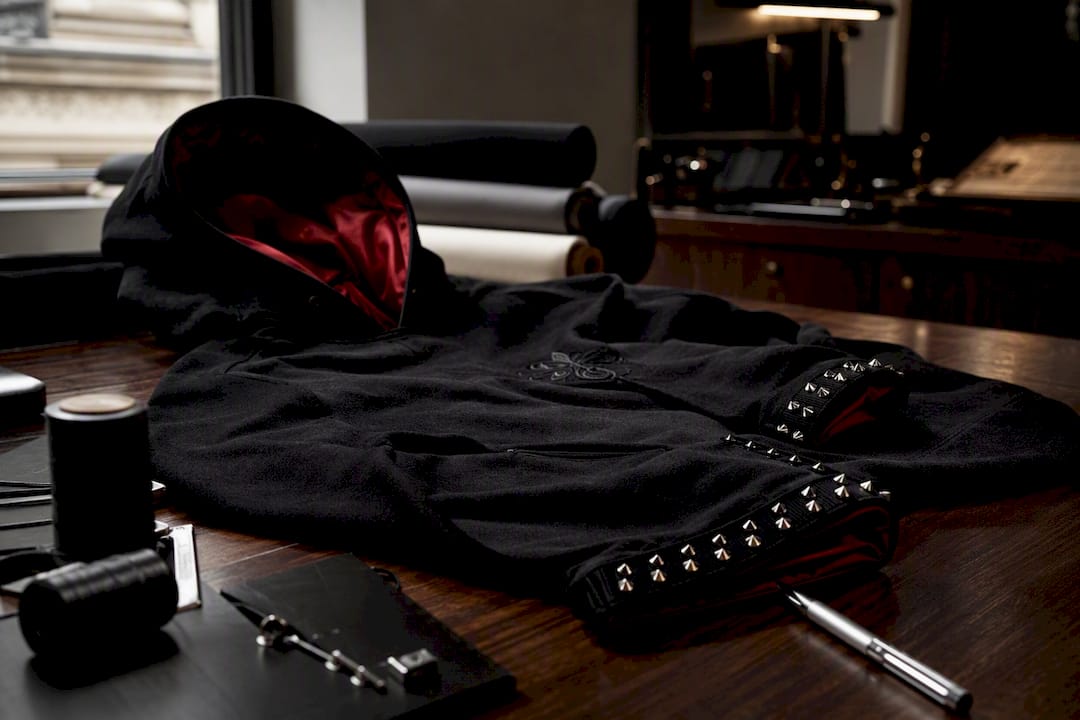
Cone studs, embroidery, and Egyptian silk hood linings each carry their own considerations during cleaning, which our guide to luxury garment finishing details explores further. For piece-specific advice, our satin hood lining notes are worth reading before you attempt any cleaning at home, and for repairs or re-lining, contact the maison directly.
Why does the maison treat care as part of the garment's story?
Every Jeeyodee piece is produced once and never repeated, which changes what "care" means. You aren't maintaining a replaceable item. You are the custodian of something that cannot be remade if it's mishandled, and that responsibility sits with you the moment the garment leaves the atelier.
We built our approach around a simple conviction: low-contact care preserves more than frequent deep cleaning ever will. Textile specialists consistently favour maintenance over intervention for exactly this reason. Follow the label, hand wash sparingly, air rather than heat, and when a piece asks for more than a careful hand at home, bring it to us. That's not caution for its own sake. It's how a numbered garment earns the decades it was made to last.
— Jeeyodee
Atelier services for owners who want maker-recommended care
Jeeyodee is the alternative to guesswork for anyone who owns a piece with a silk lining or hand-finished trim. Where a high street cleaner sees a sweatshirt, our atelier sees the same construction it built, down to the cone studs and the stitch line on the hood.

We offer care consultations, minor repairs, and re-lining for pieces that have travelled with their owners for years. Because every drop is limited and never reproduced, the value of a piece often rests on how well its original construction survives, not on replacing it. A maker who knows exactly how the cotton shell and silk lining were joined can advise on cleaning risk with a precision no general cleaner can match. If a piece needs attention, or you simply want guidance before you wash it at home, visit JEEYODEE — Numbered Luxury, Made Slowly and get in touch with the atelier directly.
Sources
For deeper reading, consult The Laundress on velvet care, Architectural Digest on cleaning velvet, and Loom & Fiber's guide to washing velvet fabric.
- First tip: cotton velvet care
- Velvet care tips — The Laundress
- How to clean velvet furniture — Architectural Digest
- Water stains on silk — SilkSilky
FAQ
Can I wash a silk sweatshirt in a normal washing machine?
Only if the care label shows a water-safe "W" symbol, and even then use a mesh bag, cold water, a delicate cycle, and minimal spin.
What temperature of water should I use on silk?
Cold water only. Warm or hot water causes silk fibres to weaken, shrink, or lose their sheen permanently.
How do I remove creases from a silk-lined hood without an iron?
Use a handheld steamer held a few inches from the reverse side, in short passes, then reshape by hand while the fabric is still slightly warm.
Can Jeeyodee repair or re-line a damaged sweatshirt?
Yes. The atelier offers care consultations, minor repairs, and re-lining for pieces with silk linings or bespoke trims through the maison directly.
What does the "S" symbol on a care label mean?
It means solvent-only cleaning. Attempting a water wash on an "S" garment typically causes permanent marks that professional dry cleaning avoids.