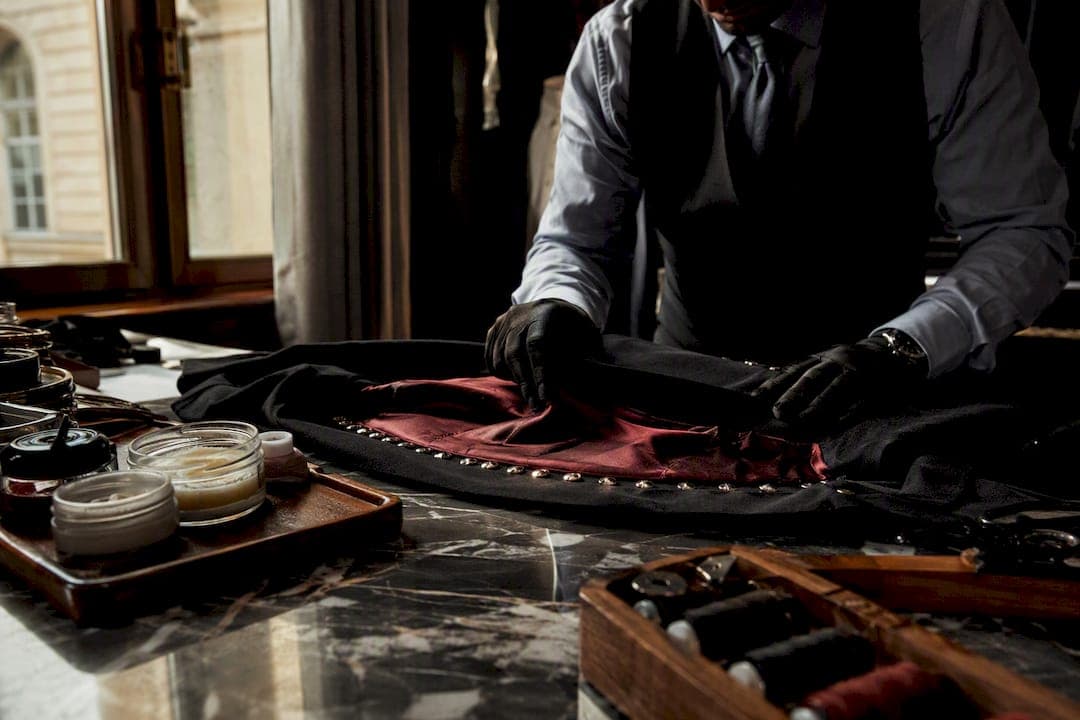
Follow the garment label first, always. For most silk, that means hand-washing at or below 30°C with a silk-safe detergent and letting the piece dry flat, away from direct heat. Heavyweight cotton tolerates a gentler wash, but the moment silk lining enters the construction, the tumble dryer is no longer an option.
Three rules protect nearly every luxury garment you own:
- Label first. The care symbol overrides any generic instruction, including ours.
- Keep silk at or under 30°C. Heat is what breaks the protein fibre down, not soap.
- Skip the tumble dryer and minimise agitation. Rubbing, wringing and spinning do more damage than dirt ever will.
Pro Tip: Before washing anything coloured, dab a damp cotton swab on an inside seam. If colour transfers, the garment goes to a professional cleaner, not your basin.
Key Takeaways
Caring for silk and cotton correctly comes down to reading the label, capping silk washes at 30°C, and never tumble drying silk-lined garments.
| Point | Details |
|---|---|
| Label governs the method | The care symbol overrides generic advice; check it before every wash. |
| Silk temperature ceiling | Wash silk at or below 30°C to prevent fibre degradation and loss of sheen. |
| Heat and agitation cause damage | Tumble drying and vigorous rubbing, not dirt, are the main causes of fabric breakdown. |
| Test before you treat | Swab a hidden seam for colourfastness before washing or stain treatment. |
| Jeeyodee atelier for mixed constructions | Heavyweight cotton with Egyptian silk lining needs conservational wet cleaning, never a standard dry-clean. |
Table of Contents
- When should you hand-wash, machine-wash, or dry-clean silk and cotton?
- How do you wash silk, cotton and mixed garments step by step?
- What is the safest way to remove stains from silk and cotton?
- How should you iron and finish silk and cotton without damage?
- Where and how should you store silk and cotton between wears?
- How does Maison Jeeyodee care for heavyweight cotton with silk linings?
- Request Jeeyodee's atelier care and restoration service
- Sources
- FAQ
When should you hand-wash, machine-wash, or dry-clean silk and cotton?
Start with the label. Symbols for maximum temperature, permitted cycle, and "dry-clean only" instructions exist because the manufacturer tested that specific fabric and dye. Ignore them at your own risk. Follow that with a colourfastness swab test on a hidden seam before any coloured silk or printed cotton touches water.
Construction matters as much as fibre content. A few checks before you commit to a method:
- Is there a silk lining, embroidery, or glued trim? Any of these push the garment towards hand-wash or professional care.
- Is the colour dark, saturated, or hand-dyed? Treat it as higher risk until the swab test proves otherwise.
- Is the garment a mixed construction, such as heavy cotton with a silk interior? Hand-wash or professional cleaning avoids the differential shrinkage that ruins fit.
When fibres disagree on how they want to be treated, the fabric type governs the method, not the bulkiest part of the garment.
How do you wash silk, cotton and mixed garments step by step?
The safest sequence for cura seta e cotone is slower than most people expect, and that slowness is the entire point.
Preparation comes first. Check the label, run the swab test, turn the garment inside out, close zips and buttons, and shake off loose dirt outdoors if you can. Choose a detergent formulated for delicate fibres. Perlana Lana & Delicati is a widely used example of a detergent without harsh alkalis, which matters because alkali-heavy formulas strip silk's natural sheen over repeated washes.
For hand-washing silk:
- Fill a basin with lukewarm water, no warmer than 30°C.
- Dissolve a small amount of silk-safe detergent fully before adding the garment.
- Submerge the piece and press gently, working soap through the fabric without rubbing.
- Soak for three to five minutes if the soiling is light. Longer soaks do not clean better; they just stress the fibre.
- Rinse in cool water until no soap remains, then press (never wring) excess water out against a towel.
Temperature check: silk fibre is protein-based, and anything above 30°C begins to degrade its structure and lustre. That ceiling applies whether you're hand-washing or running a machine cycle.
If the label permits machine washing, use a delicate or hand-wash cycle at 30°C or below, a low spin, and a protective mesh bag. Wash with similar colours only, and never let a silk-lined piece share a drum with rough denim or zips that can snag the interior.
Mechanical agitation and heat cause more fabric damage than dirt ever does. That single fact should govern every washing decision you make.
Pro Tip: Lay the wet garment flat and gently coax it back into its original shape while the fibres are still pliable. Once silk dries out of shape, it rarely corrects itself. Dry heavy cotton pieces with silk linings separately from all-cotton items, since the two fabrics shrink at different rates.
What is the safest way to remove stains from silk and cotton?
Treat stains promptly and gently, and always test any treatment on an inside seam first. Speed matters more than force.
- Oil or grease: blot immediately, then work a small amount of delicate detergent into the mark before washing as usual.
- Sweat marks: a diluted white vinegar pre-soak, tested first, can lift residue before a silk-safe detergent rinse finishes the job.
- Make-up: dab, never rub, with a mild detergent solution applied from the fabric's reverse side where possible.
- Dye transfer: act within hours; once it sets, professional cleaning is usually the only remedy.
Never use bleach on silk under any circumstance, and avoid strong solvents or vigorous scrubbing on either fibre. Always wash the entire garment after a spot treatment rather than leaving an isolated clean patch, which creates a visible watermark ring.
Pro Tip: A diluted vinegar pre-soak works well on silk odour, but rinse thoroughly afterwards. Vinegar left in the fibre will dull the sheen over time.
How should you iron and finish silk and cotton without damage?
Low heat, and always protect the fabric's face. Silk takes the lowest iron setting available and should be pressed inside out, ideally through a pressing cloth. Cotton tolerates a higher setting, but check the label before assuming.
- Steam silk from a distance rather than pressing direct heat into the fibre.
- Pin shoulders onto a padded hanger while damp to help the garment dry into shape.
- Gently stretch hems back into line while they're still slightly damp, not once fully dry.
- Avoid pressing directly over embroidery, studs, or raised trims, which flatten under sustained heat.
Pro Tip: For Egyptian silk interiors, press from the reverse side using short, confident taps rather than long dragging strokes. Long strokes are what create shine marks on fine silk.
Where and how should you store silk and cotton between wears?
Store garments clean, dry, and fully rested, away from direct sunlight, and never sealed in plastic. Plastic traps moisture and encourages both mildew and colour fading.
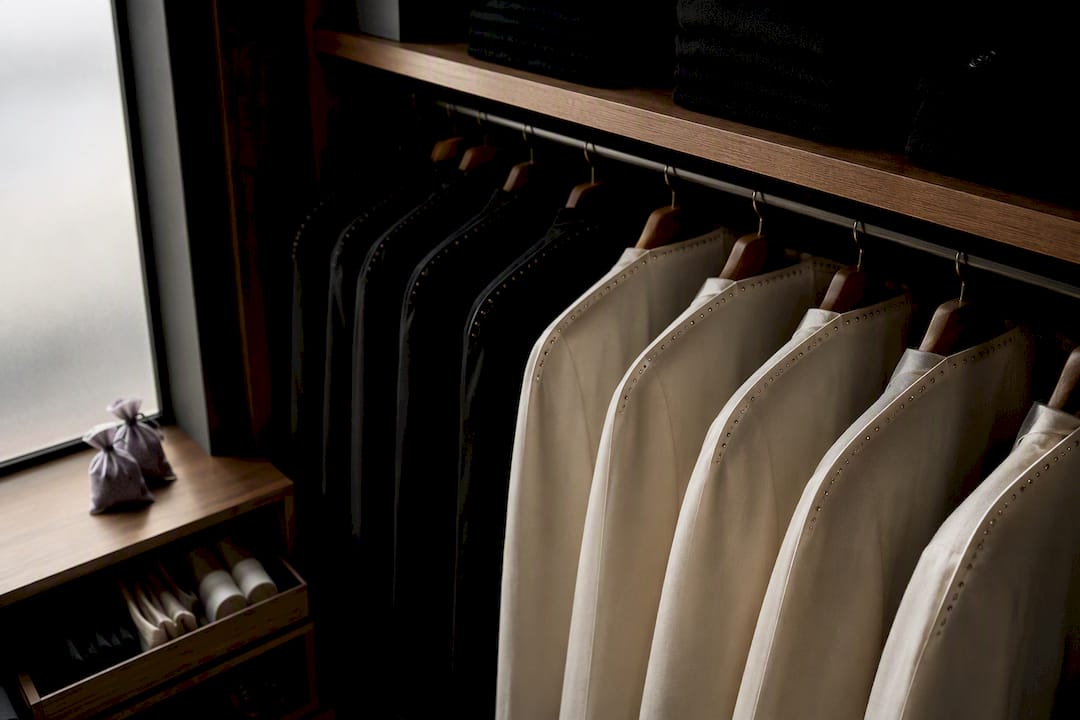
Air garments after each wear before returning them to the wardrobe. Use breathable cotton or muslin covers rather than plastic sheaths, fold silk pieces where the construction demands it, and hang heavyweight cotton on shaped hangers that support the shoulder line. Cedar blocks work as a natural moth deterrent; mothballs leave an odour that silk absorbs stubbornly.
Wash frequency should match fabric and use. Silk blouses need laundering only after visible soil or odour appears, not after every wear. Heavyweight cotton outerwear survives far longer between full washes if you spot-clean and air it regularly instead.
Pro Tip: Give high-use garments a rest day between wears, and store silk-lined pieces with slight separation from other garments to prevent dye transfer and creasing along the lining edge.
How does Maison Jeeyodee care for heavyweight cotton with silk linings?
Never tumble dry a heavyweight cotton garment lined in Egyptian silk. Heat and spin cause the two fabrics to shrink at different rates, and once that differential shrinkage sets in, it cannot be reversed.
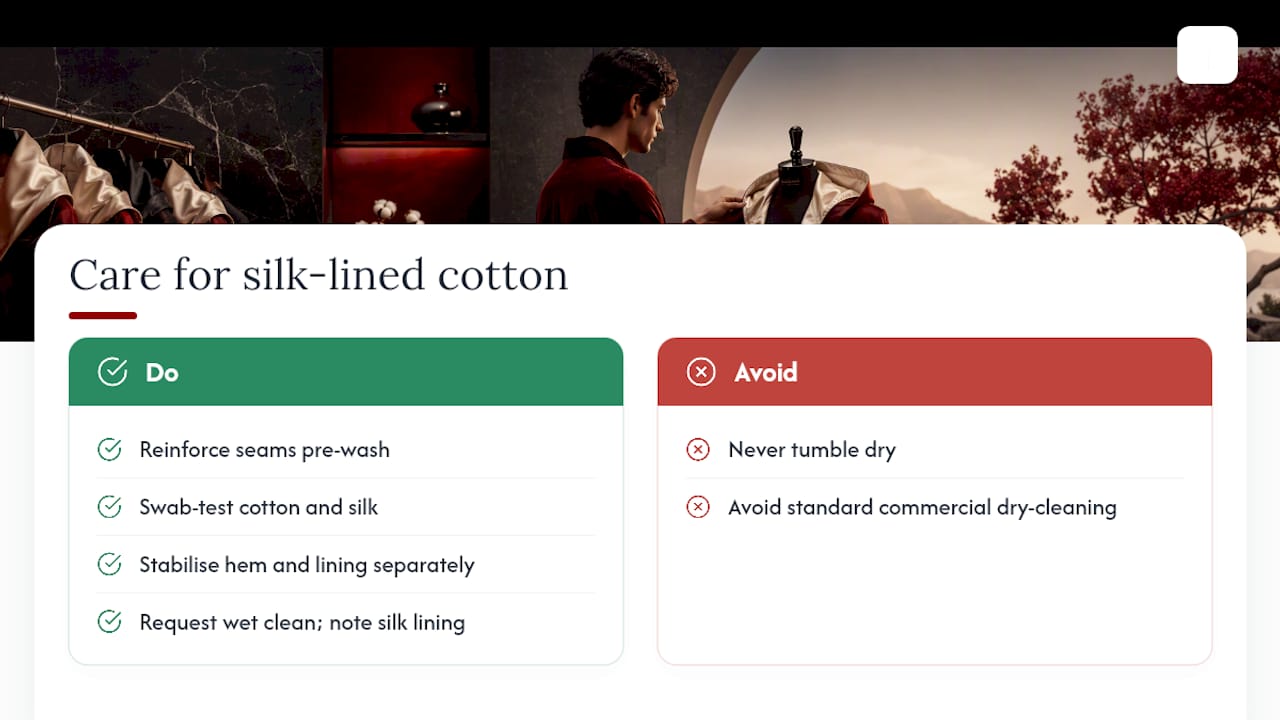
Our atelier's approach reflects that reality at every stage. Garments built with silk linings receive reinforced seams before they ever reach a wash, along with a swab test on both the outer cotton and the interior silk. For pieces with particularly delicate trims or Italian cone studs, we sometimes stabilise the hem and lining separately before wet cleaning, exactly the precaution ateliers use to preserve fit in mixed constructions.
When you send a Jeeyodee piece to a professional cleaner, request a conservational wet clean rather than a standard commercial dry-clean, and note the silk lining explicitly on the service order.
Mechanical agitation inside a hot tumble dryer is responsible for most structural deformation we see in mixed silk and cotton garments. It is the single instruction we ask every owner never to override.
Pro Tip: Keep the original care tag with the garment. It carries construction details that a general cleaner won't know to ask about.
Why does Jeeyodee treat care as part of a garment's story?
We think of careful maintenance as part of a piece's provenance, not an afterthought to it. Every hand-finished, individually numbered garment we produce carries craft that deserves the same discipline in upkeep as it received on the cutting table. Keep a simple care log alongside the original tag, and when a question falls outside what a label can answer, our atelier welcomes it directly.
Request Jeeyodee's atelier care and restoration service
Some garments deserve more than a wash cycle. Jeeyodee's atelier offers conservational wet-cleaning, reshaping, and finishing for silk-lined and limited pieces, the kind of restoration a standard dry-cleaner is rarely equipped to handle.

Because every Jeeyodee garment is produced once and never repeated, we treat its upkeep with the same restraint we apply to its making. If you own a numbered piece, or a garment intended as a Gifted commission for someone whose collection matters to them, reach out through the atelier for a private enquiry about restoration or bespoke care. Availability is limited by design, and that scarcity extends to how much we can take on at once.
Sources
- Lavare la seta proteggendo il tessuto
- Come lavare la seta: guida alla cura
- Seta
- Istruzioni per la cura | Fabric House.com
FAQ
What temperature is safe for washing silk?
Wash silk at or below 30°C. Anything higher risks damaging the protein fibre and dulling its natural sheen.
Can I put a silk-lined cotton garment in the tumble dryer?
No. Heat and spin cause the cotton and silk to shrink at different rates, which is why Jeeyodee's atelier explicitly advises against it for mixed constructions.
How do I know if a garment needs professional dry-cleaning?
Check the label first. If it says "dry-clean only," or if the piece has fine silk, heavy trims, or uncertain colourfastness, send it to a professional rather than washing at home.
How often should I wash silk versus cotton?
Wash silk only after visible soil or odour appears, rather than after every wear. Heavyweight cotton tolerates more frequent spot-cleaning and airing between full washes.
What detergent is safe for silk?
Use a detergent formulated for delicate fibres, such as Perlana Lana & Delicati, and avoid anything containing alkalis or bleach.