What separates a garment from a considered object is rarely visible at first glance. The types of luxury garment finishing details that define true craftsmanship live in the interior seams, the weight of a pressed lapel, the almost imperceptible give of a hand-rolled hem. These are the decisions that Italian ateliers have refined over generations, and they remain the clearest measure of a garment's integrity in 2026.
Finishing is not the final step. It is the discipline that transforms a sewn construction into something permanent. As garment finishing combines thermodynamics, heat, and steam to ensure dimensional stability, it marks the precise transition from raw assembly to refined product. The role of texture in luxury clothing is equally foundational: layered finishing creates complex hand feels entirely unattainable in mass-market textiles, engaging both cognitive and emotional responses that drive a reader's perception of value before a single seam is inspected.
The core finishing details that define artisanal quality include:
- French seams and flat-felled seams for interior cleanliness and structural durability
- Hong Kong finish for couture-level bound edges on unlined pieces
- Blind hems, turned hems, and rolled hems for refined silhouette and drape
- Hand-sewn buttonholes with silk thread and thread shanks
- Fully canvassed interlinings and breathable, eased linings
- Professional moulded pressing to set roll lines and break points
- Pad stitching and understitching for collar and cuff precision
- Saddle stitch, pick stitch, and hand-finished edges throughout
- Beading, embroidery, and lace appliqué applied by hand
- Silk piping, leather trims, and bias binding as decorative and protective elements
- Invisible zippers, hook and eye, and snap closures for considered fastening
What seam types define luxury garment construction?
The seam is the first commitment a maker makes to a garment's longevity. In couture and high-end atelier work, the choice of seam finish is never incidental; it reflects the fabric's character, the garment's purpose, and the maker's standard.
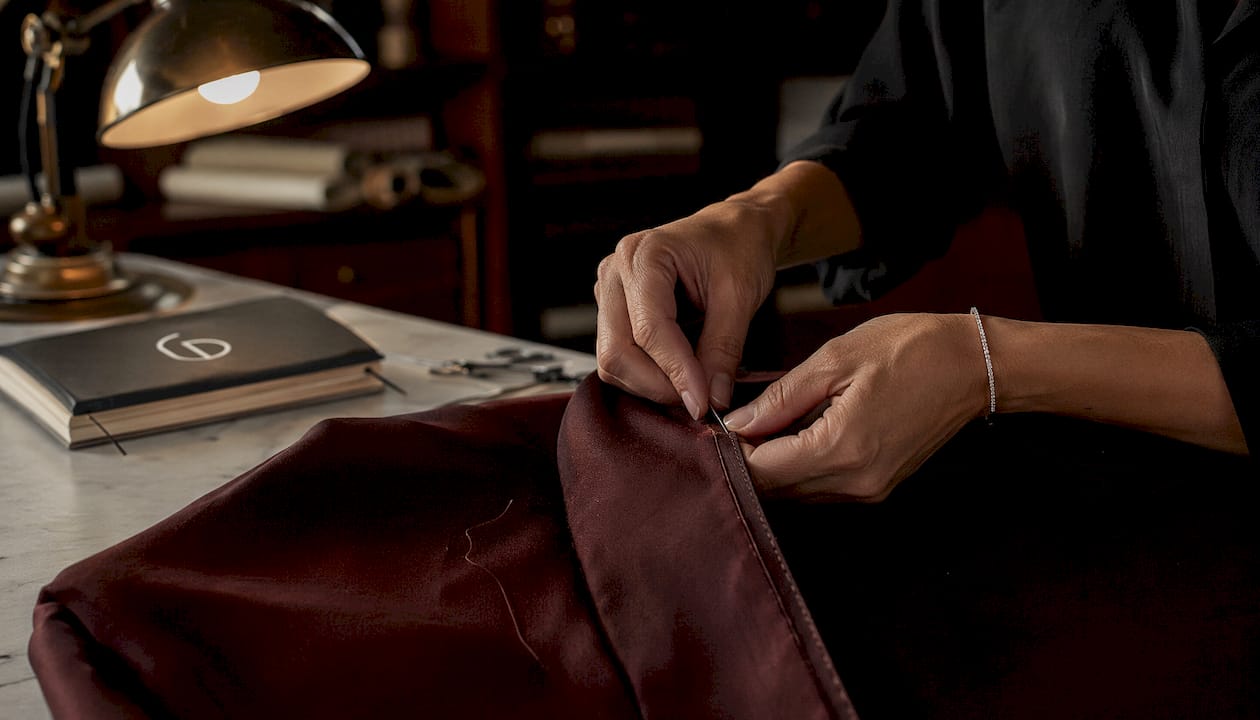
French seams entirely encase raw edges within a second fold, making them the standard for sheer and delicate fabrics where any exposed allowance would read through to the surface. The result is a clean, self-contained seam that requires no additional finishing and ages with the garment rather than against it.
Flat-felled seams take a different approach: the allowance is folded, lapped, and topstitched flat, creating a seam of exceptional durability suited to high-stress zones. You find them in considered denim and in the shoulder seams of workwear-influenced luxury pieces, where structural integrity is the priority.
The Hong Kong finish is the couture solution for unlined jackets. Each seam allowance is individually wrapped in a bias-cut strip of silk or fine cotton, producing a bound interior edge that is as considered as the exterior. It is the detail that rewards the wearer who looks inside.
| Seam type | Best fabric application | Primary benefit |
|---|---|---|
| French seam | Sheer, silk, chiffon | Fully enclosed raw edges, clean interior |
| Flat-felled seam | Denim, canvas, robust wovens | Maximum durability at stress points |
| Hong Kong finish | Unlined jackets, tailored wovens | Couture-level bound interior edge |
| Overlock seam | Most wovens and knits | Fray prevention, efficient production |
| Bound seam | Tailored and unlined pieces | Decorative and protective edge treatment |
Overlock seams are common and functional, but they represent the floor of finishing ambition rather than its ceiling. A bound seam, by contrast, uses a separate strip of fabric to encase the allowance and can serve a decorative purpose when executed in a contrasting or complementary material.
- French seam: fold wrong sides together, stitch, trim, fold right sides together, stitch again to encase
- Flat-felled: press one allowance over the other, fold under the raw edge, topstitch through all layers
- Hong Kong: cut bias strips, stitch to allowance face, wrap to reverse, stitch in the ditch
- Overlock: trim and overcast simultaneously; adequate for casual construction, insufficient for couture
- Bound seam: apply separate binding strip; choose silk or cotton bias for luxury applications
Pro Tip: When working with silk organza or fine voile, cut French seam allowances to no more than 6mm after the first stitch line. Any excess creates a visible ridge through the fabric face.
How do hem finishes shape the silhouette and drape of a luxury garment?
The hem is where a garment meets the world, and its finish determines whether the piece falls with conviction or collapses into uncertainty. Each technique carries a different relationship with the fabric's weight and movement.
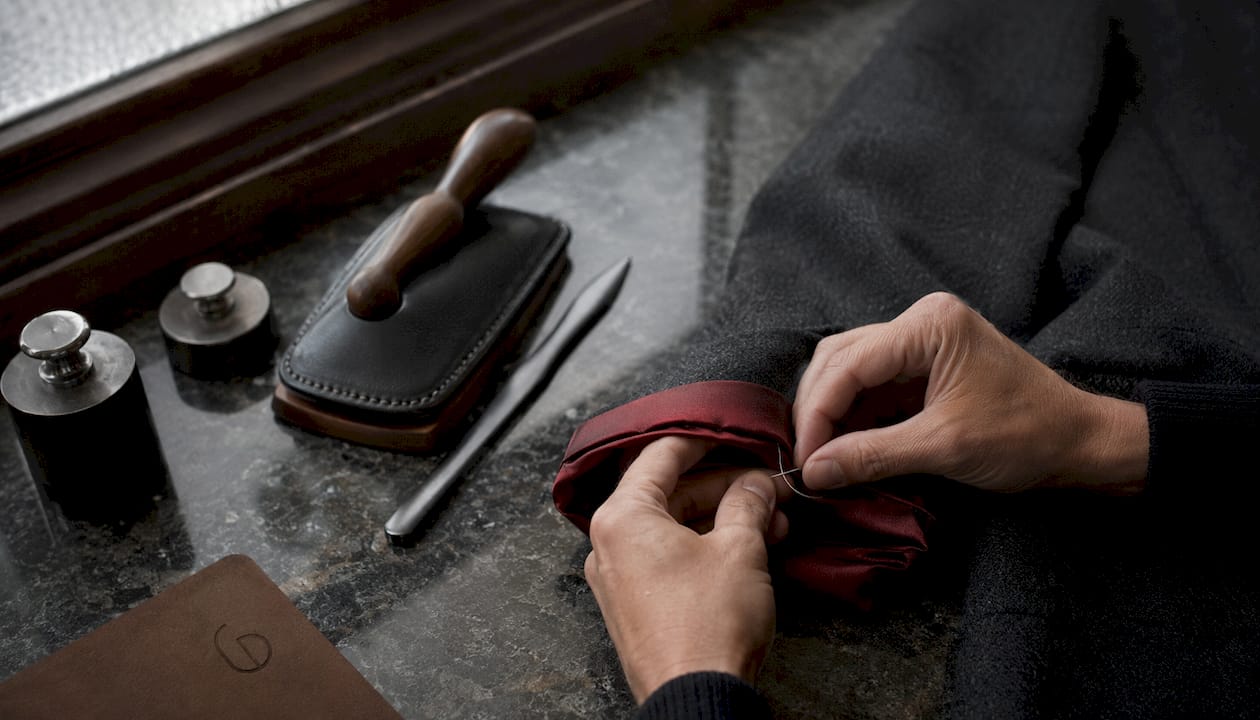
Turned hems are the classic standard: the allowance is folded twice and secured, either by machine or, in considered work, by hand with a slip stitch that catches only a single thread of the face fabric. The result is a hem that holds its line without announcing itself.
Rolled hems are reserved for the lightest fabrics, where any bulk would destroy the garment's intended delicacy. A hand-rolled hem on silk chiffon or fine georgette involves rolling the raw edge between the fingers and securing it with tiny, even stitches. The process is slow. That slowness is the point.
Blind hems provide invisible stitching from the outside, allowing the fabric to fall with an uninterrupted drape. They are particularly effective on structured wools and medium-weight silks, where the hem must be present but never felt. Hand-finished hems allow the fabric to fall naturally, without the stiffness or visible stitching inherent in machine alternatives.
- Turned hem: double-fold, hand-slip-stitched; suits medium to heavy wovens
- Rolled hem: hand-rolled edge; essential for chiffon, organza, and fine silk
- Blind hem: invisible from face; ideal for structured wools and tailored trousers
- Pinked edge: zigzag-cut allowance; a practical finish for stable wovens, not a couture choice
- Bias binding: encases the raw edge in a separate strip; both functional and decorative
- Hand-rolled edge: the signature of couture scarves and fine evening wear; requires patience and consistent tension
The role of finishing in luxury clothing is nowhere more apparent than at the hem. A machine-stitched hem on a fine wool coat reads as an economy. A hand-slip-stitched hem on the same coat reads as a decision.
Why do hand-sewn buttonholes signal luxury garment quality?
A buttonhole is a small aperture under considerable stress. How it is made reveals, with unusual clarity, the standard of the whole garment.
Machine-stitched buttonholes are consistent and fast. They are also rigid, prone to distortion under repeated use, and visually uniform in a way that reads as industrial. Hand-sewn buttonholes employ silk thread and precise stitching that minimises bulk, allowing natural drape and secure fastenings that improve with wear rather than degrading.
The distinction in technique is significant. A hand-worked buttonhole is cut after stitching, with the edges overcast in a tight buttonhole stitch that locks each thread individually. The bar tacks at each end are formed by hand, distributing stress across multiple threads rather than concentrating it at a single machine lock stitch.
- Machine buttonhole: cut before stitching; uniform but rigid; prone to fraying at cut ends
- Hand-worked buttonhole: overcast after cutting; each stitch individually secured; ages with integrity
- Silk thread: reduces bulk and surface disruption; allows fabric to roll naturally around the opening
- Thread shank on buttons: wraps thread between button and fabric face, providing clearance for the buttonhole placket and preventing strain
- Keyhole buttonhole: used on tailored jackets; the rounded end accommodates the button shank and reduces wear at the stress point
Italian ateliers treat the buttonhole as a signature. The spacing, the tension, the precise length relative to the button diameter: each variable is set by hand and eye, not by a machine's programme. You can read the maker's discipline in the evenness of the stitches.
What lining and interlining methods distinguish luxury garments?
The interior of a garment is its private architecture. In considered construction, that architecture is as deliberate as anything visible from the outside.
Fully canvassed interlinings allow a jacket to mould naturally to the body over time. Unlike fused garments, where an adhesive interlining bonds permanently to the face fabric and deteriorates with cleaning, a canvassed jacket retains its form through the movement of the wearer rather than the rigidity of glue. Horsehair canvas, cut and shaped by hand, provides the foundation for lapels and chest pieces, giving them a resilient suppleness that fused construction cannot replicate.
Linings in luxury garments are chosen for breathability, comfort, and their relationship to the outer shell. A well-executed lining is eased into the garment with a small amount of slack, preventing the outer fabric from pulling or distorting when the wearer moves. This easing is done by hand, with the artisan reading the fabric's grain and bias as they work.
- Fully canvassed chest piece: horsehair canvas, felt, and wadding layered and hand-stitched; moulds to the body over time
- Half canvas: canvassed through the chest and lapel only; a considered compromise for lighter jackets
- Fused interlining: adhesive bond between interlining and face fabric; efficient but degrades with wear and cleaning
- Eased lining: hand-set with deliberate slack; prevents distortion of the outer shell
- Breathable lining fabrics: silk, cupro, or fine cotton; chosen for comfort and compatibility with the outer textile
- Couture lining insertion: lining attached at hem and facing edges only, allowing independent movement of shell and interior
The structural interior architecture of a luxury garment supports the outer fabric's natural drape and the wearer's comfort simultaneously. These are not competing demands. In skilled hands, they reinforce each other.
How do artisan hand-finishing and professional pressing complete a luxury garment?
Hand-finishing is where a garment acquires its character. The techniques are ancient, the tools are simple, and the results are irreplaceable.
Saddle stitch uses two needles and a waxed linen thread to create a double-threaded bond that is significantly more resilient to abrasion and tearing than machine lockstitch. Critically, if one stitch breaks, the seam holds. A machine lockstitch, by contrast, can unravel entirely from a single point of failure. The pick stitch, used on lapel edges and pocket flaps in bespoke tailoring, secures multiple layers without creating bulk, with each individual stitch measuring no more than 1–2 millimetres. A master tailor on Savile Row might execute this at 8–10 stitches per inch in pure silk thread.
Professional pressing shapes garments at structural points rather than merely smoothing surfaces. Moulded presses set roll lines and break points, creating lasting silhouette form that flat pressing cannot achieve. The lapel of a considered jacket acquires its gentle roll through hours of hand-pressing over a curved tailor's ham, not through cutting alone.
Hand embellishments follow the same logic of permanence. Each bead or sequin is sewn with multiple secure stitches, ensuring longevity and precise placement. Hand-embroidered motifs possess a unique dimensionality, with varying stitch lengths and thread tensions creating a tactile surface that catches light in ways machine embroidery cannot produce.
- Saddle stitch: two needles, waxed linen thread; double-threaded bond; partial integrity maintained if one stitch breaks
- Pick stitch: 1–2mm per stitch, 8–10 per inch; secures lapels and pocket flaps without bulk
- Hand-set sleeves: eased into the armhole with targeted steam and pressing; allows full range of motion without pulling
- Pad stitching on lapels: hundreds of small stitches through canvas and facing; creates the resilient, supple foundation for the lapel roll
- Hand-applied beading and embroidery: individually secured; dimensionality and durability beyond machine application
- Lace and appliqué insertion: hand-basted, eased, and sewn; invisible joins and precise pattern matching
Pro Tip: To recognise genuine artisan hand-finishing, examine the interior of a jacket lapel. If the canvas is attached with rows of small, slightly irregular diagonal stitches visible through the lining, the garment is pad-stitched by hand. A fused lapel will show no stitching at all and will feel stiffer when gently rolled between the fingers.
The philosophy and craft behind Maison Jeeyodee's finishing
Jeeyodee does not approach finishing as a production stage. We approach it as a declaration.
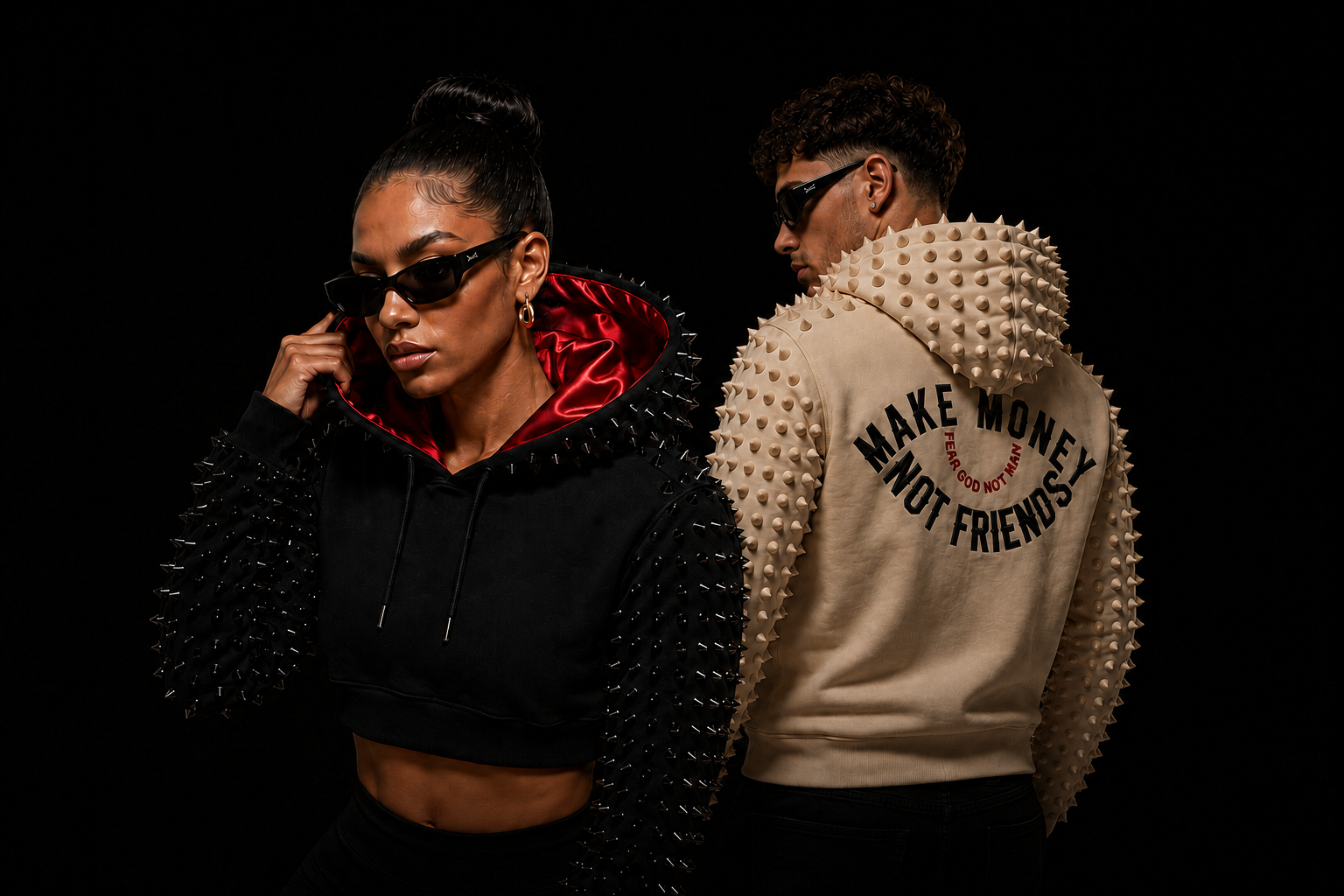
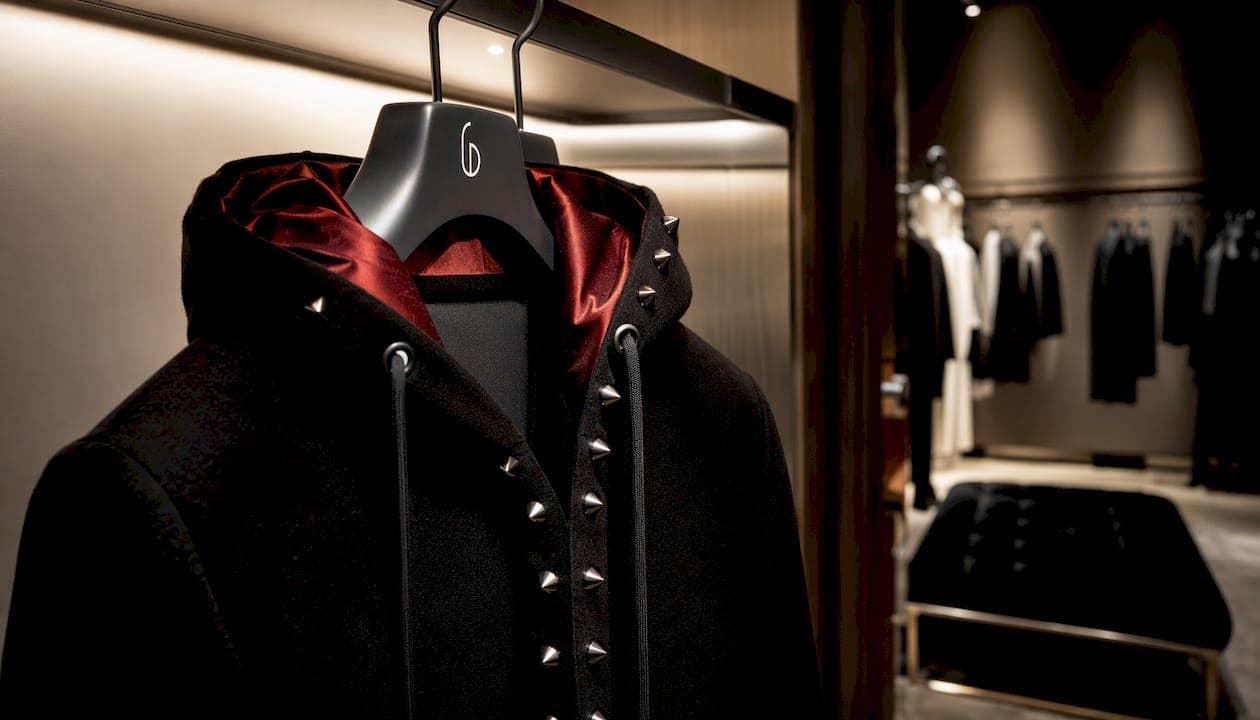
Every garment produced by Maison Jeeyodee is handcrafted in Italy, individually numbered, and produced once. The finishing details are not selected for efficiency; they are selected for permanence. Egyptian silk linings carry a weight and luminosity that synthetic alternatives cannot approach. Meticulously aligned Italian cone studs are set by hand, each one a considered mark rather than a mechanical repetition. These are not embellishments. They are the vocabulary of a garment that intends to outlast its season.
The role of craftsmanship in fashion has always been to resist the disposable. At Jeeyodee, that resistance is structural. The finishing techniques we employ, from hand-rolled edges to fully canvassed interiors, are chosen because they improve with wear rather than degrading under it. A garment that carries a number carries a responsibility: to the materials, to the artisan who completed it, and to the person who will own it.
Slow production is not a constraint. It is the condition under which conviction becomes craft. Each drop is limited because repetition would dilute the intention behind every finishing decision. When a garment is never reproduced, every detail within it becomes permanent. The luxury garments that last are those built with this understanding from the first seam to the final press.
What specialty closures do luxury garments use beyond buttonholes?
Closures are the moments where a garment opens and closes around the body. In considered construction, each type is chosen for its relationship to the fabric, the silhouette, and the wearer's experience.
Invisible zippers are set so that the coil sits entirely within the seam, leaving no visible trace on the garment face. The technique requires the zip to be attached before the seam is closed, with the tape pressed open and the coil rolled back during stitching. When executed correctly, the closure reads as a continuation of the seam rather than an interruption of it.
Hook and eye closures offer a precision that zippers cannot match at the waistband or the neckline of a structured bodice. They distribute tension across multiple small points rather than a single fastening, and they allow the garment to be adjusted with a degree of subtlety that a zip does not permit. In couture, hooks are often set by hand with a bar stitch that anchors them to the interfacing as well as the fabric, preventing any rotation or pull.
Snap closures, when used in luxury construction, are typically set with a hand-sewn ring of thread rather than pressed through the fabric mechanically. This protects the textile from distortion and allows the snap to be replaced without damage to the garment. For leather and heavyweight pieces, luxury leather finishing employs press studs set with precision tools that distribute the fixing load across a reinforced backing, preserving the integrity of the shell.
How do silk piping and leather trims define luxury garment edges?
Trims and bindings in luxury construction serve two purposes simultaneously: they protect the edge and they announce the maker's standard. The choice of material and application method is as deliberate as any other finishing decision.
Silk piping is inserted into a seam before it is closed, creating a fine raised cord along the edge of a collar, cuff, or pocket. The cord itself is typically a twisted silk or cotton rope, covered in a bias-cut strip of the same or contrasting silk. The bias cut is not incidental; it allows the piping to navigate curves without puckering, maintaining a consistent diameter around the full perimeter of the detail.
Leather trims introduce a material contrast that signals considered construction. A leather-bound hem on a wool coat, or a leather-tipped collar on a fine cotton jacket, creates a tactile and visual boundary that reinforces the garment's structure. In atelier work, leather trims are skived to a feather edge before application, so the transition between leather and fabric is felt rather than seen.
Bias binding, when used as a visible edge finish rather than a concealed seam treatment, is cut on the true bias and applied in two stages: stitched to the face, then folded and slip-stitched to the reverse by hand. The hand application is what allows the binding to follow a curved edge without distortion. A machine-applied binding on a curved edge will always show a slight ripple; a hand-applied one will not.
How are collars and cuffs finished to achieve couture-level precision?
Collars and cuffs are the most scrutinised details on any garment. They sit at the face and wrist, where the eye naturally rests, and they must hold their form through repeated wear and cleaning.
Understitching is the technique that keeps a facing or collar stand from rolling to the outside. After the collar is turned and pressed, the seam allowance is stitched to the facing only, not through to the face fabric. This anchors the interior layer and prevents it from migrating. The stitching is invisible from the outside and essential to the collar's behaviour over time.
Pad stitching is the foundation of a considered lapel and collar roll. Rows of small diagonal stitches, worked through the canvas and the facing fabric, build a flexible but resilient structure that holds the roll line without stiffness. The direction and spacing of the stitches vary across the collar to create different degrees of firmness: tighter near the stand, looser toward the outer edge. This variation is what gives a hand-padded collar its characteristic softness at the tip and authority at the base.
Cuffs in luxury tailoring are typically interfaced with a woven interlining, set by hand, and finished with a hand-sewn slip stitch at the inner edge. The button placement is marked individually for each garment, and the buttonholes are worked by hand as described earlier. The result is a cuff that lies flat, holds its shape, and responds to the wearer's wrist rather than imposing a fixed geometry upon it.
Key takeaways
Luxury garment finishing is the discipline that transforms construction into permanence, combining hand technique, considered materials, and artisanal pressing to produce garments that improve with wear.
| Point | Details |
|---|---|
| Seam choice reflects fabric and purpose | French seams suit sheer fabrics; Hong Kong finish delivers couture-level bound edges on unlined jackets. |
| Hand-sewn buttonholes outlast machine alternatives | Silk thread and individually secured stitches allow natural drape and resist distortion under repeated use. |
| Canvassed interlinings mould to the body | Horsehair canvas, hand-stitched and shaped, creates a resilient foundation that fused construction cannot replicate. |
| Pressing shapes silhouette, not just surface | Moulded presses set roll lines and break points, establishing lasting garment form beyond surface smoothing. |
| Saddle stitch maintains partial integrity if broken | Each thread is individually secured, unlike machine lockstitch, which can unravel entirely from a single failure point. |
FAQ
What are the main types of finishes used in luxury garments?
The principal finishing types include French seams, flat-felled seams, Hong Kong bound edges, blind hems, rolled hems, hand-worked buttonholes, fully canvassed interlinings, and professional moulded pressing. Each is chosen for its relationship to the fabric and the garment's structural demands.
What distinguishes hand-finished garment details from machine alternatives?
Hand-finished details such as saddle stitch, pad stitching, and hand-rolled hems offer greater resilience, subtlety, and adaptability to individual fabric characteristics than machine alternatives. A hand-stitched seam maintains partial integrity even if one stitch breaks, whereas a machine lockstitch can fail entirely from a single point.
What are the seven main types of seams used in garment construction?
The seven most commonly referenced seam types are the plain seam, French seam, flat-felled seam, Hong Kong finish, overlock seam, bound seam, and lapped seam. In luxury and couture construction, French, flat-felled, and Hong Kong finishes are preferred for their interior cleanliness and structural integrity.
Why does pressing matter in luxury garment finishing?
Professional pressing shapes the garment's silhouette at structural points, setting roll lines and break points that define the final form. Moulded presses used in atelier work go well beyond surface smoothing, creating lasting dimensional stability that flat pressing cannot achieve.
What makes a lining truly luxurious in a high-end garment?
A luxury lining is breathable, eased by hand to prevent distortion of the outer shell, and chosen for compatibility with the face fabric. Fully canvassed construction beneath the lining allows the jacket to mould naturally to the wearer's body over time, a quality that fused interlinings cannot provide.
Jeeyodee garments are produced in strictly limited runs, handcrafted in Italy, and individually numbered. Each piece is made once and never repeated. Explore the current collection at jeeyodee.store.