
A true edizione limitata is a small, documented production run made to be collectible, not a marketing label slapped on a restock. The single rule that protects a buyer is this: verify the numbering, the documentation and the materials before parting with any money. Maisons that build this correctly, Jeeyodee among them, treat provenance as the whole point of the exercise.
TL;DR:
- Authentic limited editions are documented with a fixed, stated number of pieces, not just marketed with vague "limited" labels.
- Buyers should verify numbered tags, authenticity certificates, material origins, packaging quality, and provenance through official sources or coverage.
- Genuine releases often have short pre-order windows, are announced through verified channels, and require registration or confirmation directly from the brand.
- Limited-edition garments derive value from scarcity, narrative, quality materials, and traceable provenance, not just the label or hype.
- Most brands, including Jeeyodee, produce each piece once in Italy with unique numbering, handcrafted details, and no plans for reissue or restocking.
Table of Contents
- What does 'limited edition' actually mean in fashion?
- Five authenticity indicators every buyer should check
- How limited-edition drops are released, and how to secure one
- What limited editions cost, and what happens after you buy
- Maison Jeeyodee's approach: numbering, materials and manifesto
- Why most 'limited edition' advice misses the point
- How to secure a Jeeyodee limited drop
- Sources
- FAQ
What does 'limited edition' actually mean in fashion?
The Cambridge Dictionary defines a limited edition as a work produced in small numbers, precisely so that each copy might hold value later. The Treccani entry for edizione limitata reinforces the same principle in Italian cultural context: scarcity by design, not by accident.
That distinction matters more than most shoppers realise. A brand can print "limited" on a hangtag while manufacturing thousands of units. A genuine collectible, by contrast, ties its rarity to something documented, a fixed run size, a stated collaboration, a milestone worth marking. Premium materials do real work here too: heavyweight cotton, silk linings, hand-finishing all raise the cost of production, which is precisely why they justify a smaller run.
What separates a genuine limited edition from a generic "limited" drop:
- Documented scarcity — a stated, fixed number of pieces, not a vague "while stocks last."
- A narrative worth telling — a collaboration, an anniversary, a manifesto behind the design.
- Material intent — fabrics and finishing chosen because they cannot be mass-produced cheaply.
- Traceable provenance — records that let a future owner confirm where the piece came from.
Without these, "limited" is simply a word on a label.
Five authenticity indicators every buyer should check
Before paying for anything described as limited-edition streetwear, run through this checklist. It takes minutes and it separates collectors from casualties.
- Look for a numbered edition tag. A genuine piece states its position within a stated run, "No. 14 of 100" rather than an unnumbered mass tag.
- Ask for a certificate of authenticity. Independent artist-led drops, such as Ilaria Berenice's limited-edition artist T-shirts capped at 50 signed pieces, show how seriously small ateliers treat this documentation. If a seller cannot produce one, walk away.
- Verify the materials and their origin. Made in Italy claims, silk linings, heavyweight cotton, these should be stated plainly, not implied.
- Examine the packaging and presentation. Coverage of a commemorative limited-edition T-shirt for the Frecce Tricolori's 65th season shows how curated boxing, embroidery and finishing signal collectibility. Cheap, generic packaging on an expensive "limited" item is a warning sign.
- Confirm provenance through purchase records. Buy from authorised retailers or trace editorial coverage of the release. If nobody has written about it and no retailer will vouch for it, treat the claim with suspicion.
Pro Tip: Photograph the numbered tag, the certificate and the packaging the day it arrives. If you ever resell or need to verify authenticity years later, that record is worth more than any receipt.
How limited-edition drops are released, and how to secure one
Genuine releases follow recognisable formats. Timed drops open and close within hours. Capsule collaborations pair a maison with an artist or another house for a single, unrepeated run. Bespoke atelier commissions are made to order, one piece at a time, often against a deposit rather than a shelf price. Pre-order windows for capsule collections can be startlingly short, one recent three-piece capsule collection ran for just 48 hours.
Legitimate release notices appear through official maison channels, verified boutiques and curated marketplaces, rarely through unsolicited messages or third-party resellers claiming "exclusive access."
To improve your odds while reducing fraud exposure:
- Register directly with the maison's own site or mailing list rather than relying on social media alone.
- Buy only from verified sellers or the brand's own checkout.
- Request photographs of the numbered tag and packaging before paying, especially for secondary-market pieces.
- Insist on tracked shipping and a clear returns policy before completing payment.
- Treat any seller who refuses to answer verification questions, or who pressures you to pay outside a secure checkout, as a scam.
What limited editions cost, and what happens after you buy
Scarcity is the first driver of price, but it is not the only one. Materials add real cost: heavyweight cotton and silk linings are expensive to source and finish. A collaboration or milestone narrative adds a second layer of value that has nothing to do with fabric weight and everything to do with story.
Edition size and documentation shape resale prospects more than most buyers expect. A numbered, well-documented piece tends to hold interest longer than an unnumbered item with an identical design, because the paperwork itself becomes part of what a future buyer is purchasing.
Preservation matters just as much as the initial purchase decision:
- Keep the original packaging, certificate and any labelling together with the garment.
- Store pieces away from direct sunlight and humidity, minimal laundering preserves both fabric and colour.
- Wear sparingly if resale value matters to you, every wash and wear cycle chips away at condition.
- Avoid aftermarket alterations, cropping, redyeing, restitching, any of these can void the piece's collectible status entirely.
Reproductions and poor documentation are what erode value fastest. A piece without its certificate is, in practical terms, just a well-made garment.
Maison Jeeyodee's approach: numbering, materials and manifesto
Jeeyodee builds every drop around the same conviction: a garment worth keeping is a garment made once. Each piece is handcrafted in Italy and individually numbered, there is no second run, no reissue, no quiet restock months later. The heavyweight cotton and silk-lined construction is chosen deliberately, not as decoration but as a statement about what a garment should be built to survive.
When a piece leaves the atelier, it carries what a genuine limited edition should carry:
- A certificate confirming the piece's place within its stated run.
- Presentation packaging finished to the same standard as the garment itself.
- Order documentation that lets an owner trace the piece back to its release.
For readers who want to understand the material choices in more depth, the maison's own writing on 500 gsm heavyweight fabrics sets out why weight and construction matter to longevity, and the piece on new hoodie releases walks through what a launch actually looks like from the buyer's side. None of this is decoration. It is the manifesto made physical, permanence, chosen deliberately, offered once.
Why most 'limited edition' advice misses the point
Most guides to buying limited streetwear obsess over speed, how fast to click, which app to load, when the drop goes live. That misses what actually determines whether a piece holds meaning five years on. Speed gets you a purchase. Documentation, materials and narrative get you a garment worth keeping.

The conventional wisdom treats "limited" as a hype mechanism, something to chase before it disappears. We think that framing has it backwards. A numbered piece with no certificate, no stated run size and no story behind it is not a collectible. It is simply scarce, and scarcity alone has never been the same thing as value.
What we would prioritise first, before speed, before hype, is provenance. Ask what number your piece carries within its run. Ask what materials justify the price. Ask whether the maison behind it has a reason for making the piece at all, beyond selling units. A garment that answers those three questions honestly will outlast a hundred drops that only answered the fourth: how fast can you buy it.
— Jeeyodee
How to secure a Jeeyodee limited drop
Jeeyodee releases work the way a genuine edizione limitata should: strictly limited, produced once, never reproduced. Every piece is individually numbered, finished with Egyptian silk hood linings and meticulously aligned Italian cone studs, and arrives with the documentation that confirms its place within its run. There is no reissue waiting in the wings.
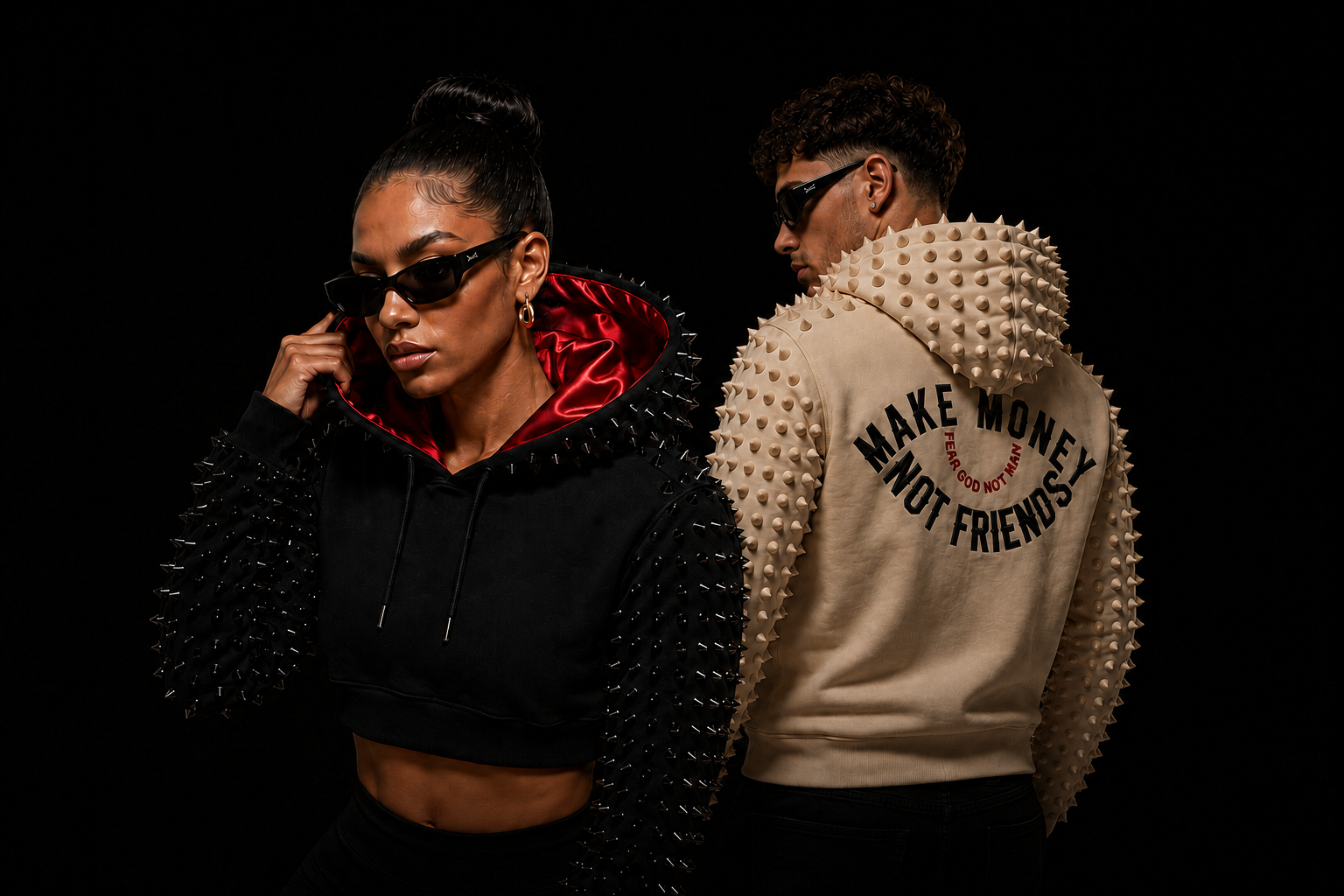
Securing a piece starts with visiting the maison's landing page and subscribing to launch alerts, given how short pre-order windows for capsule releases tend to run, sometimes a matter of hours, waiting until a drop is announced elsewhere usually means missing it. Upcoming pre-order windows and atelier commission slots, which require a deposit before final pricing is agreed, are both listed there. Every order ships with its certificate, numbered tag and presentation packaging intact, backed by a clear returns policy, so authenticity is never something you have to take on faith.
Sources
- Cambridge Dictionary — limited edition (Italian entry)
- MEGAMODO — BSMT presents 'Dreams Ain’t for Dreamers' capsule collection
- Corriere Nazionale — Exclusive limited-edition T-shirt for Frecce Tricolori 65th season
- Treccani — edizione limitata (definition and etymology)
FAQ
What does 'edizione limitata' mean for streetwear?
It means a small, fixed production run, documented by numbering and certification, rather than an open-ended restock marketed loosely as "limited."
How can I tell if a limited-edition piece is authentic?
Check for a numbered edition tag, a certificate of authenticity, stated materials and provenance, and packaging finished to a consistent standard, then confirm the release through official channels or editorial coverage.
Why do limited-edition garments cost more than standard streetwear?
Scarcity, premium materials such as heavyweight cotton and silk linings, and a collaboration or milestone narrative all add cost that a mass-produced garment never carries.
Does Jeeyodee reproduce or restock its drops?
No. Every Jeeyodee piece is handcrafted in Italy, individually numbered and produced once, with no reissue or restock ever following the original run.
What should I do if a seller cannot provide a certificate of authenticity?
Treat that as a serious warning sign and avoid the purchase. Buy only from official maison channels, verified boutiques or sellers who can produce numbered documentation on request.