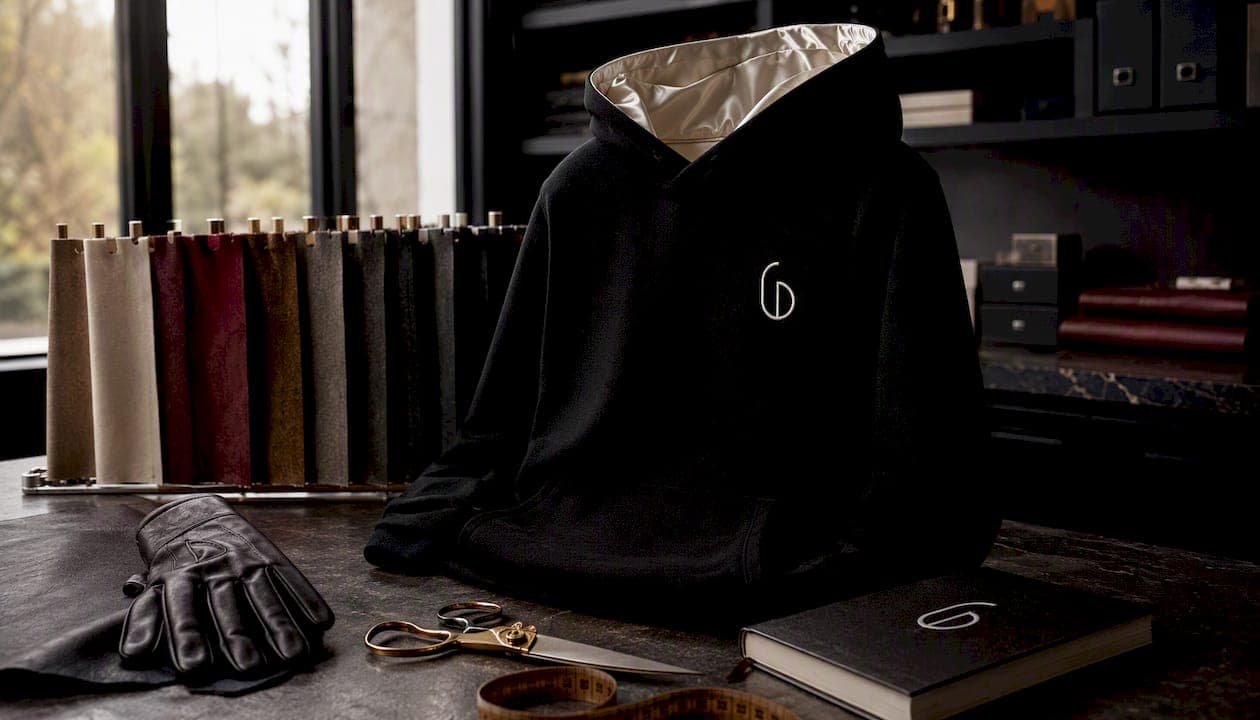
A collector-grade minimalist hoodie is a handcrafted, individually numbered garment produced in Italy from heavyweight cotton with an Egyptian silk lining, finished by a master artisan and issued as a one-time, strictly limited release. For collectors, the benchmark is Maison Jeeyodee: every piece carries a certificate of provenance, artisan attribution, and a serial number that will never be repeated.
Before you proceed, three signals confirm a piece qualifies:
- A numbered limited-edition certificate issued at the point of production, not at point of sale
- Named artisan attribution, confirming single-master finishing rather than assembly-line construction
- Verified Made in Italy atelier oversight, with a transparent supply chain from raw material to final stitch
Table of Contents
- What distinguishes a collector-grade minimalist hoodie?
- Why limited-edition production preserves long-term value
- Collector's checklist: what to verify before you acquire
- How limited drops, preorders and bespoke commissions work
- What to expect on price and production timelines
- Sizing, fit and customisation for collectors
- How to care for and conserve a limited-edition piece
- How Maison Jeeyodee crafts its limited luxury hoodies
- Key takeaways
- A note from Maison Jeeyodee
- Maison Jeeyodee's current collection and commission enquiries
- Useful sources and further reading
- FAQ
What distinguishes a collector-grade minimalist hoodie?
The phrase "minimalist hoodie" carries two entirely different meanings depending on context. For the collector, it describes a silhouette of deliberate restraint: no excess hardware, no graphic noise, no seasonal trend. The restraint is the point. What lies beneath that surface is where the distinction lives.
Fabric weight is the first marker. Heavyweight cotton at 500 gsm delivers the tactile density and structural drape that distinguish a collector piece from anything produced at volume. An Egyptian silk lining is not decorative; it is a material commitment that adds cost, complexity, and a sensory register no synthetic alternative replicates.
Construction signals matter equally. Hand-sewn joins, hand-set hardware, and the minute irregularities that only single-master finishing produces are the marks of genuine craft. As trade reporting on artisan processes confirms, master-level finishing is the product of years of training and cannot be replicated at scale. Individual numbering and a certificate of provenance complete the picture, converting a garment into a documented object.
Why limited-edition production preserves long-term value
Academic analysis of the luxury fashion industry identifies inaccessible, limited-number production as the defining characteristic of the luxury pyramid's highest tier. Scarcity is not manufactured by withholding supply; it is the natural consequence of how long genuine craft takes.
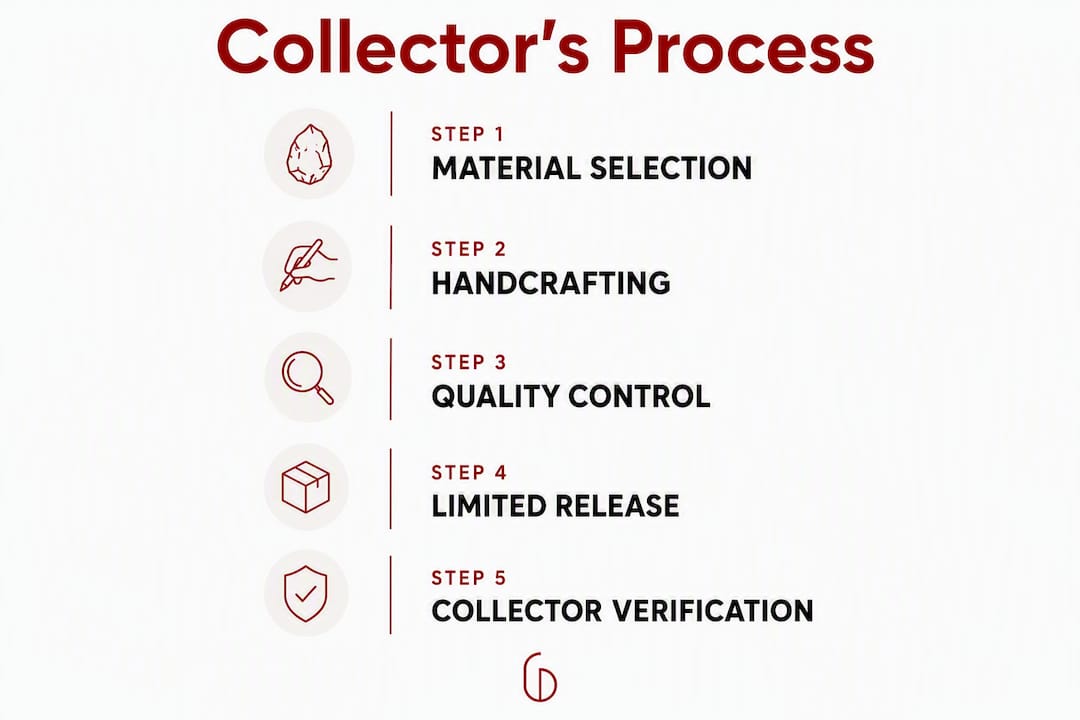
The concept of relational value extends this further. Research into the Italian fashion system argues that the future of credible luxury depends on sustained, ethical collaborations between ateliers and their suppliers, not fragmented, high-speed networks. When a maison maintains the same material relationships across years, the quality and consistency of each piece reflects that continuity. Small-batch production reinforces this: fewer pieces, made with greater care, from suppliers who understand the standard expected.
Pro Tip: Ask the maison directly for documentation of its supplier relationships. A maison confident in its relational value will answer without hesitation. Vague responses to provenance questions are themselves a signal.
Collector's checklist: what to verify before you acquire
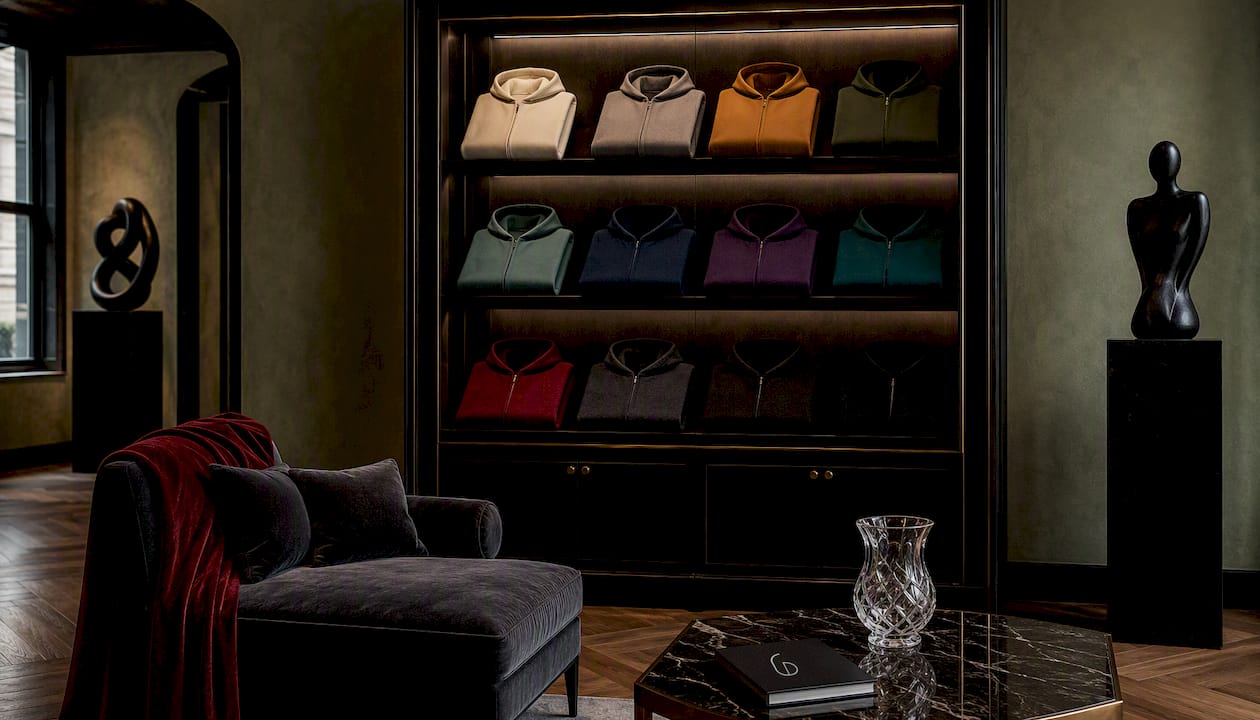
The risk of fragmented subcontracting behind a Made in Italy label is well documented. Single-atelier control is the distinguishing signal, and collectors should verify it directly.
| Verification point | What to look for |
|---|---|
| Fabric weight | Heavyweight cotton of substantial density; confirm with maison documentation |
| Lining material | Egyptian silk or equivalent natural lining; request material specification |
| Stitching | Hand-sewn joins with minute, consistent irregularities; no uniform machine stitch |
| Hardware | Hand-set studs with precise alignment; Italian provenance where stated |
| Numbering | Individual serial number on the garment, matched to certificate |
| Certificate | Issued at production, not at dispatch; includes artisan attribution |
| Supply chain | Single-atelier oversight confirmed; no opaque subcontracting |
Request the above in writing before committing to a purchase. A maison that cannot supply this documentation has not earned the claim.
- Inspect the lining seam: hand-sewn joins show slight variation in tension that machine stitching cannot replicate
- Check hardware alignment: hand-set studs sit with deliberate precision, not mechanical uniformity
- Verify the serial number against the certificate; both should carry the same reference
How limited drops, preorders and bespoke commissions work
Limited releases follow a defined sequence. Understanding it protects your position as a collector and prevents the most common acquisition errors.
- Announcement. The maison communicates the forthcoming drop to its subscriber list, typically with a short window between announcement and opening. Register for direct communications; secondary sources are always slower.
- Preorder or deposit window. For limited drops, a preorder secures your allocation. For bespoke commissions, an upfront deposit confirms the commission and initiates the production timeline. Jeeyodee's atelier commissions require a 50% deposit, with final pricing agreed privately.
- Production. Handcrafted pieces are not held in stock. Production begins after allocation is confirmed, which is why lead times are longer than mass-market equivalents.
- Authentication and dispatch. Each piece is numbered, certificated, and documented before leaving the atelier. Authentication is built into the production process, not added afterwards.
- Delivery. The garment arrives with its certificate, original packaging, and any bespoke documentation. Retain everything.
Pro Tip: Set direct alerts from the maison's own channels. Drop windows for genuinely limited pieces close quickly, and waiting for a secondary announcement almost always means waiting for the next release — which, by definition, will be a different piece entirely.
What to expect on price and production timelines
Collector-grade, handcrafted hoodies produced in small Italian ateliers occupy a price tier that reflects material cost, artisan time, and the permanence of the object. A limited-edition piece with Egyptian silk lining, Italian hardware, and individual numbering sits firmly in the upper range of luxury casualwear pricing. Bespoke commissions, where pattern adjustments or custom embroidery are involved, carry a premium above the standard drop price.
Deposit practice is standard across serious ateliers. A 50% deposit on commission work is the norm; it confirms intent, initiates material sourcing, and protects the artisan's time. The balance is settled on completion.
Production timelines for limited drops typically run several weeks from close of preorder to dispatch. Bespoke commissions, where pattern work or structural adjustments are involved, extend that timeline further. Collectors who understand this treat lead time as a mark of quality, not an inconvenience. Resale guidance confirms that limited-edition provenance and documented condition consistently command higher secondary-market prices, making the wait a considered investment.
Sizing, fit and customisation for collectors
Jeeyodee offers both unisex and women's cropped fits. The unisex silhouette is cut for structural presence: a considered drop shoulder, a hem that falls with intention. The cropped variant is proportioned for a sharper, more editorial line.
For preservation of the garment's collector value, consider the following before requesting alterations:
- Structural alterations (recut seams, repositioned hardware) affect the original pattern and may reduce provenance integrity on resale
- Embroidery and monogramming add personal provenance without altering the garment's construction; they can increase personal attachment and, in some cases, secondary-market interest
- Lining adjustments are rarely necessary and should only be requested through the atelier directly
When ordering, provide precise measurements rather than relying on standard sizing alone. For collectors intending to preserve the piece unworn, order to your exact measurements so the garment can be displayed or stored without distortion.
- Measure chest, shoulder width, and body length before selecting a size
- Communicate fit preferences to the maison at the point of commission, not after dispatch
- Request a pattern consultation for bespoke work; this is standard practice for atelier commissions
How to care for and conserve a limited-edition piece
Conservation begins the moment the piece arrives. Heavyweight cotton and Egyptian silk respond differently to storage conditions, and both require attention.
- Store flat or on a padded hanger in a breathable cotton garment bag; never compress in a sealed plastic cover
- Maintain storage temperature between 15°C and 20°C with low humidity; avoid direct light exposure
- Clean only by specialist hand-wash or atelier-authorised dry cleaning; never machine wash
- Document any cleaning or repair intervention in writing, noting the date and method
Pro Tip: Open a provenance file the day the piece arrives. Include the certificate, original packaging, purchase documentation, and a dated photograph of the garment's condition. Update it after any cleaning or repair. This file is the garment's biography, and it materially affects resale value.
Insurance for collector garments is available through specialist fine-art and luxury goods policies in the United Kingdom. A current condition audit, conducted annually, supports accurate valuation.
How Maison Jeeyodee crafts its limited luxury hoodies
Jeeyodee's production process is unfragmented by design. Material sourcing, cutting, construction, and finishing remain within a single atelier in Italy, where each piece is the work of one master artisan from first stitch to final inspection.
- Heavyweight cotton is selected for density and drape; the fabric must meet the maison's specification before cutting begins
- Egyptian silk lining is hand-sewn into the hood, adding a sensory depth that only becomes apparent on wearing
- Italian cone studs are hand-set with meticulous alignment; their placement is deliberate, never decorative for its own sake
- Individual serial numbering is applied at the point of completion, matched to a certificate that travels with the piece
Major investment in Italian artisan training across the luxury sector confirms that single-atelier, master-artisan production is the industry's most credible response to the demand for genuine craft. Jeeyodee's commitment to this model is not a positioning choice; it is the only way the maison knows how to work.
Bespoke commissions are accepted directly through the maison. A 50% deposit initiates the process; all further terms are agreed privately between the collector and the atelier.
Key takeaways
A collector-grade minimalist hoodie must carry individual numbering, a certificate of atelier provenance, and verified single-master finishing — without these, the luxury claim is unsubstantiated.
| Point | Details |
|---|---|
| Provenance is non-negotiable | Demand a numbered certificate, artisan attribution, and transparent supply-chain documentation before purchase. |
| Fabric weight signals intent | Heavyweight cotton of substantial density, paired with an Egyptian silk lining, is the material baseline for collector-grade pieces. |
| Limited means one-time | Genuine collector pieces are produced once and never repeated; any promise of reissue disqualifies the scarcity claim. |
| Conservation protects value | Store correctly, document every intervention, and maintain a provenance file to support resale and insurance valuation. |
| Jeeyodee as the benchmark | Maison Jeeyodee produces individually numbered, Made in Italy hoodies with Egyptian silk linings and Italian cone studs, issued as one-time drops. |
A note from Maison Jeeyodee
We make one piece at a time, in Italy, by hand. The materials we choose — heavyweight cotton, Egyptian silk, Italian hardware — are not selected for effect. They are selected because they are correct: correct for the weight of the object, correct for the collector who will own it, correct for the permanence we believe every garment deserves. Each drop closes and does not reopen. The number on your piece is its own, and it will remain so. If you wish to discuss a bespoke commission or request provenance documentation for a current or forthcoming release, we welcome your enquiry at jeeyodee.store.
Maison Jeeyodee's current collection and commission enquiries
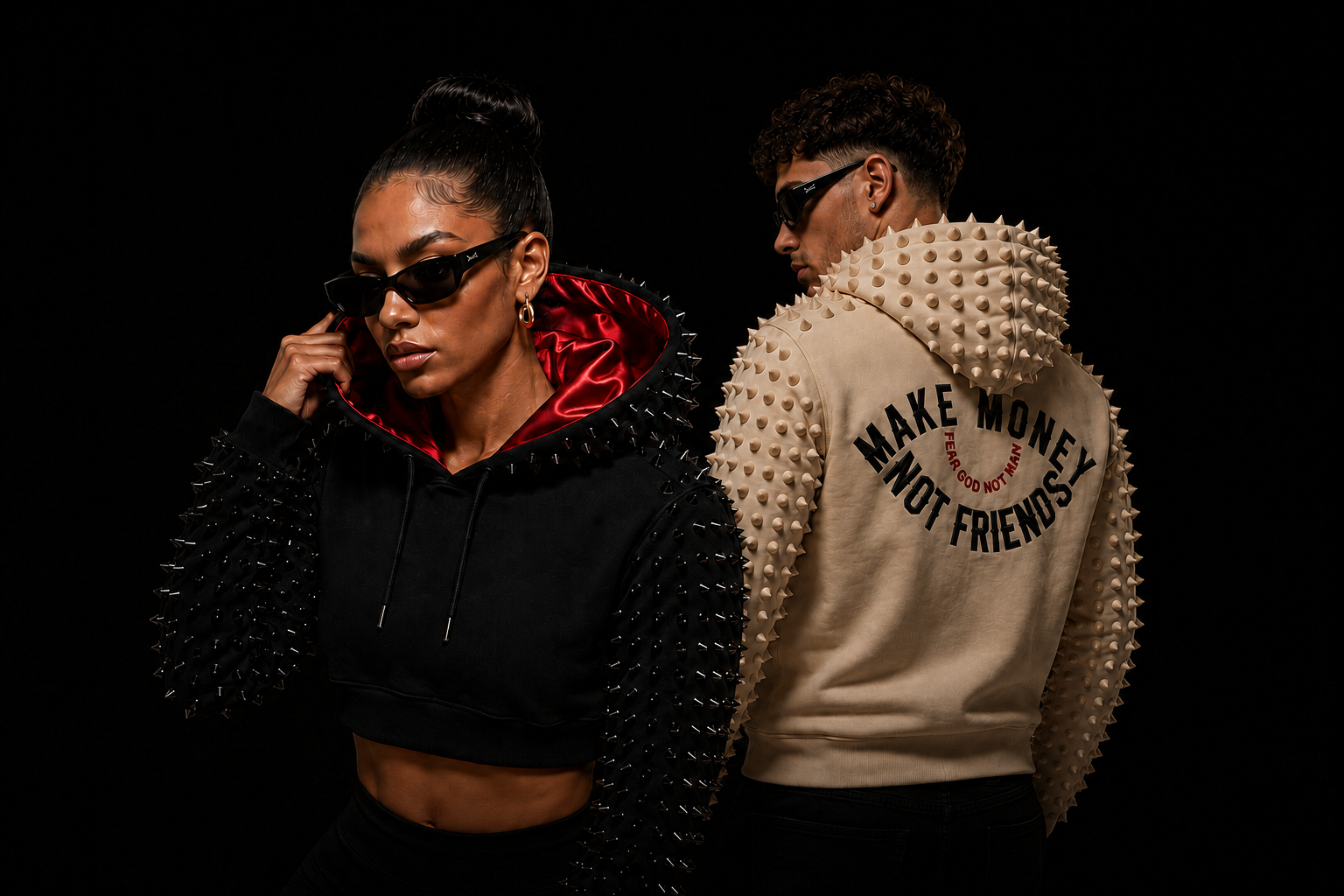
Jeeyodee's limited drops are announced directly to the maison's subscriber list and close without extension. Each piece in the current collection is handcrafted in Italy, individually numbered, and issued with a certificate of provenance. Atelier commissions are accepted for collectors seeking bespoke adjustments, including custom embroidery and fit consultations; these require a 50% deposit to initiate, with all further terms agreed privately. To view current and forthcoming releases, or to open a commission enquiry, visit jeeyodee.store directly. For questions on sizing, provenance documentation, or deposit arrangements, contact the maison through the store's enquiry form.
Useful sources and further reading
- An overview of the luxury fashion industry — PMC
- Creativity and responsibility in the Italian fashion system
- Made in Italy: the flaws in an industrial model under pressure — Luxury Tribune
- Prada focuses generational transition on artisans — AP News
- How a Hermès bag is made — The Telegraph
- Top 3 500 gsm hoodie options — Jeeyodee
- Why small-batch fashion is sustainable — Jeeyodee
- Why limited fashion holds value: scarcity, craft, and permanence — Jeeyodee
FAQ
What makes a minimalist hoodie collector-grade?
A collector-grade piece must be handcrafted in Italy by a single master artisan, individually numbered, and issued with a certificate of provenance. Heavyweight cotton and an Egyptian silk lining are the material baseline.
How does Jeeyodee's deposit policy work for bespoke commissions?
Atelier commissions at Maison Jeeyodee require a 50% deposit to initiate production; final pricing and remaining terms are agreed privately between the collector and the maison.
How do I verify that a "Made in Italy" hoodie is genuinely atelier-produced?
Request written confirmation of single-atelier oversight and supply-chain transparency. As Luxury Tribune's investigation documents, the label can conceal fragmented subcontracting; a maison with nothing to hide will provide documentation without hesitation.
Does customisation affect the resale value of a limited-edition piece?
Embroidery and monogramming add personal provenance without altering construction and can support secondary-market interest. Structural alterations affect the original pattern and may reduce provenance integrity.
How should I store a heavyweight cotton hoodie with a silk lining?
Store flat or on a padded hanger inside a breathable cotton garment bag, at 15°C–20°C with low humidity and away from direct light. Never use sealed plastic storage, which traps moisture and damages both cotton and silk.