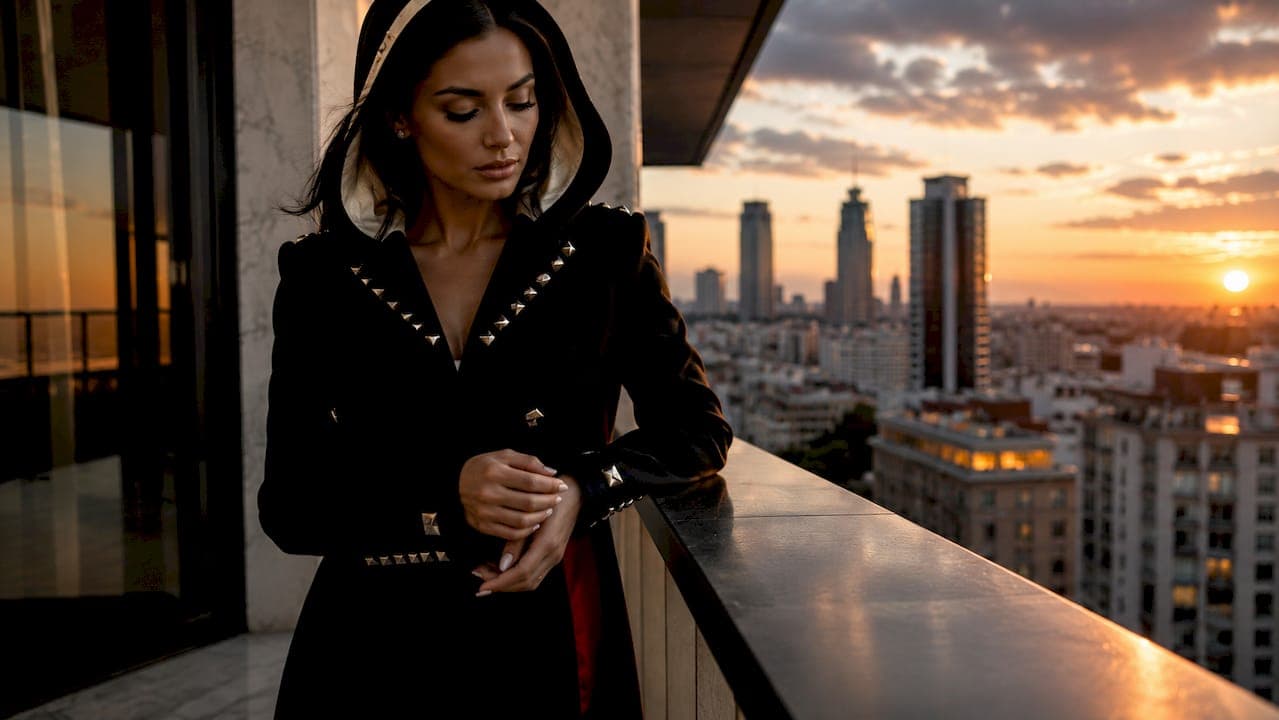
TL;DR:
- Limited fashion derives value from genuine scarcity, craftsmanship, and a disciplined drop model that supports long-term brand integrity. Scarcity triggers primal impulses that elevate perceived quality, while the drop model maximizes margins and minimizes inventory risk. Authentic craftsmanship ensures garments endure over time, making them true collectibles rather than fleeting trends.
Limited fashion holds value because scarcity is not merely a marketing device. It is a fundamental economic and psychological force that elevates perceived quality, commands premium pricing, and creates cultural permanence. The value of limited fashion rests on three interlocking pillars: the primal human response to rarity, the economic discipline of the drop model, and the craftsmanship that gives a garment reason to endure. Understanding why limited editions are valuable requires looking beyond the hype and into the architecture of desire itself. Jeeyodee was built on precisely this conviction.
Why limited fashion holds value: the psychology of scarcity
Scarcity activates primal brain responses that bypass rational price sensitivity and create a perception of superior quality, even when physical differences between garments are minimal. The brain interprets rarity as a signal of worth. That signal is ancient, and no amount of consumer education fully overrides it.
This mechanism operates through several distinct forces:
- Scarcity as quality signal. When a garment is numbered or produced in a single run, collectors instinctively assign it greater worth. The number on the label becomes a certificate of distinction.
- FOMO and social proof. Fear of Missing Out intensifies urgency and desirability during limited releases. Social media amplification, particularly through influencer endorsement, compounds this effect at speed.
- Emotional urgency. Scarcity overrides deliberate cost calculation. Collectors justify premium prices through cognitive dissonance, framing exclusivity as investment in social identity rather than expenditure.
- Numbered editions versus time-limited drops. These are not equivalent. A numbered piece carries permanent provenance. A time-limited drop creates urgency but not necessarily lasting identity. The distinction matters deeply to serious collectors.
- Elite membership. Limited drops generate loyalty by creating a feeling of elite membership. Ownership becomes attachment. Attachment becomes advocacy.
Pro Tip: When evaluating a limited release, ask whether the scarcity is structural or theatrical. A numbered garment produced once and never reproduced carries fundamentally different value from a "limited" item that reappears seasonally under a new name.
The importance of exclusive fashion lies not in the restriction itself, but in what that restriction communicates. Rarity, when genuine, tells a story of conviction.
How the drop model creates economic discipline
The limited drop model is not simply a cultural phenomenon. It is a financially disciplined approach to production that protects margin and reduces inventory risk in ways that conventional seasonal lines cannot.
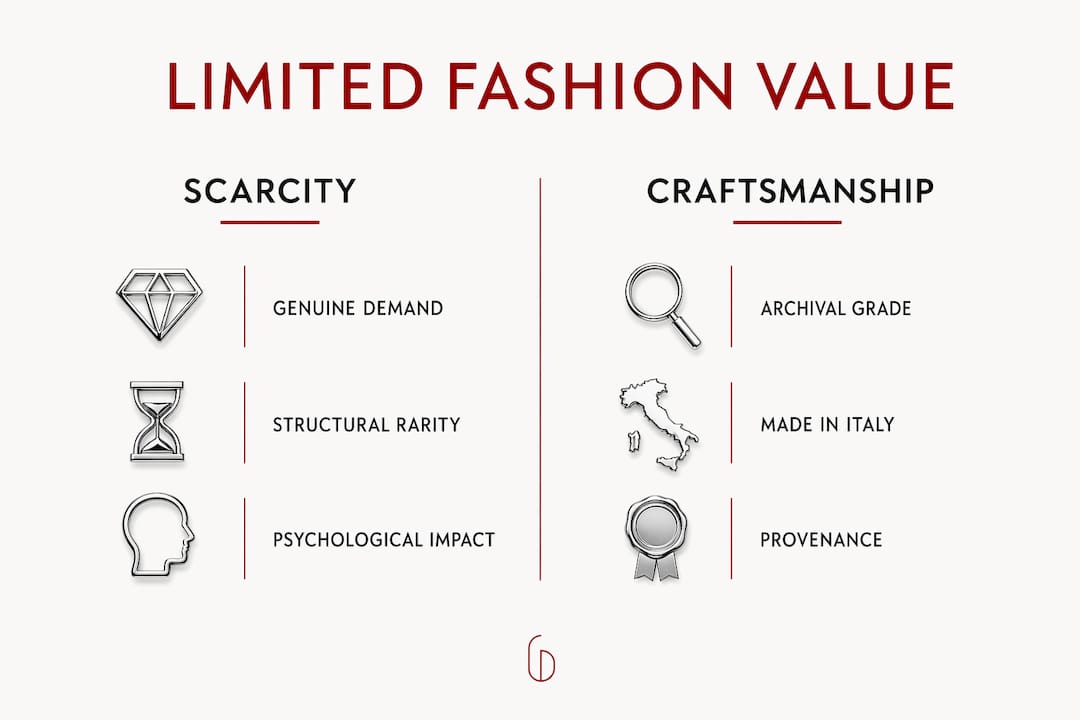
Brands using the drop model achieve gross margins between 45% and 68% by minimising markdowns, which typically erode around 15% of margin in evergreen lines. That figure represents a structural advantage, not an accident. Drops can push full-price sell-through close to 90% compared to 60–80% for standard seasonal collections. The difference between those two figures is the difference between a brand that controls its own narrative and one that discounts its way to relevance.
| Economic factor | Drop model | Evergreen line |
|---|---|---|
| Full-price sell-through | ~90% | 60–80% |
| Gross margin range | 45–68% | Variable, markdown-dependent |
| Inventory risk | Low (demand-aligned stock) | Higher (forecast-dependent) |
| Cash conversion | Faster (pre-committed demand) | Slower (seasonal clearance) |
Limited drops reduce inventory days and working capital by aligning stock strictly with pre-committed demand. That operational clarity is a significant advantage for a maison that refuses to compromise on material quality.
The trade-offs are real, however. Return rates of 20–30% and spiking fulfilment demands at launch can erode margin despite a sellout. Operational discipline is not optional. A carefully curated release portfolio, balancing hype-driven capsules with core lines, stabilises brand equity over the long term.
Pro Tip: For collectors, a brand's sell-through discipline is a proxy for its confidence. A maison that never discounts is a maison that never doubts the worth of what it has made.
Does craftsmanship determine lasting value in limited garments?
Craftsmanship is the variable that separates a collectible garment from a collectible moment. Scarcity creates desire. Craftsmanship creates permanence.
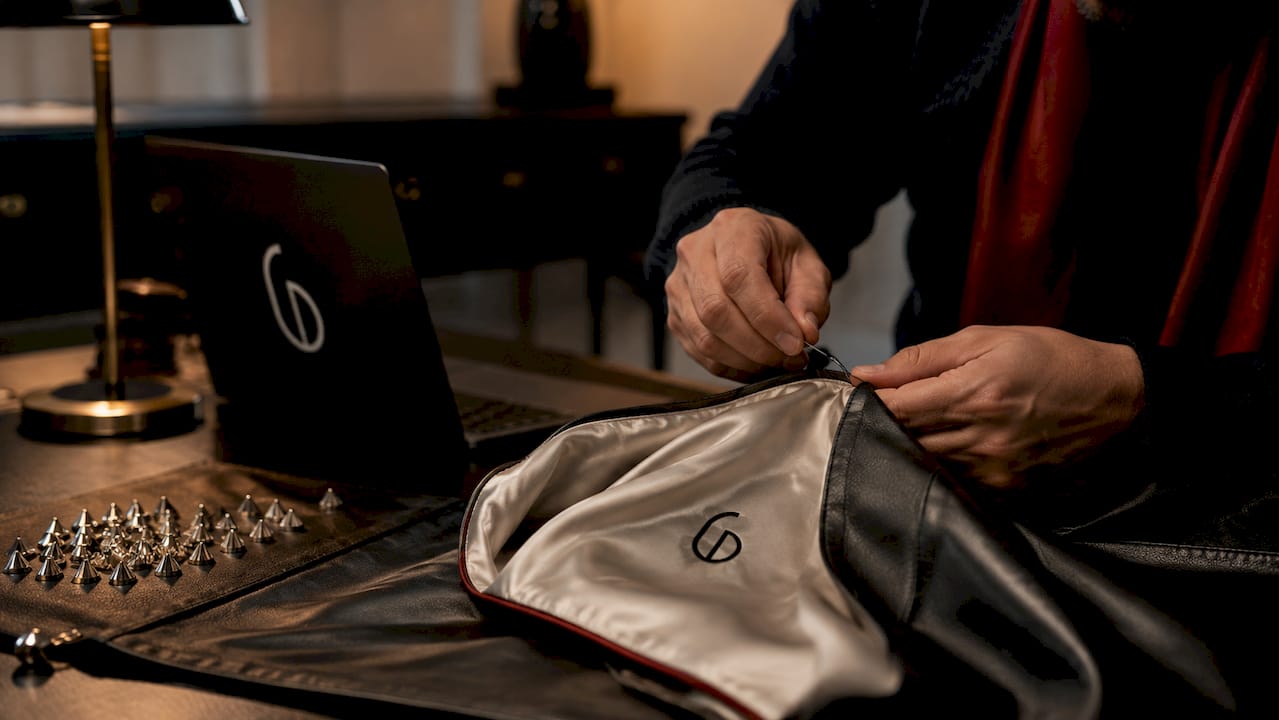
Collectors value limited editions with archival-grade materials for their lasting resale and cultural worth. The garment must survive not only the initial season but the decade that follows. Material survivability through archival-grade textiles and meticulous construction is a key predictor of collectible garment longevity. A piece that deteriorates within three years was never truly collectible. It was merely scarce.
The markers of genuine craft value in limited fashion include:
- Material provenance. Where a fabric originates, and how it was processed, directly affects durability and tactile quality. Egyptian cotton and silk carry measurable fibre integrity that synthetic alternatives cannot replicate.
- Construction method. Hand-finishing, individually aligned hardware, and interior detailing are not decorative gestures. They are evidence of time invested and standards held. High production quality, including exceptional materials and meticulous details, directly supports collector value.
- Condition and provenance. A numbered garment with its original documentation retains a higher resale position than an identical piece without it. Provenance is the paper trail of permanence.
- Contrast with mass-market production. Mass-market garments are engineered for price points, not longevity. The signs of authentic exclusive fashion are visible in the details that mass production eliminates first: interior finishing, seam integrity, and material weight.
Jeeyodee's Thorns variants are individually numbered and hand-finished in Italy, with heavyweight cotton and a deep red Egyptian silk interior. Each detail is a deliberate argument for permanence over trend. That argument is what luxury garments lasting longer actually means in practice.
When does exclusivity become a liability?
Exclusivity is not self-sustaining. Used without conviction, it becomes a gimmick. Used with discipline, it becomes a covenant between a maison and its collectors.
Artificial scarcity must be balanced carefully. Excess restriction risks grey markets and consumer alienation, while oversupply dilutes the very exclusivity that created demand. The word "limited" has been devalued by overuse in mass-market contexts. Collectors recognise this erosion immediately.
The risks of mismanaged exclusivity are specific:
- Consumer fatigue. When every release is "limited," none of them are. Fatigue sets in, and the psychological urgency that drives value collapses.
- Brand dilution through reissues. Reissuing a "limited" piece, even under a revised name, signals that the original scarcity was manufactured rather than genuine.
- Grey market proliferation. Extreme artificial scarcity pushes demand into secondary markets, where the brand loses control of pricing, condition, and narrative.
Authentic storytelling and transparent communication are the correctives. A maison that explains why a piece is limited, what materials were sourced, and why the run will never be repeated, builds trust that survives beyond the initial release.
"The most enduring limited pieces are not those that were hardest to obtain. They are those that were worth obtaining. Rarity without substance is theatre. Rarity with craft is legacy."
Exclusive collector communities form around this distinction. They are not drawn together by the difficulty of acquisition. They are drawn together by the shared recognition that what they hold is genuinely irreplaceable.
Key takeaways
Limited fashion holds enduring value when scarcity is genuine, craftsmanship is archival-grade, and the brand refuses to reproduce what it has already made.
| Point | Details |
|---|---|
| Scarcity drives perceived value | Primal brain responses elevate quality perception independently of physical product differences. |
| Drop model protects margin | Full-price sell-through near 90% and gross margins of 45–68% reward disciplined limited releases. |
| Craftsmanship creates permanence | Archival-grade materials and hand-finishing determine whether a garment retains collector value over time. |
| Authenticity prevents dilution | Genuine scarcity, communicated transparently, builds long-term brand equity. Manufactured scarcity destroys it. |
| Provenance supports resale | Numbered editions with original documentation command stronger secondary market positions. |
What discerning collectors understand that casual buyers do not
We have watched the limited fashion market long enough to distinguish conviction from performance. The difference is not always visible at the point of purchase. It becomes visible five years later, when one garment has appreciated and another has simply aged.
The collectors who build genuinely valuable wardrobes share one discipline: they do not chase hype. They evaluate material integrity, construction method, and the brand's commitment to non-reproduction. A maison that reissues its "limited" pieces has already told you everything you need to know about how it values your trust.
Savvy collectors differentiate "limited" hype from genuine long-term brand equity. Only pieces combining rarity with archival craftsmanship retain high resale value. That is not a subjective judgement. It is a pattern that repeats across every category of collectible, from prints to garments to objects.
At Jeeyodee, we made a decision early and have not revisited it. Every piece is produced once. Every piece is numbered. No drop is ever reproduced. That is not a marketing position. It is a structural commitment to the collectors who choose to hold what we make. The Thorns variants, with their Italian cone studs and Egyptian silk interiors, are permanent chapters. They do not return. That permanence is the point.
For collectors evaluating any limited piece, the questions worth asking are: Is the number on the label a genuine production limit or a print run that can be extended? Is the material specified, sourced, and documented? Will this maison reproduce this piece if demand returns? The answers determine whether you are acquiring a collectible or a commodity with a limited-edition label.
— Jeeyodee
Jeeyodee: numbered luxury, made once
Every garment Jeeyodee produces is made in Italy, individually numbered, and never reproduced. That is not a promise made lightly.
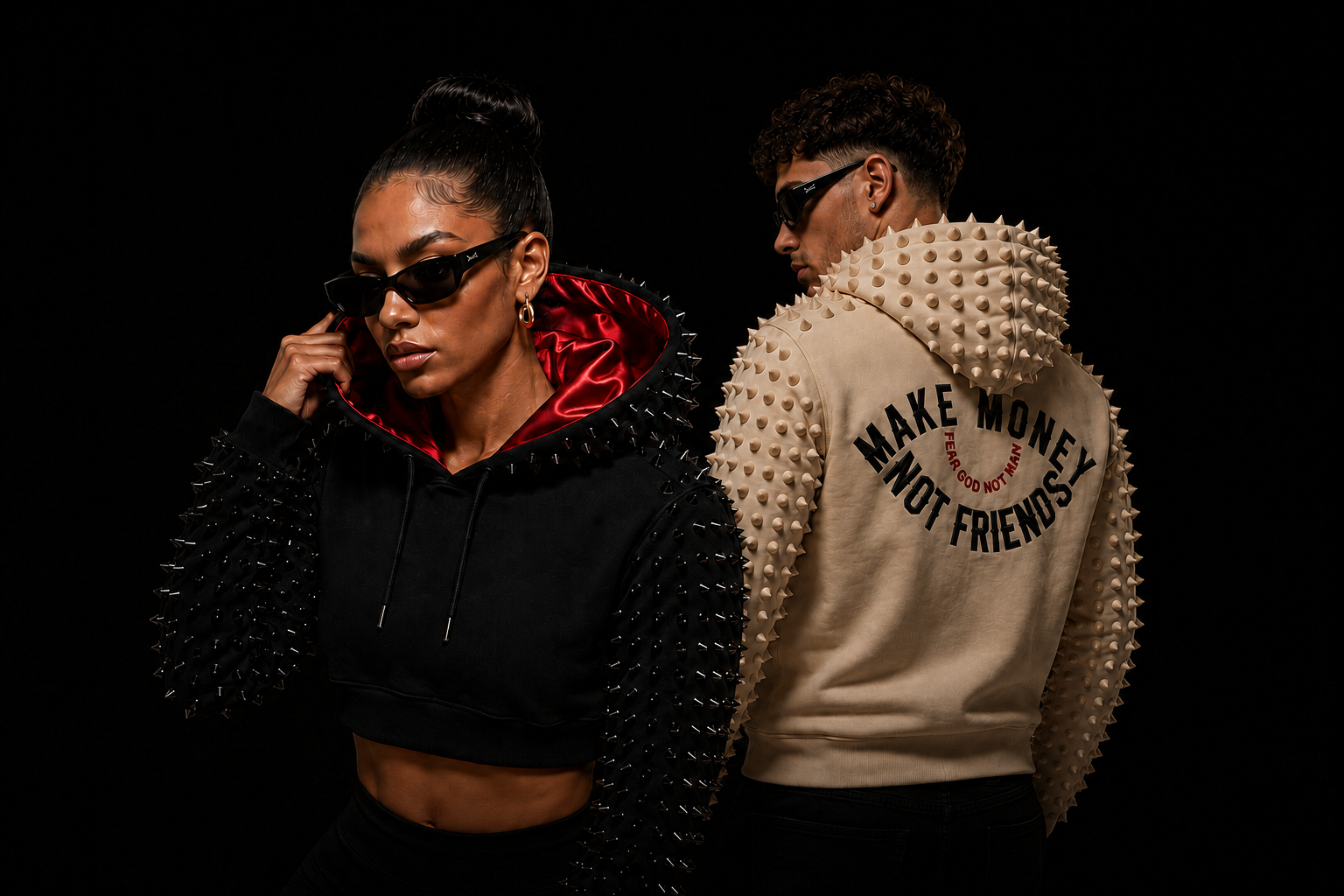
The Thorns collection exemplifies what the value of limited fashion means in practice. Heavyweight cotton, meticulous hand-finishing, Italian cone studs aligned with atelier precision, and a deep red Egyptian silk hood lining that rewards the wearer who notices detail. Each piece carries its number as a mark of permanence, not promotion. When the run closes, it closes. No reissue. No revision. No compromise.
For collectors who understand that numbered luxury is built on discipline rather than desire, Jeeyodee offers something the market rarely delivers: a garment that is genuinely, structurally, and permanently limited.
FAQ
What makes a limited-edition garment hold its value?
A limited-edition garment holds value when genuine scarcity combines with archival-grade materials and documented provenance. Pieces that are numbered, never reproduced, and constructed to a high standard retain both cultural and resale worth over time.
How does scarcity affect fashion value psychologically?
Scarcity activates primal brain responses that elevate perceived quality beyond what physical differences alone would justify. This psychological effect overrides rational price sensitivity and drives collectors to frame premium purchases as identity investments rather than expenditure.
Are numbered editions more valuable than time-limited drops?
Numbered editions carry permanent provenance that time-limited drops do not. A garment bearing a production number from a closed, non-reproducible run holds a stronger position in secondary markets because its scarcity is structural rather than temporal.
What is the risk of overusing "limited" as a label?
Overuse of the term "limited" causes consumer fatigue and brand dilution. When every release is described as limited, the psychological urgency that drives value collapses, and collectors lose confidence in the brand's commitment to genuine exclusivity.
Why does craftsmanship matter for limited fashion collectors?
Craftsmanship determines whether a garment survives as a collectible or simply ages. Archival-grade textiles, hand-finishing, and meticulous construction are the factors that separate a piece worth holding for a decade from one that deteriorates within a season.