TL;DR:
- A genuine luxury hoodie is handcrafted in a named Italian atelier, with limited, individually numbered runs. High-quality materials like Egyptian silk lining, heavyweight cotton, and hand-placed hardware guarantee authenticity, verified through proper documentation. Bespoke commissions require a 50% deposit and take several weeks to produce, with buyers responsible for import duties.
The definitive choice for a discerning collector is a strictly limited, Made in Italy handcrafted hoodie with Egyptian silk hood lining and individually numbered provenance. Materials and atelier origin are the two factors that separate a collectible piece from a well-made garment; numbering makes it permanent.
- Egyptian silk hood lining — a material choice that signals atelier intent, not cost-cutting
- Heavyweight cotton construction — weight and drape that mass production cannot replicate
- Individual numbering — each piece documented once, never repeated
TL;DR: Buy numbered, buy Italian-made, and verify the silk before you commit.
Table of Contents
- What makes a handcrafted hoodie a luxury object?
- Signature materials and artisanal details collectors should expect
- How do you verify craftsmanship and authenticity before buying?
- What should UK buyers expect to pay, and how long does it take?
- Fit, sizing and styling for a numbered luxury piece
- Care, maintenance and preserving collectability
- How to commission a bespoke, individually numbered hoodie
- Why Maison Jeeyodee sets the standard for numbered luxury hoodies
- Ordering, shipping and returns for UK buyers
- Key takeaways
- Craft is a position, not a process
- Current Jeeyodee drops and bespoke commissions
- Useful sources and further reading
- FAQ
What makes a handcrafted hoodie a luxury object?
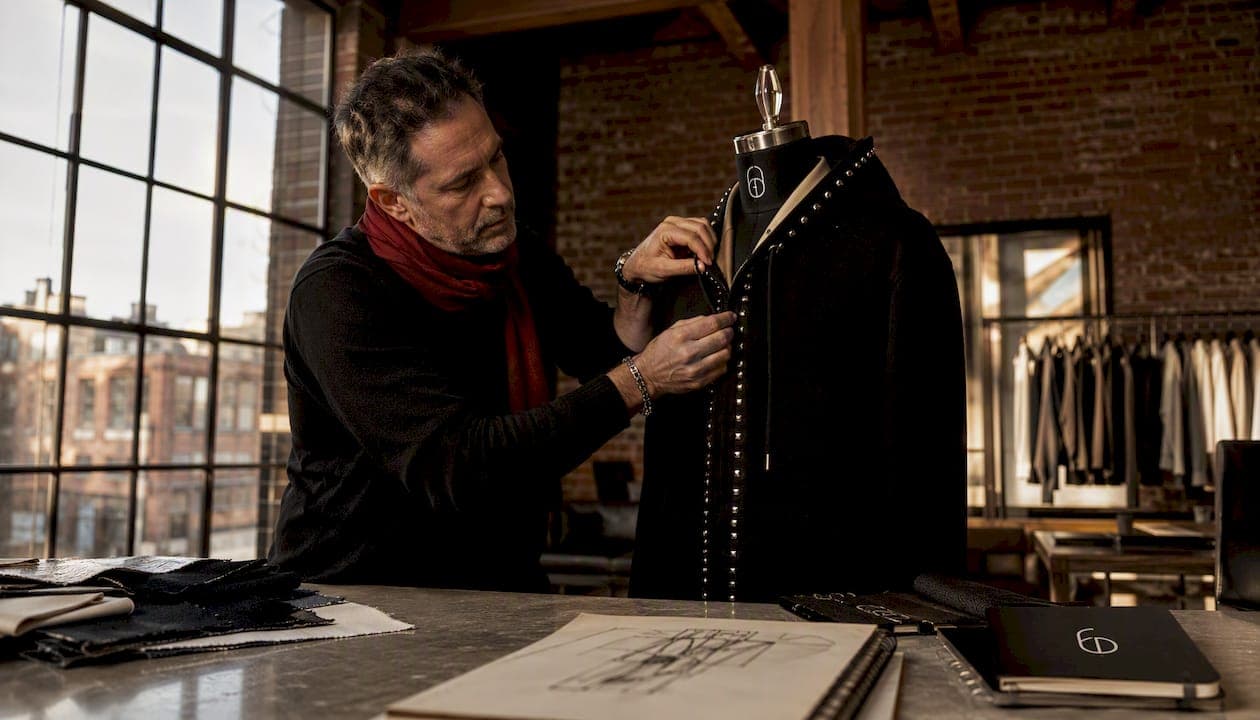
The term "handcrafted hoodie" covers a wide spectrum, from hand-finished mass-market pieces to atelier-produced garments made in strictly limited runs. For a collector, only the latter carries genuine value. A luxury handcrafted hoodie is defined by four conditions: atelier production in a named location, a limited run that will not be repeated, hand-finishing at every stage, and documented material provenance.
Mass-market brands use "hand-finished" loosely. Two distinctions matter:
- Atelier production means the garment is cut, assembled, and finished by skilled hands in a single named workshop, not a factory line where "hand-finishing" refers only to the final press.
- Limited run means the production number is fixed before the first stitch, not adjusted to meet demand.
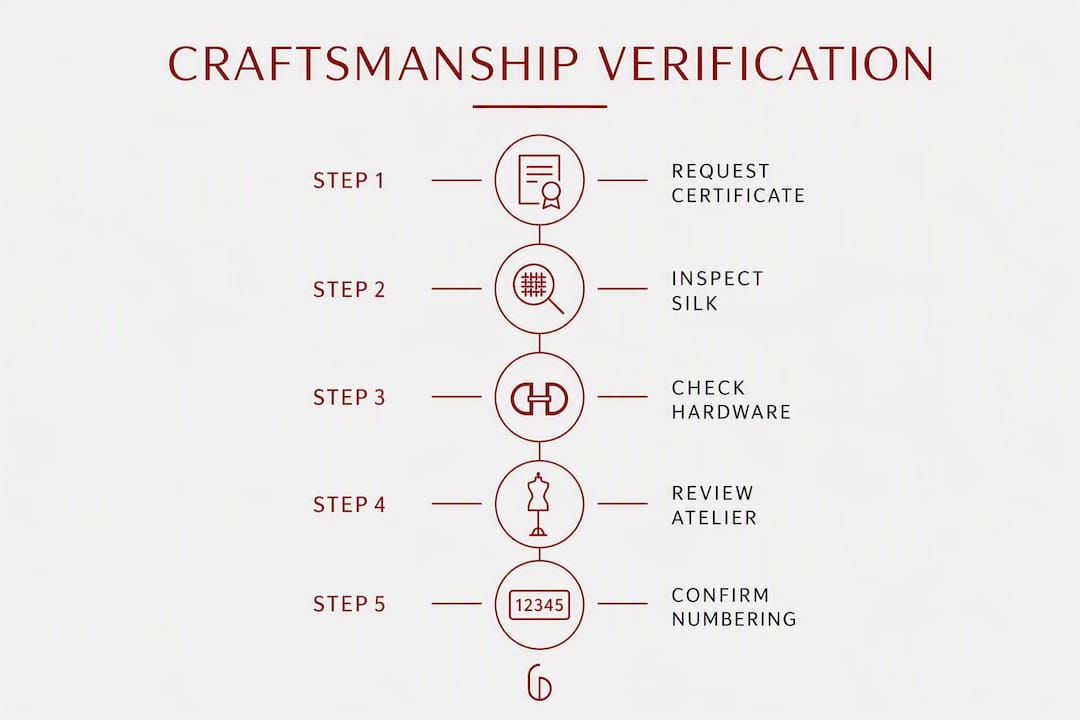
Pro Tip: Ask for atelier notes or a production certificate before purchasing. A credible maison will provide documentation that names the workshop, the run number, and the individual piece number. If that documentation does not exist, the piece is not genuinely limited.
Luxury artisan hoodies in the truest sense are produced in small ethical batches, prioritising exclusivity over scalability.
Signature materials and artisanal details collectors should expect
Construction quality begins with textiles. Heavyweight combed cotton provides the structural weight that gives a luxury hooded sweatshirt its characteristic drape; lighter blends pill, distort, and lose shape within a season. Handknit merino and handwoven cotton are alternatives that alter stitch behaviour and produce unique surface texture, though they require specialist care.
The interior is where atelier ambition is most visible. An Egyptian silk hood lining is not decorative; it is a declaration of material discipline. Jeeyodee's pieces pair heavyweight cotton with a deep red silk interior, a combination that demonstrates craft intent through contrast. Hand-braided drawcords and meticulous Italian cone studs placed by hand complete the exterior.
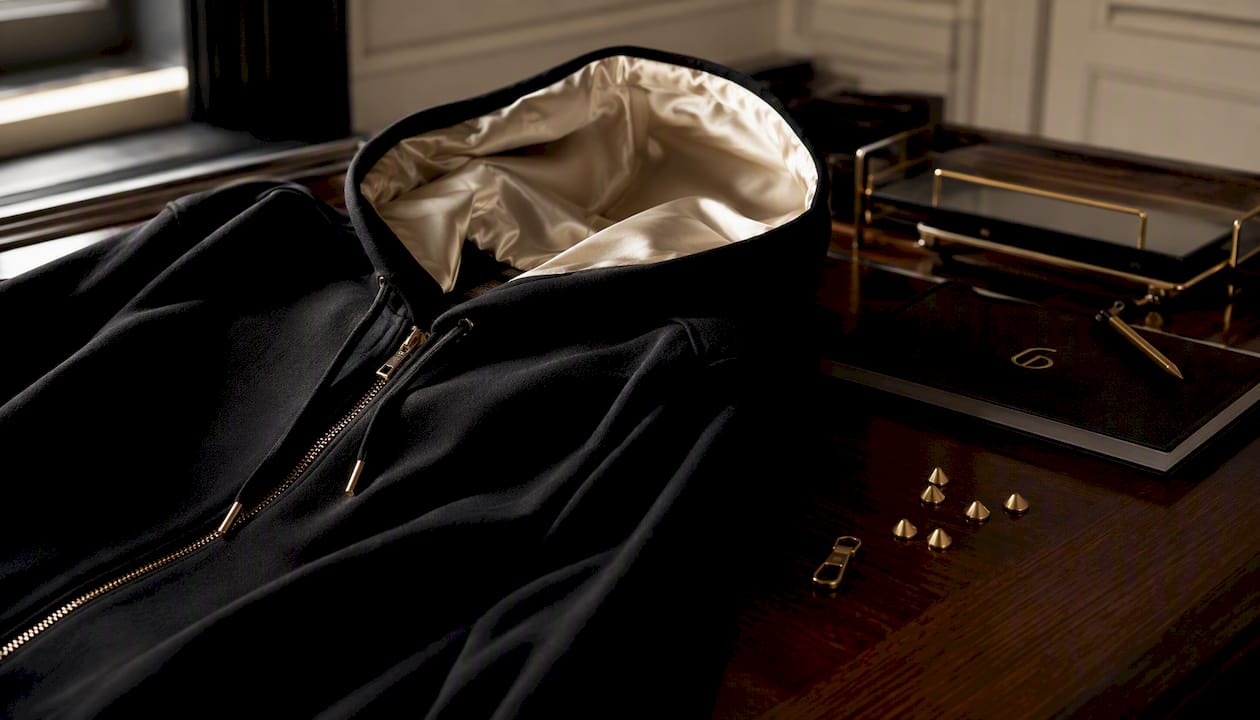
Hardware is the detail most collectors overlook. Handmade Waldes zippers and custom alloy hardware are recognised by experienced collectors as non-textile indicators of atelier quality; these components are sometimes stamped or documented by the atelier itself. Provenance labels showing Made in Italy production should accompany every piece.
Pro Tip: Request a close photograph of the zipper pull and any cone studs before purchase. Authentic atelier hardware carries a consistency of finish that stock components cannot match.
How do you verify craftsmanship and authenticity before buying?
Inspection begins with photographs. For luxury garment finishing details, request images of the interior seams, hood lining, stitch density at the cuffs, and the numbering tag or plaque. Uneven seam allowances, loose thread ends, or a printed rather than woven label are immediate disqualifiers.
Ask the seller or atelier these questions directly:
- What is the total production run for this piece?
- Can you provide the atelier's name and location?
- Is there a certificate or numbered documentation included with the garment?
- Are the cone studs placed by hand, and can you show the reverse side of the fabric?
Pro Tip: To verify silk authenticity remotely, ask the seller to photograph the lining under direct light at an angle. Genuine silk produces a characteristic lustre shift; synthetic alternatives appear flat regardless of the angle.
What should UK buyers expect to pay, and how long does it take?
Numbered limited runs from independent luxury labels occupy a distinct price bracket, reflecting atelier labour, material cost, and the permanence of a non-repeating production. Bespoke commissions sit above that bracket, with final pricing agreed privately between the collector and the maison.
Bespoke atelier commissions at Jeeyodee require a 50% deposit, with the balance agreed before production begins. This is standard practice across serious ateliers and protects both parties.
| Order type | Typical deposit | Lead time |
|---|---|---|
| Limited drop (numbered run) | None — purchased at checkout | 2–6 weeks from production close |
| Made to order (standard) | Varies by atelier | 2–6 weeks typically |
| Bespoke commission | 50% upfront | 6–14 weeks depending on complexity |
Availability for maison drops follows a one-off production model: a window opens, orders are taken, and the run closes permanently. Preorder windows are common; scarcity and permanence are not marketing devices but structural features of the model.
Fit, sizing and styling for a numbered luxury piece
Handcrafted sizing differs from mass-market sizing in one fundamental way: the garment is built around a pattern, not a demographic average. Handknit and handwoven construction alters stitch behaviour, meaning a stated size M may carry more volume than its mass-market equivalent. Jeeyodee offers both unisex and women's cropped fits; select based on intended wear, not habit.
If the piece is primarily a collector's item, size up slightly to preserve the garment's structural drape without stress on the seams. For frequent wear, follow the atelier's own size guidance precisely.
- Avoid abrasive accessories against the exterior; cone studs and silk linings are vulnerable to friction.
- Minimal layering preserves the silhouette and protects hand-placed hardware.
- Style against clean, unfussy pieces to let the craftsmanship read clearly.
Pro Tip: A numbered hoodie worn as part of a considered luxury wardrobe carries more presence than one buried under heavy outerwear. Treat it as the primary statement, not a base layer.
Care, maintenance and preserving collectability
Cold-water washing with a natural detergent, followed by shade line drying, is the standard atelier recommendation for handcrafted luxury textiles. Hand-dyed pieces require particular care; natural indigo and wax-resist finishes are sensitive to heat and agitation. Never tumble dry a silk-lined garment.
For storage, wrap the piece in acid-free tissue and keep it in a breathable garment bag away from direct light and moth exposure. A sealed cedar block nearby is sufficient moth deterrent without chemical risk to the fibres.
Professional restoration is appropriate for structural repairs to seams or hardware. It is not appropriate for surface patina on hand-dyed pieces; that patina is part of the garment's character and its collectible identity. Cleaning away natural ageing reduces value, not increases it.
Pro Tip: Maintain a photographic log of the piece from the day of purchase: front, back, interior lining, numbering tag, and any hardware. Dated photographs alongside the original receipt constitute provenance documentation that supports resale value.
How to commission a bespoke, individually numbered hoodie
Commissioning a bespoke piece follows a defined sequence. Deviating from it, or working with an atelier that cannot articulate each stage, is a warning sign.
- Initial consultation — discuss pattern, materials, fit, and any custom embroidery or hardware preferences.
- Design approval — receive and sign off a written specification before any deposit changes hands.
- Deposit — pay the agreed 50% to confirm the commission and begin material sourcing.
- Sampling — review a physical or photographic sample of key details (lining, hardware, stitch density).
- Production — the atelier works to the approved specification; expect 6–14 weeks for complex pieces.
- Delivery and documentation — receive the garment with its numbered certificate, atelier photography, and care notes.
Before the first consultation, prepare these questions:
- What is the maximum run size for a bespoke commission?
- Will the piece carry a unique number, and how is that number recorded?
- Can I specify the Egyptian silk lining colour or weight?
- What documentation accompanies the finished piece?
Pro Tip: Request that the atelier photograph the piece during production, not only on completion. Mid-production images are the most compelling provenance documentation a collector can hold.
Why Maison Jeeyodee sets the standard for numbered luxury hoodies
Jeeyodee operates as an independent luxury maison with a single governing principle: every piece is made once and never repeated. Each garment is produced in Italy, individually numbered, and constructed from heavyweight cotton with an Egyptian silk hood lining. Italian cone studs are placed by hand; bespoke embroidery is available on commission.
The maison's trust signals are concrete, not aspirational:
- Made in Italy atelier production — not "inspired by" or "finished in"
- Individual numbering — each piece carries its own number as provenance proof
- Egyptian silk hood lining — documented in the maison's own craftsmanship record
- 50% deposit for commissions — a formal commissioning process, not an informal arrangement
To view current drops and atelier photography before committing, visit the maison's product pages directly. The 500 gsm hoodie guide offers further context on textile weight and collector preferences.
Pro Tip: Review the maison's craftsmanship journal before your first commission. The documentation there gives you the vocabulary to ask precise questions and the confidence to recognise a genuine atelier answer.
Ordering, shipping and returns for UK buyers
Italian-made limited runs typically ship to UK addresses within 2–6 weeks of production close for standard drops; bespoke commissions carry the longer lead times outlined above. Shipping from Italy to the UK is cross-border, and buyers should expect to bear any applicable import duties and VAT on arrival. These costs vary by declared value and product category; confirm the current threshold with HMRC or your courier before ordering.
Before completing checkout, verify:
- The atelier's full contact details are listed on the product or confirmation page.
- Customs documentation (commercial invoice, country of origin) is included with the shipment.
- The piece is insured for its full declared value in transit.
Returns on limited numbered runs are subject to the maison's stated policy; bespoke commissions are typically final sale once the design specification has been approved and the deposit paid. Confirm this in writing before the deposit is transferred.
Pro Tip: For high-value cross-border purchases, request that the atelier photograph the piece before dispatch and share the tracking reference at the point of shipment. This protects both parties and forms part of your provenance record.
Key takeaways
A genuinely collectible handcrafted hoodie requires three things without exception: documented atelier provenance, individually numbered production, and materials that cannot be replicated at scale.
| Point | Details |
|---|---|
| Provenance is non-negotiable | Demand a named Italian atelier, a numbered certificate, and production documentation before purchasing. |
| Materials define collectability | Egyptian silk lining, heavyweight cotton, and hand-placed Italian cone studs are the markers of genuine atelier craft. |
| Inspect before you commit | Request interior seam photographs, hardware close-ups, and the numbering tag image as a minimum. |
| Understand deposit norms | Bespoke commissions require a 50% deposit; confirm this in writing alongside the full specification. |
| Maison Jeeyodee | Individually numbered, Made in Italy, with Egyptian silk hood lining — produced once and never repeated. |
Craft is a position, not a process
There is a tendency in luxury fashion to treat handcraft as a marketing qualifier, something added to a description rather than embedded in a decision. We hold a different conviction. The choice to line a hood in Egyptian silk when a synthetic would suffice, to place each cone stud by hand when a press could do it faster, to number every piece and close the run permanently — these are not gestures. They are positions. Made in Italy is not a label we apply; it is the condition under which the work is possible at all. A garment that carries a number carries a responsibility: it will exist in that form for as long as the fabric holds, and it will never be made again. That permanence is what transforms ownership into attachment, and attachment into legacy.
Current Jeeyodee drops and bespoke commissions
Jeeyodee's numbered pieces are produced in strictly limited runs, each one a permanent chapter. When a drop closes, it closes without exception.
To view live drops and available numbered pieces, visit jeeyodee.com. For a bespoke commission, the process begins with a private consultation; a 50% deposit confirms your place in the atelier's production schedule. Every commission is documented, numbered, and delivered with full provenance materials. The work is made slowly, and it is made once.
Useful sources and further reading
- JEEYODEE — Numbered Luxury, Made Slowly — the maison's primary store, with current drops and product provenance.
- How we ensure every garment reflects genuine craftsmanship — Jeeyodee — the maison's own account of material choices and construction standards.
- Why handcrafted clothing costs more — Jeeyodee — context on deposit practice and atelier pricing.
- Isaac Hoodie in Honeycomb Natural — Umber and Ochre — an independent artisan reference for hardware standards and care guidance.
- Building a handcrafted luxury wardrobe: the complete guide — further maison guidance on collecting and wardrobe curation.
FAQ
What defines a luxury handcrafted hoodie?
A luxury handcrafted hoodie is produced in a named atelier in a strictly limited, non-repeating run, with documented material provenance including elements such as Egyptian silk lining, heavyweight cotton, and hand-placed hardware.
How do I verify that a numbered hoodie is genuine?
Request the numbered certificate, atelier name and location, interior seam photographs, and hardware close-ups. A credible maison provides this documentation as standard, not on request.
What deposit does Jeeyodee require for a bespoke commission?
Jeeyodee's atelier commissions require a 50% deposit, with final pricing agreed privately before production begins.
How long does a bespoke commission typically take?
Bespoke commissions generally take several weeks depending on complexity; made-to-order pieces from smaller ateliers usually have shorter lead times.
Do UK buyers pay import duties on Italian-made luxury garments?
Cross-border shipments from Italy to the UK may attract import duties and VAT; the buyer typically bears these costs. Confirm current thresholds with HMRC before ordering.