
The single most reliable practice for luxury garment preservation is museum-grade climate control paired with disciplined cleaning before storage. Stable temperature, controlled humidity, breathable materials, and freedom from light and pests protect fibres far longer than any single product ever will. Most valuable pieces still benefit from professional attention. At Maison Jeeyodee, we regard this as the baseline, not the luxury.
TL;DR:
- Proper storage requires stable climate conditions, breathable packing materials, and professional handling for fragile or valuable pieces.
- Silk, wool, linen, and leather each need specific care, such as controlled washing temperatures, flat storage, or avoiding excess moisture and heat.
- Using wooden supports, acid-free tissue, and rotation helps maintain shoe and bag shapes, with professional assessment recommended for high-value items.
- At-home storage suits regular wardrobes, but long-term preservation of valuable garments benefits from climate-controlled facilities with proper cataloguing.
- Prevent moths and damp damage by monitoring with pheromone traps, stabilizing humidity, and freezing infested garments; immediate inspection is crucial.
Table of Contents
- Come conservare capi di lusso: your quick-start checklist
- Which fabrics need different care: silk, wool, linen, leather
- How should you store luxury bags and shoes?
- What's the best long-term storage: home or professional?
- How do you protect luxury clothes from moths and damp?
- Cleaning and preparing garments before you store them
- When should you call a conservator, not a tailor?
- What Jeeyodee's construction teaches about easier preservation
- The collector's approach to preserving what you wear
- A maison's answer to the question of longevity
- Sources
- FAQ
Come conservare capi di lusso: your quick-start checklist
Before anything else, look closely. Read the care label, then run your hands over seams, trims, and hems for stains, loose threads, or the tell-tale pinholes of moth activity. A garment sent into storage with an undetected flaw rarely improves with time.
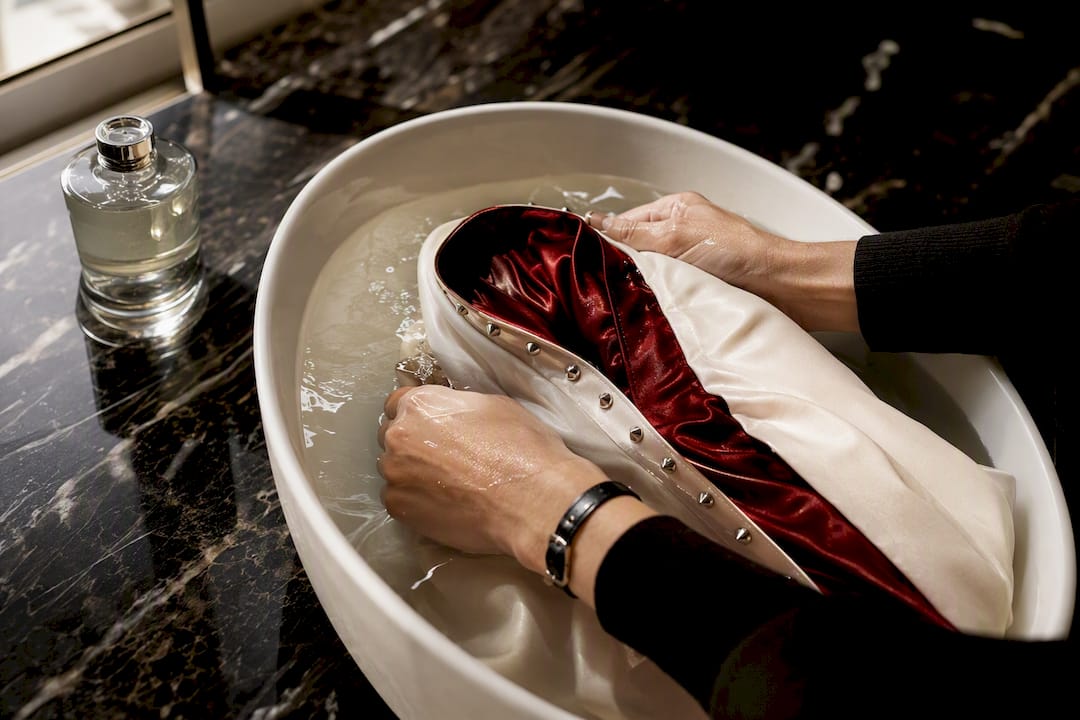
Isolate anything suspicious rather than boxing it alongside clean pieces. For delicate vintage fabrics, a short soak (never more than 30 minutes in cold or tepid water with a gentle detergent) is often enough to lift surface soil without stressing weakened fibres.
- Pack in breathable materials: acid-free tissue or clean cotton dust bags, never vacuum-sealed plastic.
- Fit wooden shoe trees, padded hangers, and structured supports to hold shape.
- Store away from direct light and heat sources.
- When a piece carries real value or fragility, hand it to a specialist rather than guessing.
Pro Tip: Keep a small notebook, digital or paper, logging what went into storage, when, and in what condition. Six months later, you will thank yourself for not relying on memory.
Which fabrics need different care: silk, wool, linen, leather
Fibres do not age the same way, and treating them as if they do is how good garments become ruined ones.
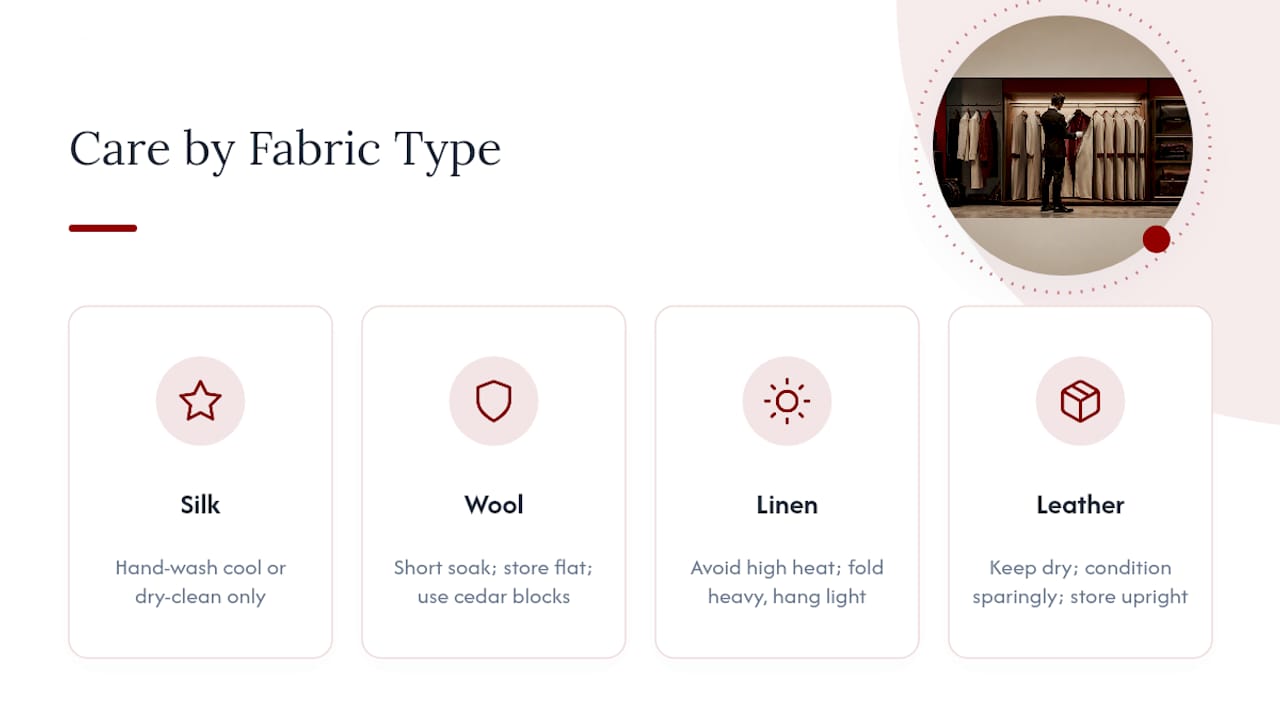
Silk demands restraint. Hand-wash in cool water with a gentle detergent, or use a dry-cleaner you trust with couture. Sunlight weakens silk's protein structure and yellows it over time, so never dry silk near a window or radiator. Our guide to preserving luxury fibres covers hand-washing technique in more depth.
Wool and cashmere respond well to a short soak and gentle agitation, or professional cleaning for structured pieces. Store cashmere flat rather than hung, since knitwear stretches under its own weight over months. Cedar blocks or pheromone monitoring, rather than chemical mothballs, keep moths at bay without leaving residue on the fibre.
Linen and cotton launder more easily but punish carelessness with over-drying. Excessive heat breaks down cotton's cellulose structure and shortens the garment's working life. Fold heavier cotton pieces to avoid hanger stretch; hang lighter linen shirts to prevent deep creasing.
Leather and suede need to stay dry above all else. Condition leather sparingly, since over-conditioning softens structure and invites sagging. Store bags and jackets upright with internal shape supports, never crushed flat under other items.
Delicate embellishments, beading, embroidery, sequins, should never see a washing machine. Pack these pieces flat, cushioned in acid-free tissue, so nothing abrades the surface or knocks a bead loose in transit. For any fragile vintage piece with hand-applied trim, the same 30-minute soak ceiling applies, and even that should only happen after testing a hidden seam.
How should you store luxury bags and shoes?
Structure is the enemy of neglect. A bag or shoe left unsupported for even a season can lose the shape it took a craftsman weeks to build.
- Fit wooden shoe trees inside every pair before storage, and keep them in breathable dust bags rather than sealed plastic that traps moisture against the sole.
- Rotate wear across your shoe collection so soles dry fully between outings rather than compressing under repeated damp use.
- Stuff bags lightly with acid-free tissue, enough to hold shape without stretching seams, and store structured bags upright, soft ones flat.
- Wrap metal hardware, buckles, clasps, zip pulls, in tissue so it cannot scratch adjacent leather or discolour a lighter hide through contact.
- Never let a black bag rest against a cream one for months; leather dye migration is real and often irreversible.
- For anything genuinely valuable, have a cobbler or bag restorer assess condition before it goes into long-term storage, not after damage surfaces.
What's the best long-term storage: home or professional?
The honest answer depends on value, volume, and how much control you actually have over your home environment.
Museum standards point to a relative humidity close to 50% and stable indoor temperatures as the target for slowing material deterioration. Wide swings between damp and dry conditions are what invite mould and fibre breakdown, far more than a single bad week ever could.
At home, that means sturdy hangers suited to the garment's weight, shelving that keeps pieces off damp floors, blackout conditions where possible, and silica packs in enclosed drawers. Avoid plastic garment bags for anything beyond short-term transport; they trap humidity rather than release it. Acid-free tissue or plain cotton sheeting works as a breathable barrier when you cannot source archival-grade tissue.
Professionally, specialist providers deliver what most homes cannot: climate-controlled rooms, photographic cataloguing completed within days of intake, white-glove handling, and private viewing rooms for larger collections. Some seasonal services extend to wardrobe switches and pickup, inspecting and photographing pieces as they rotate in and out.
- At-home storage suits an active, well-ventilated wardrobe you handle often.
- Professional storage suits archival pieces, seasonal overflow, or anything insured at meaningful value.
The trade-off is straightforward: professional storage costs more and means less immediate access, but it buys genuine longevity for pieces you are not wearing this season.
How do you protect luxury clothes from moths and damp?
Prevention costs almost nothing; remediation after an infestation costs far more, in both money and irreplaceable fabric.
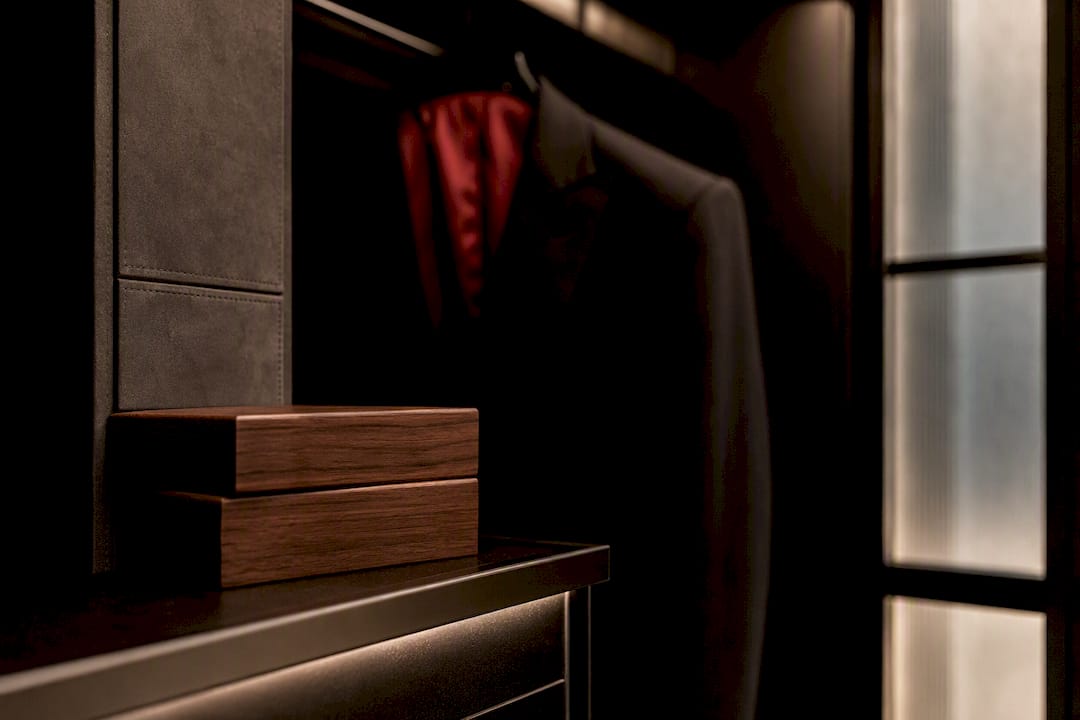
Pheromone traps monitor moth activity without the chemical residue that mothballs leave behind on delicate fibres. Aim to keep storage spaces within a stable humidity band, and bring in a dehumidifier or silica packs when a room runs consistently damp.
If infestation does take hold, the museum-recommended remedy is freezing: seal the affected garment in a bag, freeze it for around two weeks, then thaw it still sealed so condensation forms outside the fabric rather than soaking into it.
- Monitor with pheromone traps, not chemical mothballs.
- Stabilise humidity before it becomes a mould problem.
- Freeze and thaw sealed for severe infestations.
- Reach for gentle, fabric-safe odour treatments first; escalate to professional ozone or conservation cleaning only for stubborn cases.
Pro Tip: Check stored garments every few months rather than waiting for a seasonal clear-out. Early moth activity is a five-minute fix; a full infestation is not.
Cleaning and preparing garments before you store them
Storage failures rarely start in the box. They start with a garment put away dirty, damp, or unexamined.
- Inspect thoroughly first, checking for stains, loosening trims, and any stitching that has begun to weaken at stress points.
- For structured or lined pieces, favour a specialist dry-cleaner over domestic laundry; the risk of damaging linings and internal construction is real and often invisible until it is too late.
- If hand-washing, follow the short-soak rule and never wring; press water out gently between towels instead.
- Dry flat on a padded surface, away from direct heat, and never tumble-dry anything with embellishment or structure.
- Repack in breathable materials once fully dry, and label each box with the date, treatment used, and any condition notes worth remembering.
That last step matters more than it sounds. A labelled box tells you, and eventually whoever inherits your collection, exactly what care a piece received and when.
When should you call a conservator, not a tailor?
Some maintenance belongs to you: gentle de-pilling with a fabric comb, securing a loose thread before it runs, low-heat pressing on delicate settings. These small acts of attention cost nothing and prevent bigger problems later.
Visible repairs are where amateur intervention becomes costly. Hand-stitching a couture hem yourself, however carefully, can visibly lower a garment's value and its integrity if the thread tension or needle gauge does not match the original work.
A conservator brings something different: careful assessment, reversible treatments that do not permanently alter the fabric, and the specific skill needed to stabilise fragile trims without losing beadwork in the process. Keep a photographic and written care log for anything of real value. It supports provenance, insurance claims, and eventual resale, quietly proving the garment was treated with the seriousness it deserved.
What Jeeyodee's construction teaches about easier preservation
Every Jeeyodee piece pairs heavyweight cotton with an Egyptian silk lining, a choice that reduces internal abrasion between fabric layers and slows the wear that shortens a garment's working life. Numbered, never-repeated drops encourage a different relationship with clothing: one built on documentation and traceability rather than disposability. Read more on why luxury garments last longer, or explore our approach to building a handcrafted wardrobe.
The collector's approach to preserving what you wear
Preservation, done properly, is an act of stewardship, not restriction. We think of care as part of collecting itself: the record-keeping, the seasonal attention, the quiet decision to protect something because it matters.
None of that means locking a garment away permanently. Conservators themselves note that the goal is extending life, not eliminating use. Wear the piece. Rotate it. Let it earn its place in your life rather than sitting untouched in a box.
At Jeeyodee, every numbered garment carries its own record from the atelier onward, because provenance is part of what makes a piece worth preserving in the first place.
— Jeeyodee
A maison's answer to the question of longevity
Storage solutions and specialist cleaners solve the maintenance problem. Jeeyodee solves a different one: what you put into storage in the first place.

Heavyweight cotton with an Egyptian silk hood lining resists the internal friction that wears cheaper garments thin within a season. Meticulously aligned Italian cone studs are set once, by hand, in Italy, so there is no loose hardware to catch, scratch, or work free over years of wear. Because every drop is produced once and never reproduced, a Jeeyodee garment is not something you replace when it fades; it is something you preserve because no second version exists.
For those building a wardrobe meant to outlast trends, or considering a bespoke commission through our atelier, explore the current numbered collection and see what a garment built for permanence actually looks like before it ever needs a storage box.
Sources
- Come prendersi cura dei vestiti vintage | Elle.it
- Le cinque regole d'oro per custodire al meglio i vostri capi | Vogue Italia
- Seasonal wardrobe storage | UOVO
FAQ
How do you store elegant clothes properly?
Clean the garment first, then pack it in breathable materials such as acid-free tissue or cotton sheeting, away from direct light, heat, and plastic covers that trap moisture.
How should you store clothes for a seasonal changeover?
Inspect and clean everything before boxing it, use structured supports for shape, and consider a professional service if you are rotating a large wardrobe, since providers like UOVO offer inspection and cataloguing as part of seasonal switches.
How do you protect clothes from humidity?
Keep storage spaces at a stable humidity close to 50%, use silica packs or a dehumidifier in damp rooms, and avoid sealed plastic bags that hold moisture against fabric.
How should luxury garments be stored in a wardrobe?
Use padded hangers for structured pieces, fold knitwear flat to prevent stretching, keep bags and shoes supported with trees or tissue, and give every piece breathing room rather than compressing garments together.
Is it better to fold or hang luxury clothing?
It depends on the fibre: hang structured cotton and tailored pieces to hold their line, but fold heavy knitwear like cashmere flat, since hanging stretches it out of shape over time.