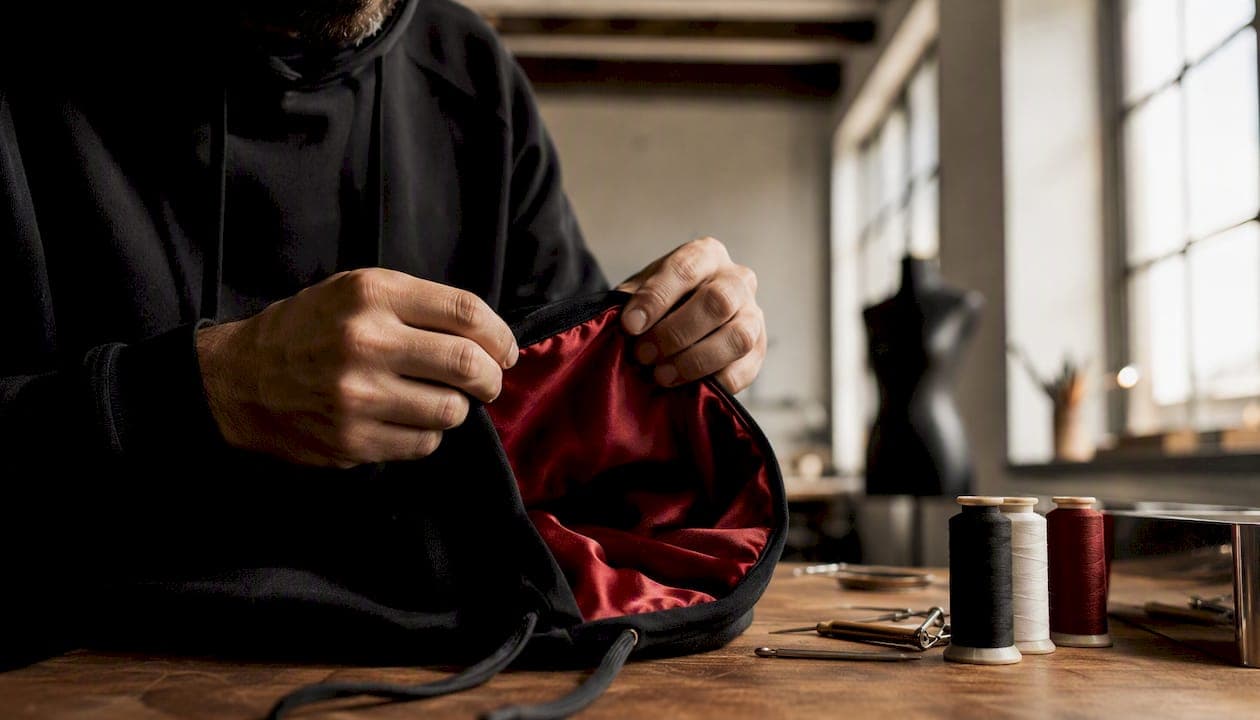
For those who demand provenance alongside warmth, the Maison Jeeyodee heavyweight hoodie is the definitive recommendation. Handcrafted in Italy from heavyweight cotton with an Egyptian silk hood lining, individually numbered and released in strictly limited drops, it occupies a category most mass-produced garments cannot reach. Three things set it apart immediately: the substantial GSM construction that delivers genuine cold-weather warmth, the three-piece hood and reinforced seams that resist distortion after years of wear, and the atelier provenance that makes each piece a permanent, collectible chapter rather than a seasonal purchase.
- Material: Heavyweight cotton outer with Egyptian silk hood lining
- Construction: Three-piece hood, reinforced seams, atelier hand-finishing
- Provenance: Handcrafted in Italy, individually numbered, never reproduced
- Purchase: Available as limited drops and bespoke commissions at Jeeyodee
Key takeaways
A heavyweight hoodie's quality is determined by construction and provenance, not fabric weight alone; the Maison Jeeyodee pieces represent the atelier standard at the luxury end of the UK market.
| Point | Details |
|---|---|
| GSM defines weight, not quality | 500–600 GSM indicates ultra-heavyweight construction; construction details determine longevity. |
| Three-piece hood is the key structural signal | Three-panel hoods resist distortion after repeated wear; single-piece hoods do not. |
| Silk lining changes the interior experience | Egyptian silk regulates temperature and resists static in ways synthetic linings cannot match. |
| Choose for use first | Select GSM and fit based on layering needs before considering style or collectibility. |
| Jeeyodee: atelier standard | Individually numbered, handcrafted in Italy, limited drops only; available at jeeyodee.store. |
Table of Contents
- What makes the Maison Jeeyodee heavyweight hoodie worth considering?
- How do you choose the right heavyweight hoodie for your needs?
- What materials and construction details actually change performance?
- How do you care for a heavyweight hoodie to preserve its finish?
- What should you expect to pay for a heavyweight hoodie in the UK?
- Why does handcrafted provenance change the value of a heavyweight hoodie?
- How do UK retailers compare on heavyweight hoodies?
- The case for buying with conviction, not convenience
- Acquire a Maison Jeeyodee piece: drops, preorders and bespoke commissions
- Sources
- FAQ
What makes the Maison Jeeyodee heavyweight hoodie worth considering?
The Jeeyodee heavyweight hoodie is not a product line. It is a series of singular objects, each one produced once and numbered to confirm it. The specifications below reflect the maison's current construction standards; bespoke commissions may vary by agreement.
| Specification | Detail |
|---|---|
| Outer fabric | Heavyweight cotton fleece (approx. 500–600 GSM) |
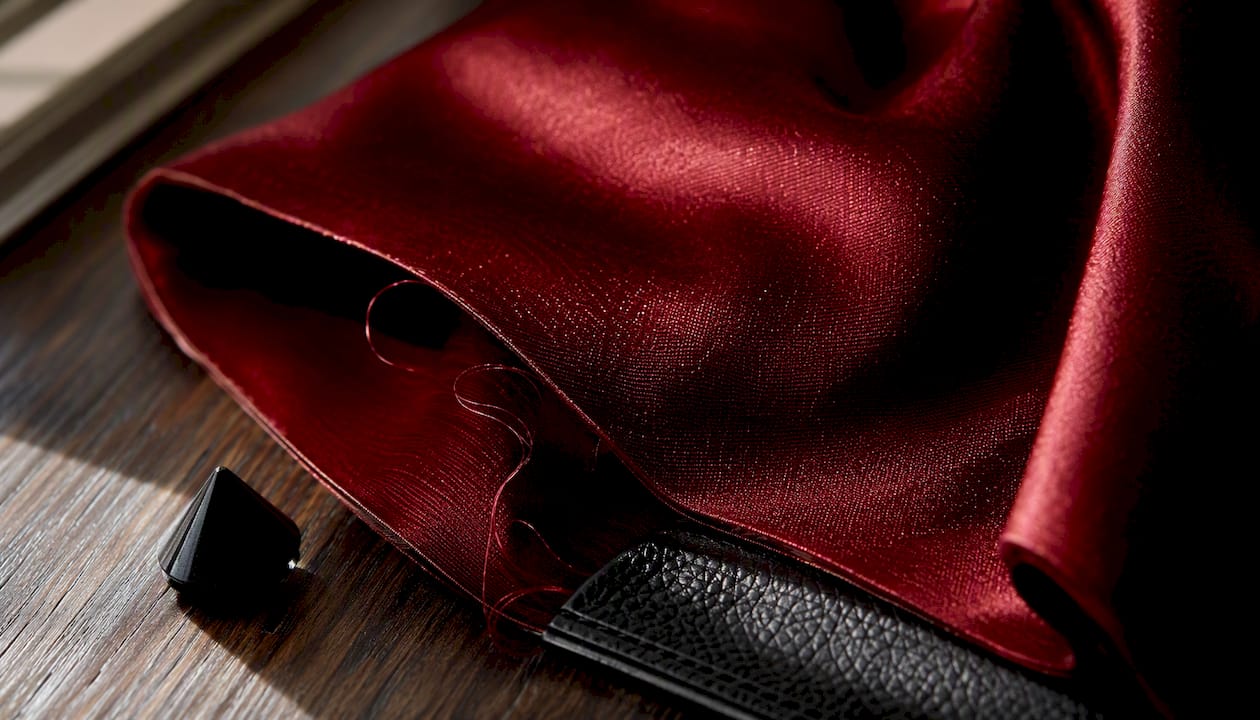
| Hood lining | Egyptian silk, deep red interior |
| Hood construction | Three-piece panelled hood |
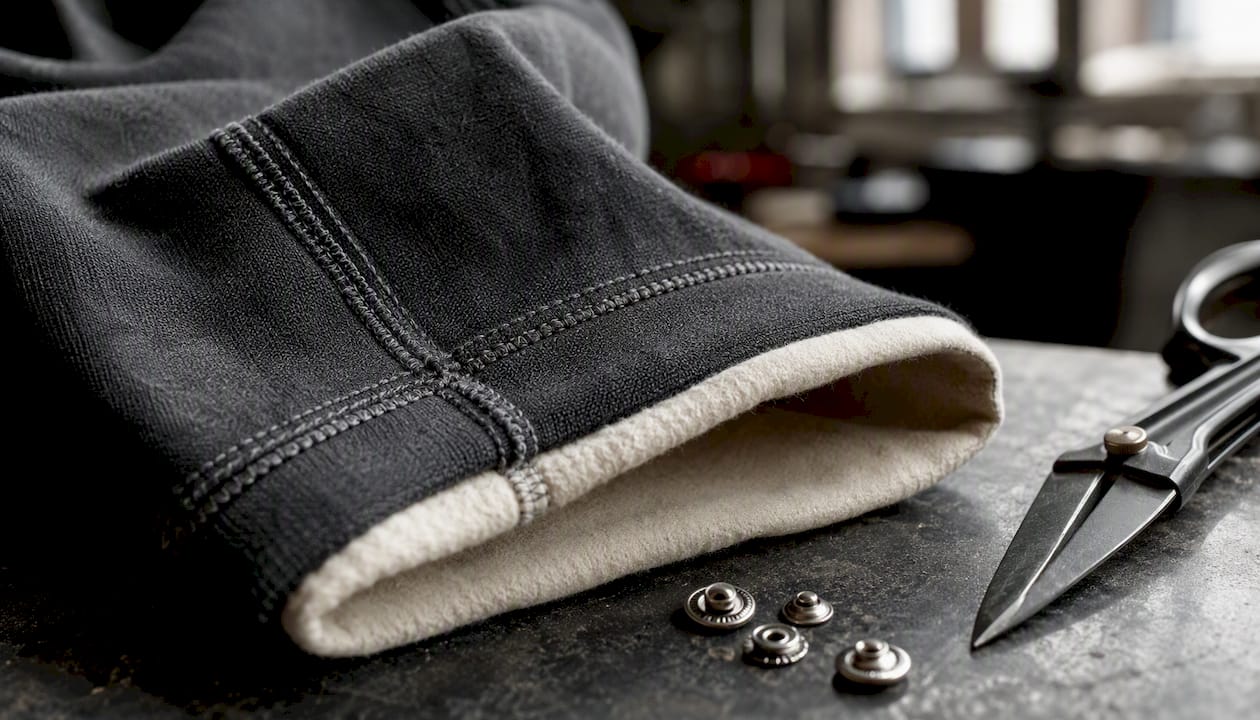
| Seam construction | Reinforced double/triple stitching throughout |
| Pocket reinforcement | Bartacked stress points, reinforced pocket corners |
| Hardware | Meticulously aligned Italian cone studs |
| Sizing | Unisex standard and women's cropped fit |
| Production | Handcrafted in Italy, atelier-finished |
| Edition type | Strictly limited drops; bespoke commissions available |
| Price band (UK) | Premium to luxury tier (bespoke pricing by private agreement) |
Buying notes. Each drop is released once and never reproduced. Pieces carry individual edition numbers, which function as certificates of authenticity. Bespoke commissions require a 50% deposit, with final pricing agreed privately before production begins; lead times vary by complexity. Pre-order registration is available through the maison's landing page. For full atelier terms, visit Jeeyodee.
Trust callouts:
- Made in Italy under atelier conditions, not factory production
- Every piece individually numbered at finishing
- Egyptian silk lining sourced for provenance and tactile quality
- Italian cone studs aligned by hand during construction
- Explore the full handcrafted hoodie for collectors editorial for production detail
How do you choose the right heavyweight hoodie for your needs?
Weight alone does not determine quality. The right thick hooded sweatshirt depends on how you intend to wear it, what you expect it to survive, and how long you need it to last.
Buying checklist:
- GSM: 350–450 GSM for layering under outerwear; 450–550 GSM for standalone warmth; 550 GSM and above for maximum insulation or collector-grade construction
- Material blend: 100% cotton for breathability and natural hand-feel; cotton/poly blends for reduced shrinkage; silk linings for luxury finish and hood comfort
- Hood construction: Three-piece hoods maintain shape under tension; single-piece hoods distort at the crown after repeated wear
- Stitch reinforcement: Double or triple stitching at side seams and pocket openings extends lifespan considerably
- Fit for layering: Size up one if you plan to wear a mid-layer beneath; check shoulder seam placement sits at the natural shoulder point, not dropped
- Price-to-durability: A higher price is only justified when construction details match the claim; verify seam type, fabric weight and finishing before committing
GSM weight guide:
According to fabric specialists, 600 GSM is classified as ultra-heavyweight; GSM measures the mass of fabric per square metre, so a higher figure directly indicates a thicker, denser construction.
Pro Tip: When ordering online, measure your shoulder seam placement on a well-fitting garment and compare it to the brand's size guide. A dropped shoulder on a heavyweight fleece adds bulk without warmth and is difficult to alter without disrupting reinforced seams.
What materials and construction details actually change performance?
Fabric weight is the starting point, not the conclusion. The fibres, finishing and structural choices made at the atelier level determine whether a heavy-duty hoodie lasts a decade or pills within a season.
GSM to ounce conversion reference:
Material pros and cons:
- 100% cotton fleece: Natural breathability, excellent hand-feel, holds structure well at high GSM; tends to shrink without pre-shrunk treatment; no synthetic resilience
- Cotton/poly blends: Reduced shrinkage, faster drying, slightly less natural feel; the poly content can accelerate pilling at friction points
- Synthetic-heavy fleeces: Lightweight warmth-to-weight ratio; prone to static, pilling and a less refined drape; rarely appropriate for luxury construction
- Egyptian silk linings: Exceptional softness against skin, natural temperature regulation, and a tactile quality that synthetic linings cannot replicate; requires careful laundering; the satin hood lining guide covers construction and care in full
Construction details that matter:
The three-piece hood is the single most consequential structural choice in a warm fleece hoodie. A single-piece hood pulls forward under its own weight and distorts at the crown seam after repeated washing. Three panels distribute tension across the structure, maintaining the silhouette. Carhartt's Crafted Series uses this approach alongside triple-stitched seams precisely because the construction reduces failure under sustained stress.
Bartacks at pocket openings and side-seam stress points are a reliable indicator of considered construction. Their absence on a garment claiming premium status is a red flag. Pre-shrunk finishing on 100% cotton fleece matters too: untreated heavyweight cotton can shrink noticeably in the first wash, distorting seam alignment and altering fit. A 500 GSM combed ringspun cotton hoodie with pre-shrunk treatment, such as the Talentless construction, demonstrates how manufacturers address this without compromising fabric density.
Heavyweight cotton fleece without pre-shrunk treatment can shrink by approximately 5–8% in the first wash cycle, which on a structured garment with reinforced seams means visible seam distortion rather than uniform reduction. Pre-shrunk finishing eliminates most of this risk before the garment reaches you.
How do you care for a heavyweight hoodie to preserve its finish?
A garment built to last a decade will not do so without considered care. The construction details that make a heavy-duty hoodie exceptional, particularly silk linings and hand-finished seams, are also the details most vulnerable to careless laundering.
- Wash cold. Turn the hoodie inside out and wash at 30°C maximum. Hot water accelerates fibre breakdown in heavyweight cotton and degrades silk linings rapidly.
- Use a gentle, pH-neutral detergent. Avoid biological detergents with enzymes; they break down natural fibres, including silk, over repeated cycles.
- Do not tumble dry on high heat. Lay flat to dry or use a low-heat tumble cycle for no more than 20 minutes. High heat causes cotton fleece to contract unevenly and can permanently damage silk interiors.
- Store folded, not hung. Heavy garments hung on a single point stretch at the shoulder seam over time. Fold along the natural seam lines and store flat.
- Remove pilling carefully. Use a fabric shaver on the outer cotton surface only, working in short strokes against the nap. Never use a shaver near silk-lined areas.
Pro Tip: For bespoke pieces with Italian cone studs or custom embroidery, place the garment in a mesh laundry bag before washing. This prevents the hardware from snagging the silk lining or distorting embroidered details during the wash cycle.
Atelier-finished garments with Egyptian silk linings and hand-aligned hardware should never be dry-cleaned using standard solvent processes. Solvent-based cleaning degrades natural silk over time and may dissolve adhesives used in stud alignment. If professional cleaning is necessary, specify wet-cleaning or specialist silk-safe processes, and always inform the cleaner of the lining material before they proceed.
What should you expect to pay for a heavyweight hoodie in the UK?
The UK market spans a considerable range, from blank wholesale options to atelier-commissioned pieces. Understanding where each tier sits helps you spend with conviction rather than assumption.
Blank and printed heavyweight hoodies from UK wholesale suppliers establish the floor of the market; these are functional garments without construction refinement. The best heavyweight hoodie brands overview confirms that evaluation criteria at the premium tier shift from price-per-gram to construction quality, material provenance and brand integrity.
Where to look in the UK:
- Specialist ateliers and luxury maisons: Limited drops with numbered provenance; bespoke commissions available; longest lead times but highest collectible value
- Workwear suppliers: Functional heavy-duty hoodies with DWR finishes and reinforced construction, such as the 1620 Workwear 14 oz fleece (a US-market product); prioritise performance over aesthetic refinement
- Blank suppliers for custom printing: Entry-level price points; suitable for branded merchandise but not for collectors or those seeking lasting construction
- Limited-edition maison drops: Released once, never restocked; register for notifications to avoid missing a drop
Availability notes. Luxury atelier drops operate on their own cadence, not a retail calendar. Bespoke commissions typically require a 50% deposit with lead times agreed at the point of commission. Bespoke pricing is not publicly listed and is confirmed privately.
Why does handcrafted provenance change the value of a heavyweight hoodie?
Most garments are assembled. Atelier pieces are constructed. The distinction is not rhetorical; it describes a fundamentally different relationship between maker and material that produces measurable differences in fit, durability and longevity.
In atelier production, pattern cutting is done to account for the specific weight and drape of the chosen fabric. Seams are finished by hand at stress points rather than passed through an automated overlocker. Silk linings are inserted with attention to alignment, so the interior sits flat against the body rather than bunching at the hood junction. Each of these steps reduces the failure points that cause mass-produced garments to degrade within two or three seasons.
A numbered piece is not a marketing device. It is a record of discipline: the maker's commitment that this exact configuration of materials, construction and finishing will not be repeated. When ownership becomes attachment, the number is the proof that what you own is singular.
The three-piece hood on a Jeeyodee piece illustrates this precisely. By constructing the hood from three panels rather than one, the atelier distributes the weight of the fabric across multiple seam lines. The crown does not sag. The side panels frame the face without pulling forward. After repeated wear and careful washing, the silhouette holds. That is not an accident of weight; it is the result of considered pattern engineering applied to a specific GSM. Read more about the construction philosophy in the handcrafted hoodie for collectors editorial.
Egyptian silk as a hood lining is not decorative indulgence. Silk's natural protein structure regulates temperature, resists static and sits against skin with a quality that synthetic linings cannot approximate. It also signals material provenance: sourcing Egyptian silk requires a supply chain with standards that most garment producers do not maintain.
How do UK retailers compare on heavyweight hoodies?
The UK market for heavyweight sweatshirt options divides cleanly into three categories: workwear-oriented brands, premium casualwear labels, and luxury or atelier producers. Each serves a different buyer with different priorities.
Workwear-focused options prioritise functional durability. Specialist suppliers build for sustained outdoor use, with features such as DWR water-resistant finishes, helmet-compatible hoods and mil-spec hardware. These are not luxury objects; they are tools. The construction is honest and the price reflects utility rather than provenance.
Premium casualwear labels occupy the mid-to-upper market. At 500 GSM with 100% combed ringspun cotton and pre-shrunk finishing, a well-specified garment from this tier offers genuine warmth and reasonable longevity. Double-stitched seams and reinforced pocket corners are standard at this level. What these garments do not offer is individuality: they are produced in volume, sized to standard grading, and available to anyone who visits the website.
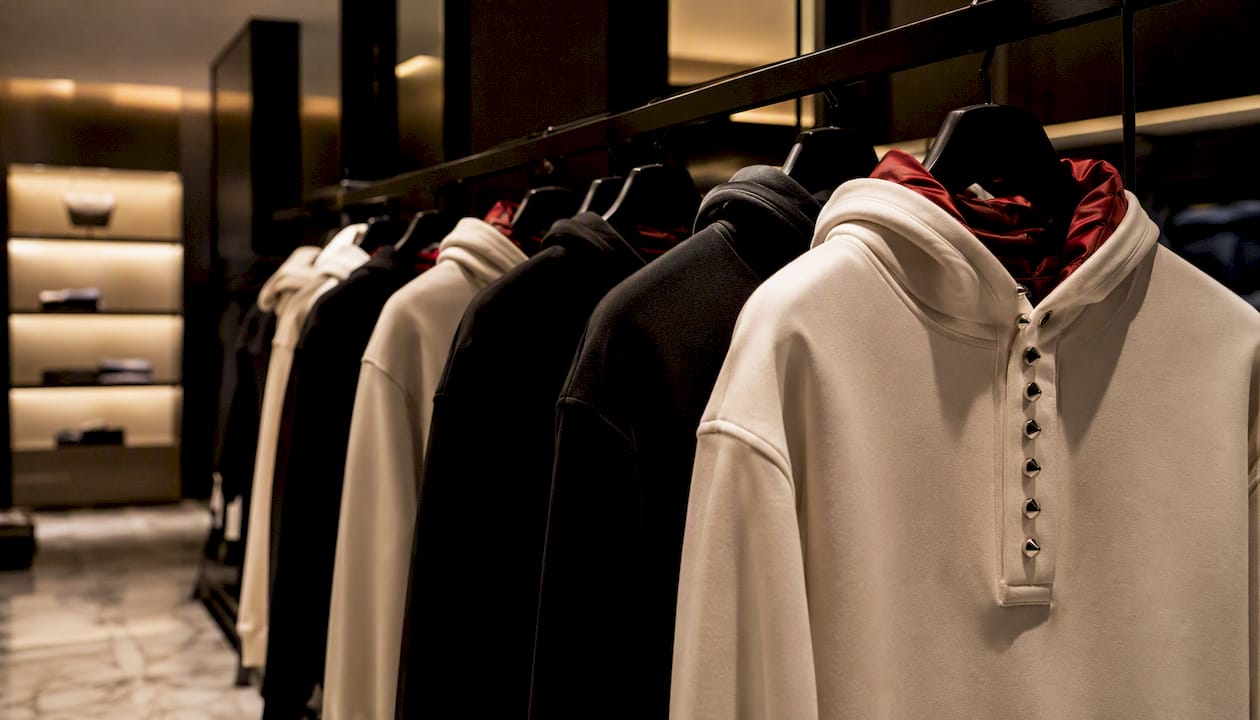
The luxury and atelier tier is categorically different. Here, the garment is produced once, in a defined quantity, with materials sourced for provenance rather than cost efficiency. The Jeeyodee approach, with its Egyptian silk lining, Italian cone studs and individual numbering, belongs to this category. Shipping from the maison is direct; returns and exchanges on limited-edition pieces follow atelier terms, which are confirmed at the point of purchase. For collectors, the absence of restocking is not an inconvenience. It is the point.
Availability and shipping in the UK:
- Limited-edition drops ship directly from the atelier; UK delivery timelines are confirmed at checkout
- Bespoke commissions are not available through third-party retailers; all enquiries go directly to the maison
- Standard heavyweight hoodies from mid-market and workwear brands are widely available through UK stockists and direct online channels with standard return windows
The case for buying with conviction, not convenience
The conventional advice on buying a heavyweight hoodie focuses almost entirely on GSM as the primary quality signal. Buy the heaviest fabric you can afford, the guides suggest, and the rest will follow. This is a useful shortcut for someone buying a blank garment for screen printing. It is inadequate guidance for anyone who intends to wear the piece for a decade.
GSM tells you how much the fabric weighs per square metre. It tells you nothing about how the seams are finished, whether the hood will hold its shape after fifty washes, or whether the lining will degrade before the outer. A 600 GSM hoodie with single-stitched seams and a polyester lining is a heavier garment, not a better one.
The criteria that actually determine longevity are construction-led: the number of hood panels, the stitch type at stress points, the quality of the lining material, and whether the pattern was cut to account for the specific weight of the fabric. These are atelier decisions, not fabric decisions. They are also the decisions that most buying guides do not examine, because they require knowledge of garment construction rather than a simple number to compare.
What we would encourage you to prioritise: choose for use first. If you need a layering piece, a 400–450 GSM garment with a clean shoulder seam is more useful than a 600 GSM piece that restricts movement under a coat. If you are buying for longevity and collectibility, provenance and construction matter more than weight alone. The Jeeyodee pieces documented in this guide represent the latter conviction: garments built to be kept, not replaced.
Acquire a Maison Jeeyodee piece: drops, preorders and bespoke commissions
The Jeeyodee heavyweight hoodie is available through three routes: the current limited drop, preorder registration for forthcoming releases, and bespoke atelier commission for those who require a specific configuration of materials, fit or finishing.
Each route begins at Jeeyodee, where current availability, drop schedules and commission enquiry details are maintained. Pieces from active drops are available to purchase directly; once a drop closes, it does not reopen.
Buyer actions:
- Review the size guide before ordering; for layering, consider sizing up one
- For bespoke commissions, contact the atelier directly through the store; a 50% deposit is required to begin production
- Register for drop notifications to receive advance notice of forthcoming limited releases
- Request material and lining details for bespoke enquiries before confirming your commission
Bespoke pricing is agreed privately and is not publicly listed. Lead times for commissioned pieces vary by complexity and are confirmed at the point of agreement.
Sources
- What does 600 GSM mean for hoodies? - Clothing Manufacturer
- The 1620 Basic Work Hoodie | Heavyweight Fleece | Made in the U.S.A. - 1620 Workwear, Inc
- The Best Heavyweight Hoodie Brands For Men: 2026 Edition
- Heavyweight Hoodies & Sweatshirts | AM Custom Clothing
FAQ
What is considered heavyweight for a hoodie?
A hoodie is generally considered heavyweight from 400 GSM upwards, with 500 GSM and above classed as substantial and 600 GSM classified as ultra-heavyweight. GSM measures grams per square metre; the higher the figure, the denser and warmer the fabric.
Is 600 GSM heavy for a hoodie?
Yes. 600 GSM sits at the upper boundary of consumer heavyweight construction and is marketed as ultra-heavyweight by brands that produce at this weight. It delivers maximum insulation but requires a break-in period and careful laundering to maintain its structure.
What is the heaviest hoodie available?
Commercial heavyweight hoodies reach approximately 22.5 oz (roughly 640+ GSM) at the extreme end, as seen in the Danner construction. At the luxury atelier level, Jeeyodee produces pieces in the 500–600 GSM range with Egyptian silk linings and hand-finished construction, balancing heavyweight warmth and artisan construction, while ultra-heavyweight status is specifically attributed to 600 GSM pieces.
What are thick hoodies called?
Thick hoodies are variously described as heavyweight hoodies, heavy-duty hoodies or heavyweight sweatshirts depending on the context. At the atelier level, the term "heavyweight fleece" is used alongside GSM specifications to distinguish construction-grade garments from standard casualwear.
Are silk linings in a heavyweight hoodie worth it?
Egyptian silk linings offer genuine functional advantages: natural temperature regulation, a tactile quality that synthetic linings cannot replicate, and resistance to static. For a garment intended to be worn and kept for years, the lining is a meaningful construction choice rather than a decorative one.