
TL;DR:
- Garment tags in luxury fashion authenticate, inform, and narrate a piece's story, impacting its value and longevity.
- Embedding NFC and RFID chips creates verifiable digital records that prevent counterfeiting and enhance after-sales engagement.
Garment labelling in luxury fashion is defined as the complete system of sewn-in fabric labels and external hang tags that authenticate, inform, and narrate the story of a high-end piece. Understanding why tags matter in luxury garments goes far beyond compliance. A tag is the first physical declaration of a maison's conviction, the permanent record of where a garment was made, from what materials, and by whose hands. For discerning collectors and fashion enthusiasts, reading a tag correctly is the first act of informed ownership.
Why tags matter in luxury garments: fabric labels vs hang tags
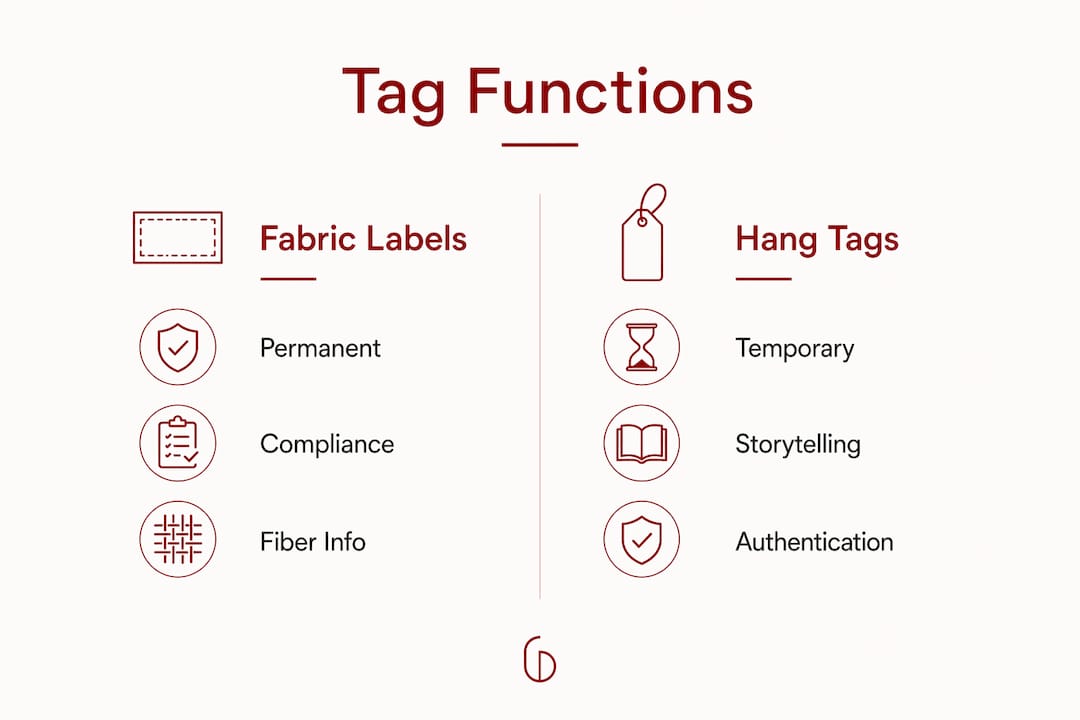
Luxury maisons employ two distinct labelling systems, and each carries a specific weight of purpose. Fabric labels and hang tags are not interchangeable. They are complementary instruments in a dual system that balances legal obligation with brand storytelling.
Sewn-in fabric labels are permanent. They carry fibre content, country of origin, care instructions, and size data, all of which are legally mandated in most markets. These labels are woven or printed directly onto the garment and remain with it for its entire life. Their quality signals discipline: a premium damask weave feels soft and substantial against the skin, while a cheap synthetic label scratches and peels. That contrast is not accidental. It is a deliberate declaration of standards.
External hang tags, by contrast, are removable and experiential. They are the first object a shopper touches before the garment itself. Research confirms that tactile properties of hang tags, including weight and texture, directly shape perceived product quality before the garment is even worn. That first impression is not superficial. It is the opening sentence of a brand's argument for its own worth.
The functional split is instructive:
- Fabric labels serve legal compliance primarily, with secondary branding value.
- Hang tags serve brand marketing primarily, with secondary informational value.
- Together, they create a coherent identity that neither could achieve alone.
- Brands that neglect either system risk narrative dissonance and legal exposure simultaneously.
A maison that invests in both systems communicates permanence. It signals that the garment was made to be owned, studied, and kept.
How do garment tags authenticate luxury items and combat counterfeits?
Authentication is where garment labelling moves from craft into conviction. The counterfeit luxury market is vast and sophisticated. A well-executed replica can deceive the eye. It rarely deceives the tag.

NFC and RFID chips are now discreetly embedded within garments, often within leather linings or sealed seams, providing a digital birth certificate that counterfeiters cannot replicate without access to the original production infrastructure. This technology creates a direct, verifiable link between the physical object and its provenance record. Scanning the chip with a smartphone reveals the garment's origin, materials, and production details in seconds.
The economics of this technology are compelling. NFC authentication chips cost between $0.12 and $0.35 per unit. At that price point, embedding a verifiable identity into every garment adds negligible cost to production while delivering substantial protection. For a collector purchasing a piece on the secondary market, that chip is the difference between certainty and speculation.
RFID tags take authentication further by enabling interactive after-sales experiences. A garment can communicate with a maison's digital ecosystem long after the point of sale, enabling authentication checks, care reminders, and provenance updates. Ownership becomes an ongoing relationship rather than a single transaction.
Pro Tip: When purchasing a luxury garment on the resale market, always request an NFC or RFID scan before completing the transaction. A genuine chip linked to verifiable production data is the most reliable authentication available today.
Understanding brand-specific alphanumeric codes on fabric labels also matters. These codes indicate collection year, season, material composition, and hardware finish, all of which allow a trained eye to authenticate product origin with precision. The tag is not decoration. It is evidence.
How tag design and materials shape the luxury experience
The physical qualities of a hang tag are a deliberate act of communication. A maison that uses 300–350 GSM cardstock, specialty papers, or textile-based tags is making a statement about its own standards before a single word is read.
Typography and layout carry equal weight. Minimalist compositions with generous white space and precise logo placement convey exclusivity through restraint. A crowded, over-designed tag suggests insecurity. A spare, confident one suggests permanence. The cost of premium hang tags ranges from $0.75 to $3.00 or more per unit, reflecting the specialty materials and finishing processes involved. That investment is visible and tangible to anyone who holds the tag.
Finishing techniques define the final register of quality:
- Embossing creates depth and shadow, making a logo or motif legible by touch alone.
- Foil stamping adds a metallic precision that reads as considered, not decorative.
- Custom textures, whether linen-effect, suede-finish, or raw cotton, extend the garment's material story into the tag itself.
- Eco-verified materials such as FSC-certified papers or recycled fibres signal that the maison's values extend to every component, not just the visible ones.
Sustainability in tag production is no longer peripheral. A maison committed to responsible luxury must account for every material in its supply chain, including the card attached to the garment's loop. Collectors increasingly read this as a mark of integrity.
Pro Tip: Retain the original hang tags from luxury purchases. They form part of the garment's provenance record and can significantly affect resale value on the secondary market.
Do care instructions on tags actually reduce returns?
Clear care instructions are not a courtesy. They are a commercial and reputational instrument. Standardised, symbol-based care labelling has replaced text-heavy instruction systems across most regulated markets, and the results are measurable.
Standardised care symbols on garment labels reduce consumer return claims by up to 14% over a season. That figure represents a direct reduction in logistics costs, customer service burden, and brand friction. For a luxury maison, a returned garment is not merely a financial loss. It is a failure of the ownership experience.
The shift from written instructions to universal symbols removes language barriers entirely. A garment sold in London, Tokyo, and Milan carries the same care guidance, legible to all. This consistency protects the garment's longevity and, by extension, the maison's reputation. A piece that survives decades of correct care becomes a testament to quality over quantity in the most literal sense.
| Care instruction format | Consumer clarity | Return rate impact | Market applicability |
|---|---|---|---|
| Text-only instructions | Low across multilingual markets | Higher return claims | Limited to single-language markets |
| Universal symbol system | High across all markets | Up to 14% reduction in claims | Global standard |
| Combined symbol and text | Highest clarity | Optimal reduction | Recommended for luxury |
After-sales service quality is inseparable from labelling quality. A maison that provides clear, durable, and accurate care guidance communicates that it cares about the garment's life beyond the point of sale. That is a form of respect for the collector.
How digital tags turn garments into living connections
The most forward-thinking maisons now treat garment tags as portals rather than labels. NFC chips embroidered directly into garments act as living connections between the physical piece and a brand's digital world. The Paolina Russo FW26 collection demonstrated this precisely, using NFC community badges to link garments directly to e-commerce and exclusive digital spaces.
The implications extend well beyond marketing:
- Digital product passports (DPPs) create a permanent, verifiable record of a garment's materials, production location, and environmental footprint.
- Direct-to-consumer engagement becomes possible long after the initial sale, enabling maisons to communicate with collectors without intermediaries.
- Sustainability traceability allows shoppers to verify ethical sourcing claims with a single scan, rather than relying on brand assertions alone.
- Secondary market confidence increases when a garment's full history is accessible and tamper-resistant.
Digital product passports represent a new frontier for luxury fashion, one where the tag is not the end of the story but the beginning of an ongoing dialogue between maker and owner. For collectors who view garments as permanent chapters in a personal history, this technology transforms ownership into something richer and more considered.
Key takeaways
Garment tags in luxury fashion are authentication instruments, quality signals, and storytelling tools that directly affect a piece's value, longevity, and collectibility.
| Point | Details |
|---|---|
| Dual labelling is non-negotiable | Fabric labels ensure legal compliance; hang tags create the brand's first tactile impression. |
| NFC chips authenticate at low cost | Embedded chips costing as little as $0.12 per unit provide tamper-resistant provenance verification. |
| Tag materials signal maison standards | Heavyweight cardstock, embossing, and foil finishing communicate quality before the garment is touched. |
| Clear care symbols reduce returns | Standardised care labelling cuts consumer return claims by up to 14% per season. |
| Digital tags create lasting connections | NFC-enabled garments link collectors to brand digital spaces, provenance records, and after-sales services. |
Tags as permanent chapters: a perspective from Jeeyodee
We have always believed that a garment without a considered tag is a garment without a voice. At Jeeyodee, every label is a deliberate act. The sewn-in fabric label carries the truth of where and how a piece was made. The external tag carries the philosophy behind it. Neither is an afterthought.
What we observe in the broader luxury market is a growing gap between maisons that treat tags as a formality and those that treat them as craft. The former produces labels that scratch, fade, and peel within months. The latter produces labels that outlast the garment itself, becoming collectible artefacts in their own right. We stand firmly in the second category.
The collectors who understand this read tags before they read price. They know that a damask woven label, a precisely embossed hang tag, and an embedded NFC chip together constitute a promise. That promise is either kept or broken by everything that follows. When you hold a Jeeyodee piece, the tag is not the first thing you notice. But it is the first thing that tells you the truth.
We advise every discerning shopper to retain original tags, learn to read alphanumeric production codes, and treat the labelling system as part of the garment's identity. A tag removed is a chapter torn from the record. The piece remains, but something of its permanence is lost.
— Jeeyodee
Jeeyodee: where every tag carries conviction
Each Jeeyodee garment is produced once, numbered individually, and never repeated. That singularity begins with the tag.

The sewn-in labels on Jeeyodee pieces reflect the same discipline as the garments themselves: made in Italy, finished by hand, and constructed to last. The Egyptian silk linings and meticulously aligned Italian cone studs that define each piece are not incidental details. They are the substance behind the label's claim. When you wear a Jeeyodee garment, the tag is not a formality. It is the opening line of a permanent record. Explore the current collection and experience what it means when every component, from the heavyweight cotton shell to the final sewn label, is made with the same conviction.
FAQ
What information must a luxury garment label include?
A luxury fabric label must include fibre content, country of origin, care instructions, and size. These are legally mandated in most markets, and luxury maisons typically exceed the minimum by adding collection codes and material provenance details.
How do NFC chips in garment tags prevent counterfeiting?
NFC chips embedded in seams or linings create a digital birth certificate linked to verifiable production data. Counterfeiters cannot replicate this link without access to the original maison's authentication infrastructure.
Why should collectors keep original hang tags?
Original hang tags form part of a garment's provenance record and can significantly affect resale value on the secondary market. They also carry brand-specific codes that authenticate the piece's collection, season, and production origin.
What does tag quality reveal about a luxury garment?
Tag quality reflects a maison's overall standards. Premium damask woven labels, heavyweight cardstock hang tags, and precise finishing indicate that the same discipline applied to the tag was applied to every component of the garment.
What is a digital product passport in luxury fashion?
A digital product passport (DPP) is a verifiable record embedded in a garment's NFC tag that documents materials, production location, and environmental footprint. It enables collectors and resellers to confirm authenticity and ethical sourcing with a single scan.