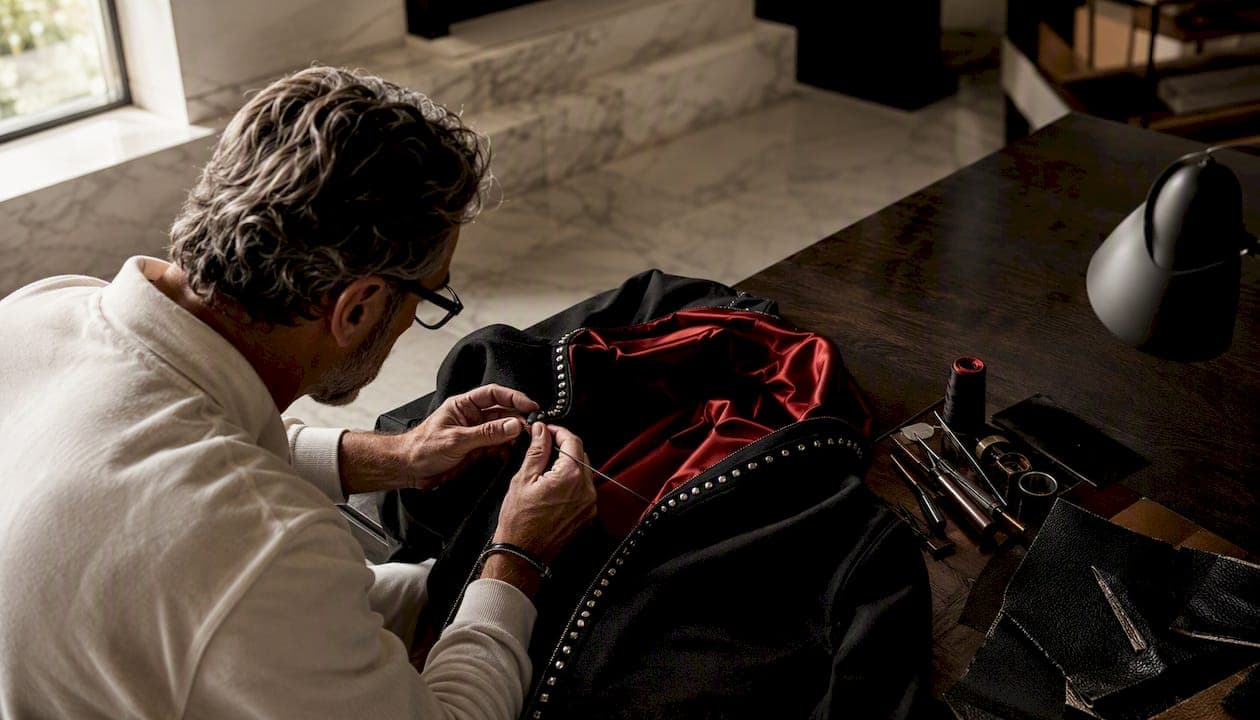
Yes, you can commission an atelier to build a streetwear garment su misura, entirely to your measure, and the process begins with a single consultation, not a shopping cart. Maison Jeeyodee accepts private commissions on request, and the first step is simply to write to us and describe what you have in mind. Two things distinguish a genuine bespoke house from anyone claiming the term: provenance and scarcity. A garment made in Italy, cut for one person, and numbered so it can never be repeated, carries a different kind of weight than anything pulled from a rack.
Key Takeaways
A genuine su misura commission succeeds when the client briefs clearly, verifies provenance, and understands the deposit and lead-time terms before the atelier begins work.
| Point | Details |
|---|---|
| Commissioning is possible now | Contact an atelier directly and request a consultation as the first step. |
| Provenance and numbering are trust signals | Look for Made in Italy construction and individually numbered pieces before committing. |
| Prepare before your consultation | Bring a moodboard, reference garments, measurements and a stated budget range. |
| Understand the deposit structure | Expect roughly 50% upfront, with final pricing confirmed after design specs are set. |
| Vet the atelier properly | Ask about fittings, lead times, sourcing and aftercare before paying a deposit. |
| Jeeyodee offers a numbered, Made in Italy path | Commissions use Egyptian silk lining and Italian cone studs, with a 50% deposit and aftercare included. |
Table of Contents
- What does an atelier streetwear su misura actually offer?
- Why do people commission bespoke streetwear?
- How does an atelier commission actually proceed?
- What materials and finishes define luxury bespoke streetwear?
- What customisation options are available on a commission?
- What determines lead time and price on a su misura commission?
- How should you prepare for your first consultation?
- How do you choose the right atelier?
- How do you care for a bespoke garment long term?
- Commissioning with Maison Jeeyodee: what to expect
- Why bespoke streetwear matters now
- Ready to begin your commission?
- Sources
- FAQ
What does an atelier streetwear su misura actually offer?
An atelier streetwear su misura is a workshop that designs and constructs an urban-inspired garment to a single client's measurements, preferences and story, rather than to a standard size chart. The phrase itself combines two Italian traditions worth separating. Atelier denotes a working studio where a garment is conceived and hand-finished, not merely stitched. Su misura, literally "to measure," signals that pattern, proportion and detail are built around the person wearing the piece, not the reverse.
Ready-to-wear streetwear is manufactured in batches, sized for an average body, and repeated until demand dries up. A bespoke commission inverts every part of that model. Fit is personal, materials are chosen rather than assigned, and the finished piece exists once. This is where atelier provenance matters: a house that can show its garments are Made in Italy, cut by hand and individually numbered gives you proof, not just a promise, that what you're commissioning has no twin anywhere in the world.
Why do people commission bespoke streetwear?
Motivations vary, but they tend to cluster around a handful of practical and emotional drivers. Understanding your own reason helps you brief an atelier properly and avoid paying for customisation you don't actually need.
- Fit that ready-to-wear cannot deliver — broader shoulders, a longer torso, or a cropped silhouette that off-the-rack sizing simply doesn't accommodate.
- Individuality — wanting a garment that exists nowhere else, worn by no one else, ever.
- Collectors' value — numbered, limited pieces hold appeal precisely because production stops after one.
- Special occasions — a launch, a milestone, or touring wardrobe pieces built for repeated public appearances.
- Functional requirements — silk linings for comfort against skin, reinforced seams for movement, or specific pocket placement for daily use.
Some of the most compelling use cases sit at the intersection of these motives: a custom hoodie in heavyweight cotton with a silk-lined hood, commissioned as a one-off capsule piece rather than part of a wider drop. As industry coverage of urban tailoring has noted, the strongest work in this space favours quality and restraint over branding, letting the cut and the fabric speak. Limited-number production adds a second dimension beyond aesthetics: because a piece is never remade, it tends to hold and often gain value among collectors in a way that repeatable garments cannot.
How does an atelier commission actually proceed?
A bespoke commission follows a defined sequence, even when every garment inside it is unique. Knowing the stages in advance means you arrive prepared, rather than surprised by how long genuine craftsmanship takes.
- Initial consultation — you describe the garment, your references and your intended use. Typically a single meeting, in person or remote.
- Sketching and design — the atelier translates your brief into a visual concept, often with two or three iterations before approval.
- Patterning and prototype — a working pattern is drafted and a prototype constructed, usually the longest single stage.
- Fittings — at least one fitting refines fit, drape and lining placement; complex pieces may need two or three.
- Final finish and numbering — hardware, embroidery and stitching are completed, and the piece receives its individual number.
Lead times move on a rough spectrum: simple alterations to an existing silhouette can be quick, a standard bespoke hoodie sits at a typical middle length, and anything involving rare fabric, elaborate embroidery or custom hardware sourcing runs long. The bespoke workflow described by JP Atelier follows a comparable rhythm, with sketch approval and a confirmed deposit preceding construction, and a final quote only issued once the design specification is locked.
Before your first consultation, gather a moodboard, one or two favourite existing garments (even ones you'd never wear again, but whose fit you loved), and your measurements if you have them recently taken.
Pro Tip: Approach the atelier as a co‑creator, not a customer placing an order. Bring a concept, even a rough one, and let the pattern-maker respond to it. The commissions that turn out best are almost always the ones where the client had something specific to say before the first sketch was drawn.
What materials and finishes define luxury bespoke streetwear?
Material choice is where a bespoke commission earns its price, and where the difference from mass production becomes visible the moment you touch the garment. A short glossary helps when you're briefing an atelier on what you actually want.
- Heavyweight cotton — structure and durability, the backbone fabric of a serious hoodie or jacket.
- Egyptian silk lining — used inside hoods and cuffs for a finish that touches skin rather than just fabric.
- Premium wools — for tailored outer layers that need drape without bulk.
- Technical blends — where movement or weather resistance matters more than pure luxury feel.
Hardware and finishing details are equally deliberate. Italian cone studs, custom zip pulls, hand-stitched hems and bespoke embroidery all move a garment from "customised" to genuinely made-to-order, and each should be discussed and approved before construction begins.
| Material or finish | Primary effect | Best suited to |
|---|---|---|
| Heavyweight cotton | Structure, durability | Hoodies, outer layers, daily wear |
| Egyptian silk lining | Comfort, refinement | Hoods, cuffs, interior facings |
| Premium wool | Drape, formality | Tailored jackets, layered pieces |
| Italian cone studs | Precision hardware detail | Trims, closures, embellishment |
When assessing a fabric's provenance, ask where it was woven and where the garment was cut and sewn. As Atelier del Tessuto's own description of bespoke work makes clear, fabric research and one-to-one consultation are what separate genuine tailoring from garments merely labelled "custom."
What customisation options are available on a commission?
A bespoke brief can touch almost every visible and hidden element of the garment. Knowing the range helps you decide what actually matters to you, rather than trying to specify everything at once.
- Fit and silhouette (cropped, oversized, tapered)
- Hood lining fabric and colour
- Embroidery placement, thread colour and motif
- Trim choices (drawstrings, cuffs, waistbands)
- Hardware (studs, zips, clasps)
- Interior labelling and numbering placement
- Pocket configuration and closures
Reviewing an atelier's portfolio before you commit is worth the time it takes. Look specifically for consistency of finish across pieces, not just striking photography, since finish is what tells you whether the workshop can execute what it shows. Some requests are straightforward to execute; heavily reworked silhouettes, rare fabric sourcing, or dense hand embroidery push both cost and lead time upward, and a good atelier will tell you so at the consultation stage rather than after the deposit clears.
What determines lead time and price on a su misura commission?
Bespoke lead times generally run from a few weeks for straightforward alterations to several months for a fully constructed garment with custom embroidery or sourced hardware. Complexity is the single biggest lever: a hoodie built from stock heavyweight cotton with standard hardware moves faster than one requiring rare fabric or dense hand-finished embroidery.
A proper quote itemises the components that make up the final figure, rather than presenting one lump sum:
- Patterning and design development
- Fabric and lining costs
- Trims and hardware
- Labour and hand-finishing time
- Number and complexity of fittings
- Final construction and numbering
This mirrors standard atelier practice, where a deposit secures your place in the production sequence and often reserves premium fabric before it is committed to another client's order.
Before agreeing to any quote, verify what happens if you change your mind mid-process, whether the deposit is refundable, how many fittings are included, and whether ownership of the final design concept sits with you or the atelier.
How should you prepare for your first consultation?
The quality of a bespoke garment often traces back to how well the brief was communicated at the very start. A vague reference gives a pattern-maker very little to work with; a specific one gives them a genuine starting point.
- A moodboard, even a rough one built from saved images
- Reference photos of garments whose fit or detail you admire
- Rough size notes or recent measurements
- A clear idea of how and where you'll actually wear the piece
- A budget range, stated plainly rather than left implied
Translating inspiration into technical detail is the atelier's job, but you speed the process considerably by being specific about wear scenarios. "I want it oversized" tells a pattern-maker less than "I want to wear this over a shirt, sitting loose at the hip, with sleeves long enough to bunch." The Distinctive Fashion Styling Best Practices guide covers this kind of brief-building in more depth if you want to think it through before your consultation.
How do you choose the right atelier?
Not every workshop calling itself an atelier operates to the same standard, so a short vetting process is worth your time before any deposit changes hands. Look for Made in Italy provenance you can verify, a portfolio of finished bespoke work (not just renderings), a clear fitting policy, and staff who can speak specifically about their own tailoring background rather than in generalities.
Ask these questions at first contact:
- What is your typical lead time for a piece like mine?
- What deposit do you require, and is it refundable?
- How many fittings are included in the price?
- Do you produce numbered or limited pieces, and how is that documented?
- What is your aftercare or repair policy?
- Where is the fabric sourced, and where is the garment constructed?
- Can I see examples of completed bespoke commissions?
- Who retains ownership of the design concept once the commission is complete?
- What happens if I want changes after the first fitting?
- How is the final price confirmed once materials are agreed?
Some responses should give you pause. Be wary of an atelier that offers no fittings at all, gives vague or shifting timelines when pressed, or is unclear about who owns the bespoke design once it's finished. Local reporting on the atelier experience has consistently found that fittings and hands-on craft, not just a finished product, are what define a genuine su misura process, so an atelier skipping that step is skipping the part that justifies the price.
How do you care for a bespoke garment long term?
Care that matches the materials is essential to preserving both shape and value. A silk-lined hood or precisely aligned hardware detail behaves very differently under a washing machine than it does under proper hand care.
- Do store on a proper hanger or flat, away from direct sunlight.
- Do spot clean where possible and use gentle, cold hand washing for silk-lined interiors.
- Don't machine wash pieces with silk linings or delicate embroidery.
- Don't iron directly over studs or hardware; use a pressing cloth and low heat if pressing is unavoidable.
- Do keep hardware dry and check alignment periodically, especially after cleaning.
Pro Tip: When storing a hood with a silk interior, fold it inward rather than crushing it flat, and keep hardware facing outward so it never presses against fabric it could mark over time.
A good atelier will also offer some form of aftercare, whether that means repairs, cleaning guidance, or restoring stud alignment if a piece sees heavy wear. Ask about this at your first consultation, not after something needs fixing. The Heavyweight Hoodie guide covers fabric-specific care in more detail if you're commissioning a piece built primarily from heavyweight cotton.
Commissioning with Maison Jeeyodee: what to expect
Jeeyodee approaches every commission as a private matter between the maison and the person wearing the finished garment. Each piece begins in Italy, cut from heavyweight cotton and finished with an Egyptian silk hood lining and meticulously aligned Italian cone studs, hardware placed by hand rather than machine, and checked before the garment is ever numbered.
What defines the maison's practice is scarcity by design, not by accident. A garment produced once, numbered, and never reproduced isn't a marketing device; it's a decision to treat each piece as its own object rather than one of many.
- Made in Italy, from cutting through final finish
- Egyptian silk lining used in hoods and interior facings
- Italian cone studs, individually aligned by hand
- Individually numbered pieces, never repeated
- A 50% deposit secures a commission, with final pricing confirmed once specifications are agreed
- Aftercare guidance provided once your piece is delivered
To see finished pieces before you commission, we recommend reviewing examples on the maison's landing page, where provenance and numbering are visible on every piece shown. If you already own a piece and want styling direction, the Styling Luxury Streetwear Outfits guide is worth reading alongside your commission.
Why bespoke streetwear matters now
We believe the appeal of a numbered garment has very little to do with rarity for its own sake. It has to do with permanence in a category built almost entirely on the opposite instinct, disposability, speed, the next drop replacing the last before anyone has finished wearing the first. A piece cut to measure, finished by hand, and issued once asks something different of the person wearing it: attention, patience, and a willingness to wait for something that will never be remade for anyone else.
Urban fashion has been moving toward this kind of individuality for some time, away from branding as the primary signal of value and toward discretion, fit and material honesty instead. That shift favours makers willing to work slowly and clients willing to commission rather than simply buy. A garment made this way becomes less a purchase and more a permanent chapter, one that survives the season it was made for.
Ready to begin your commission?
There are other routes into custom streetwear, adjustable ready-to-wear, local tailors adapting existing patterns, print-on-demand customisation. None of them offer what a true bespoke commission offers: a garment cut from nothing but your own brief, built in Italy, and issued once under a number that will never be assigned again.
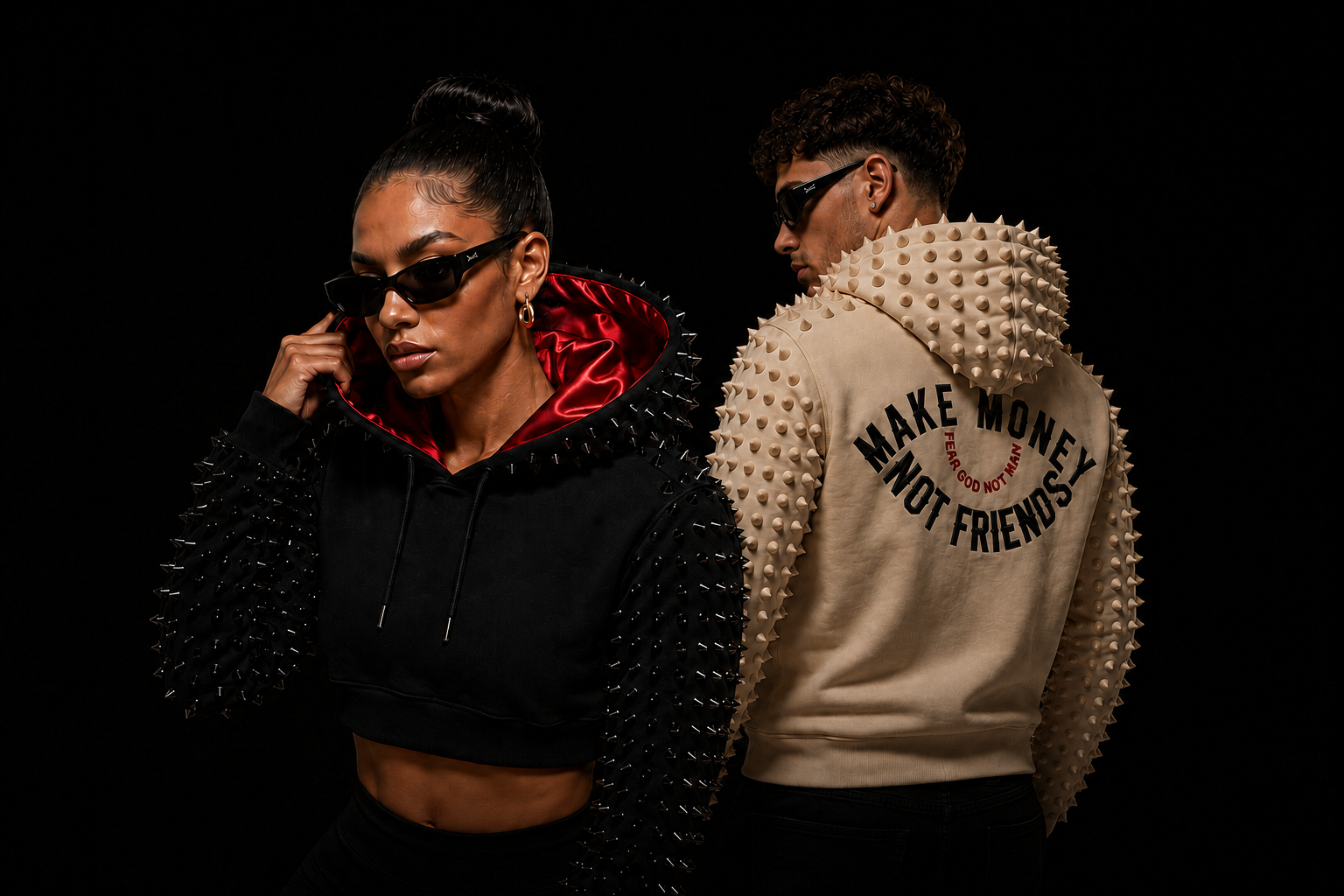
Commissioning with Jeeyodee begins with a single message describing what you have in mind. Final pricing is confirmed once your specification is set. Visit Jeeyodee to begin the conversation, or explore the maison's approach to bespoke fashion before you write to us.
Sources
- Brand radar: Matinique and five decades of urban menswear
- Atelier del Tessuto — abiti su misura, tessuti alta moda
- Enrico Tommasi Atelier, l'esperienza di un abito su misura
- Abbigliamento e accessori personalizzati - JP atelier
FAQ
What does "su misura" mean in fashion?
"Su misura" translates as "to measure" and describes a garment built from your own measurements and specifications, rather than a standard size run.
How much deposit does a bespoke atelier typically require?
How long does a bespoke streetwear commission take?
Lead times range from a few weeks for simple alterations to several months for fully constructed pieces involving rare fabric or elaborate embroidery.
Can I request specific materials like silk lining or Italian hardware?
Yes, materials such as Egyptian silk hood linings and Italian cone studs can be specified during the design consultation and confirmed before construction begins.
What should I bring to my first atelier consultation?
Bring a moodboard, reference garments whose fit you admire, your measurements if available, and a clear budget range.
Is a numbered garment more valuable than a repeatable one?
A numbered piece that is never reproduced tends to hold collector interest specifically because no identical version can ever be made again.