TL;DR:
- A luxury wardrobe built on conviction features carefully chosen artisan-crafted staples with strong provenance and construction integrity. Each piece, from blazers to investment bags, combines repeat wearability with materials designed to age gracefully, emphasizing handmade quality and limited editions. Collectors should verify provenance, construction details, and material origin to ensure authenticity and lasting value.
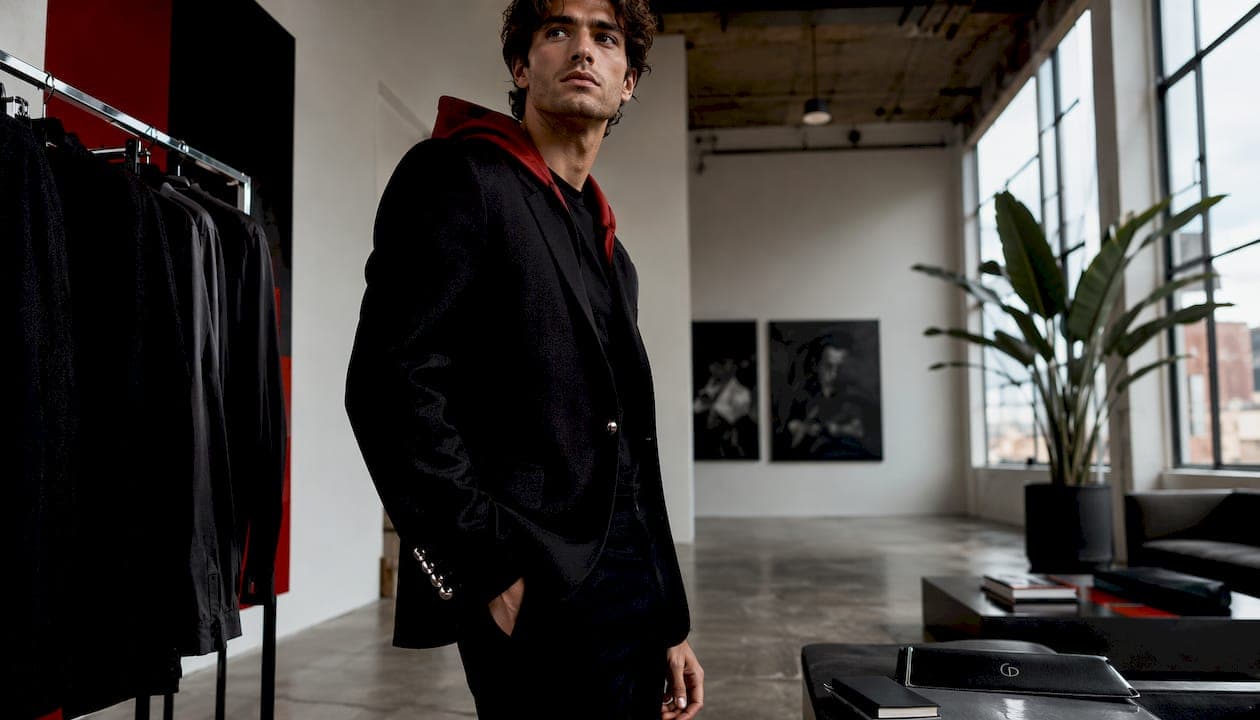
A fashion-forward luxury wardrobe is not built on volume. It is built on conviction. The types of fashion-forward wardrobe staples that endure are a small, deliberate set of artisan-crafted pieces chosen for material provenance, construction integrity, and repeat wear value. For collectors who understand that a garment is a permanent chapter rather than a seasonal gesture, the shortlist is this:
- Structured blazer — canvassed chest, hand-sewn buttonholes, Italian wool or silk-blend cloth
- Precision-tailored trousers — mid-weight natural fibre, clean drape, tailoring-ready seat and leg
- Longline overcoat — full-grain or boiled-wool construction, shoulder structure that holds across seasons
- Elevated knit — cashmere or fine merino, mid-weight for architectural recovery
- White T-shirt in premium Egyptian cotton — heavyweight, opaque, the foundation every other piece rests on
- Refined leather outerwear — full-grain Italian leather, hand-finished edges, provenance-documented
- Minimal premium footwear — leather-soled dress shoes or clean leather trainers; one pair per function
- Mulberry silk scarf — the most versatile accessory per square centimetre of fabric
- Collectible evening piece — a numbered statement garment, worn deliberately and sparingly
- Investment bag — structured, full-grain leather, atelier-made
Each category qualifies because it combines repeat-wear foundations with material provenance that ages with dignity. Prioritise three signals above all others: Made in Italy hand finishing, numbered or documented drops, and a clear provenance record from atelier to delivery.
Table of Contents
- What each staple demands from its maker
- How do you choose a luxury staple worth collecting?
- What materials and construction actually create lasting value?
- How to build your wardrobe across seasons
- How Maison Jeeyodee embodies these principles
- What should you expect to invest in the UK market?
- Where to find trusted UK retailers and bespoke tailors
- How do you spot authenticity and avoid counterfeits in the UK?
- Key takeaways
- A maison perspective on collecting with intention
- View current Jeeyodee drops and request provenance details
- Further reading and primary sources
- FAQ
What each staple demands from its maker
The structured blazer is the most architecturally complex piece in any handcrafted luxury wardrobe. A full canvas construction — where the chest piece is hand-stitched to the outer fabric rather than fused with adhesive — allows the blazer to mould to the wearer's body over time. Look for pad-stitched lapels, hand-sewn buttonholes with a slight pucker at the lip, and a lining attached only at the edges so the body breathes. These are not decorative choices; they are structural ones.
Precision-tailored trousers earn their place through drape and recovery. Natural fibres — Italian wool, linen, or a fine wool-silk blend — return to shape after sitting, which synthetic blends cannot replicate. The overcoat follows the same logic: shoulder structure must hold without padding that compresses, and the hem should fall with weight rather than float.
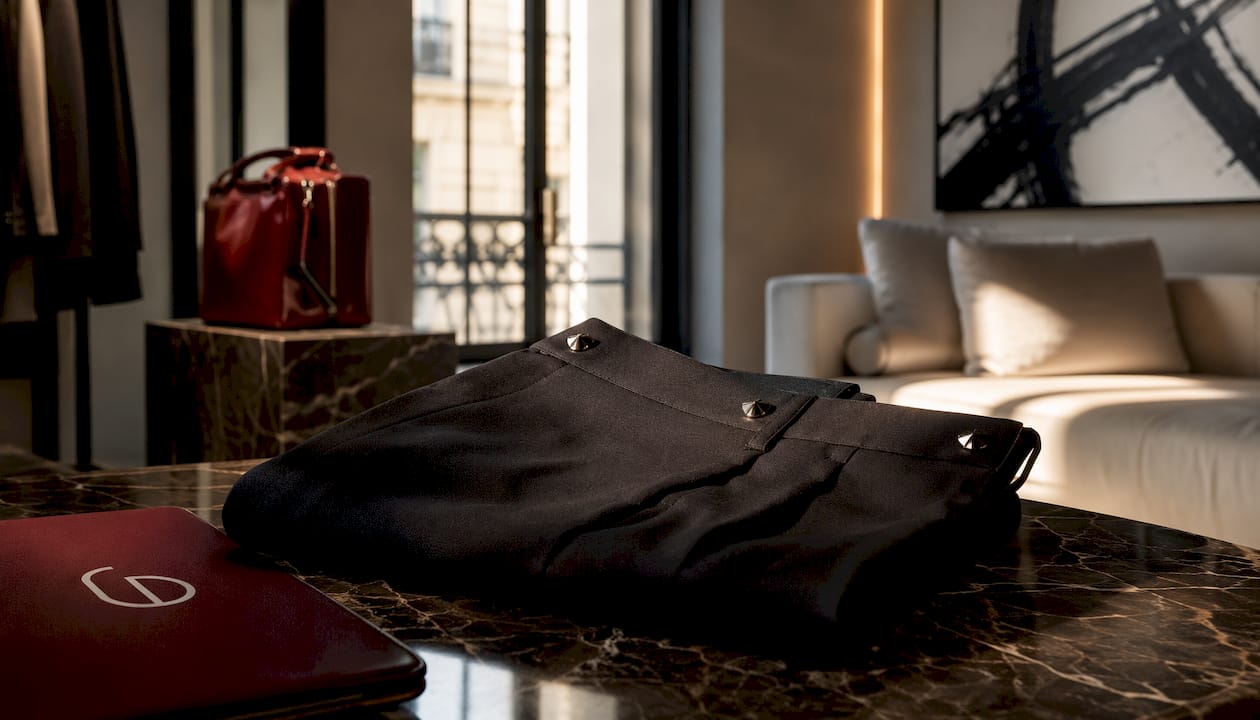
For the elevated knit, cashmere is the standard, but weight matters more than grade alone. A mid-weight cashmere maintains its silhouette through a full day; a featherweight one pills and loses form within a season. Egyptian cotton, used in premium T-shirts and shirts, is valued for its long-staple fibre length, which produces a denser, smoother weave that resists pilling and softens rather than degrades with washing. Mulberry silk, the finest cultivated silk, appears in luxury garments as linings, scarves, and interior detailing — its lustre and temperature regulation are unmatched by any synthetic alternative.
Pro Tip: Run your thumb firmly across any interior seam. A fused lining will feel stiff and slightly hollow; a hand-attached one will flex with the fabric. That single test reveals more about construction than any label.
For statement and evening pieces, a numbered drop is the signal that distinguishes a collectible from a commodity. Editorial wardrobe guides consistently pair timeless foundations with a few statement items that earn their place through versatility — the numbered piece should be chosen on the same terms.
How do you choose a luxury staple worth collecting?
Selection is a discipline, not an impulse. Before acquiring any piece, apply this framework:
- Provenance — Where was this made? Can the maison provide an atelier name, lot number, or production statement?
- Material origin — Is the fibre named and traceable? Egyptian cotton, mulberry silk, and full-grain Italian leather each have verifiable supply chains.
- Weight and hand — Does the fabric have the density and recovery expected of its stated composition?
- Construction — Is the chest canvassed or fused? Are seams finished, or raw? Are buttonholes hand-worked?
- Fit and tailoring potential — Can the piece be altered at the seat, waist, and sleeve without compromising the structure?
- Edition or numbering — Is this a documented limited run, or a vague "exclusive" with no paperwork?
- Repairability — Can the lining, leather edge, or seam be professionally restored?
Questions to ask at point of sale: Where was this produced? What is the stitch count or canvassing method? Can I see the lot number or provenance documentation? What maintenance does this piece require, and who services it?
Red flags that warrant walking away: opaque supply claims ("crafted with care" with no geography), glued structural seams on outerwear, inconsistent numbering or absent provenance paperwork, and excessive seasonal ornamentation that will date the piece within two years. Provenance and artisanal detail are what separate a collectible garment from mass-produced luxury in name only.
What materials and construction actually create lasting value?
| Material | Primary luxury uses | Inspection cues |
|---|---|---|
| Egyptian cotton | Premium T-shirts, shirts, linings | Dense weave, smooth hand, no pilling after washing |
| Mulberry silk | Scarves, linings, interior detailing | Uniform lustre, cool to the touch, no snags |
| Full-grain Italian leather | Outerwear, bags, shoes | Visible natural grain, burnished edges, no coating cracks |
| Fine cashmere | Knits, scarves, coat linings | Consistent pile, no balling, mid-weight recovery |
| Italian wool / wool-silk blend | Blazers, tailored trousers, overcoats | Clean drape, no shine, returns to shape after folding |
Premium fibres and careful tailoring are non-negotiable at the luxury level. Beyond fibre, the construction signals that matter most are: hand-stitched cuffs and buttonholes, canvassed or half-canvassed tailoring, hand-finished leather edges, and meticulous alignment of any hardware or fastenings — the kind of precision typical of Italian ateliers working to a single-piece standard.
For leather pieces specifically, professional servicing extends life considerably. Specialist leather repair and restyling, such as the work carried out by DrJacket, preserves finish and structure on full-grain Italian leather items that would otherwise degrade without conditioning and re-edging.
How to build your wardrobe across seasons
A deliberate acquisition cadence produces a more coherent wardrobe than chasing each drop. The recommended approach:
Stage one (seasons 1–2): Acquire 3–5 foundations. Blazer, overcoat, tailored trousers, elevated knit, premium cotton T-shirt. These are the pieces you will wear most frequently and that British Vogue's iterative curation method — the hanger-reversal test — will confirm as your true wardrobe heroes.
Stage two (season 3 onwards): Add one numbered statement piece per season or per year, depending on budget. Reserve styling space for it; a numbered drop loses its power when buried in a crowded wardrobe.
Stage three: Fill gaps with artisanal accessories — silk scarf, investment bag, refined footwear — that amplify the foundations without competing with them.
Care protocols that materially affect longevity:
- Cedar or shaped hangers for all structured pieces; never wire
- Rotate leather outerwear; condition every 3–4 months with a professional-grade product
- Silk specialist cleaning only; no domestic machine wash
- Periodic re-edge finishing for leather goods to maintain burnish
- Tailoring windows: revisit fit every 12–18 months as the body and the garment both settle
Quality over quantity is not a philosophy of restraint — it is a philosophy of permanence.
How Maison Jeeyodee embodies these principles
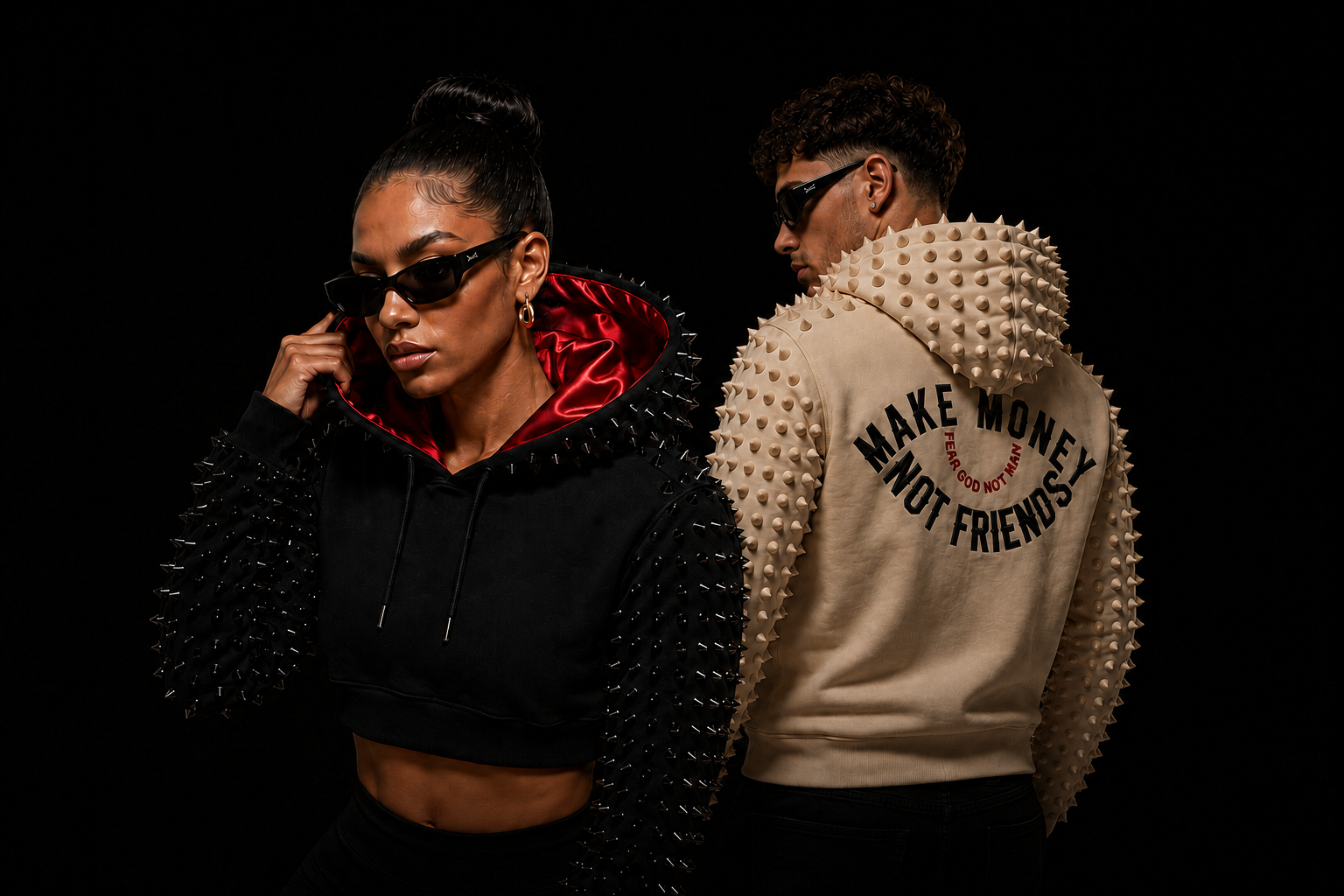
Jeeyodee operates as an independent luxury maison with a single governing discipline: every garment is produced once, numbered individually, and never reproduced. Each drop is handcrafted in Italy, finished by hand, and documented from atelier to delivery. The Egyptian silk hood linings and meticulous Italian cone studs present in Jeeyodee pieces are not decorative flourishes — they are provenance signals, evidence of a production standard that cannot be replicated at scale.
When inspecting a Jeeyodee drop, collectors should request: the lot number and atelier production statement, confirmation of the Egyptian silk lining origin, notes on the Italian cone stud alignment process, and the maison's repair and alteration policy. These are the questions a serious collector asks. The scarcity and craft behind numbered drops meaningfully increase collectibility and secondary-market interest when accompanied by this documentation.
What should you expect to invest in the UK market?
Luxury staple pricing in the United Kingdom reflects both material cost and construction standard. These are realistic ranges for genuinely artisan-crafted pieces:
- Structured blazer (canvassed, Italian cloth): £800–£2,500
- Precision-tailored trousers: £300–£900
- Longline overcoat (wool or leather): £1,200–£4,000
- Fine cashmere knit: £400–£1,200
- Premium Egyptian cotton T-shirt: £80–£250
- Full-grain Italian leather outerwear: £1,500–£6,000
- Mulberry silk scarf: £150–£600
- Investment bag (atelier-made): £1,000–£5,000
- Numbered statement piece (limited drop): £500–£3,000+
A considered foundation wardrobe of five core pieces — blazer, overcoat, trousers, knit, and premium T-shirt — represents a total investment of approximately £2,780–£8,850 at artisan quality. Statement and numbered pieces are additions, not substitutes. The craftsmanship that commands these prices is also what sustains resale and heirloom value.
Where to find trusted UK retailers and bespoke tailors
For bespoke tailoring, Savile Row in London remains the primary address: houses such as Henry Poole & Co and Dege & Skinner offer full-bespoke and made-to-measure services with documented cloth provenance. For ready-to-wear luxury with artisanal credentials, Dover Street Market in London stocks independent labels with verifiable production standards. For leather goods and outerwear, Connolly on Clifford Street specialises in full-grain leather with a long heritage of quality.
For collectors seeking numbered and limited-edition drops from independent luxury labels, Jeeyodee's own drop pages at jeeyodee.store offer documented provenance and atelier statements with each release.
How do you spot authenticity and avoid counterfeits in the UK?
The UK counterfeit market is sophisticated, and visual inspection alone is insufficient. Nine indicators of authentic exclusive fashion include: consistent stitch density throughout, hand-finished buttonholes with a slight pucker, natural grain uniformity in leather (no repeating pattern), a lining that moves independently of the outer fabric, and hardware that is weighted and aligned rather than lightweight and approximate.
Request provenance documentation at point of sale. A legitimate maison can provide an atelier name, a lot or edition number, and a material origin statement. If a seller cannot produce these, the piece is either mass-produced or counterfeit. In the UK, the Intellectual Property Office provides guidance on reporting suspected counterfeit luxury goods, and Trading Standards enforces the Consumer Protection from Unfair Trading Regulations 2008 against misleading provenance claims.
Pro Tip: Photograph the interior seams, lining attachment, and any hardware before purchase. A legitimate maison will welcome the scrutiny; a counterfeit seller will not.
Key takeaways
A fashion-forward luxury wardrobe is defined by a small number of artisan-crafted staples chosen for material provenance, construction integrity, and the discipline to acquire deliberately rather than accumulate rapidly.
| Point | Details |
|---|---|
| Start with five foundations | Blazer, overcoat, tailored trousers, elevated knit, and premium cotton T-shirt cover the majority of high-frequency wear. |
| Prioritise construction signals | Canvassed tailoring, hand-sewn buttonholes, and hand-finished leather edges distinguish collectible pieces from fused alternatives. |
| Demand provenance documentation | Request a lot number, atelier statement, and material origin record at every point of sale. |
| Add numbered drops deliberately | One statement piece per season preserves styling space and maintains the coherence of the wardrobe. |
| Jeeyodee's numbered drops | Each piece is handcrafted in Italy, individually numbered, and documented with Egyptian silk linings and Italian cone studs. |
A maison perspective on collecting with intention
There is a distinction we hold firmly at Jeeyodee: between a wardrobe assembled and a wardrobe composed. Composition requires patience, a clear understanding of what each piece must do, and the willingness to wait for the piece that is genuinely right rather than merely available. Every drop we produce begins not with a trend brief but with a material — its origin, its weight, its behaviour over years of wear. The Egyptian silk that lines our hoods is chosen because it ages with the garment, not against it. The Italian cone studs are aligned by hand because mechanical alignment is approximate, and approximation is not a standard we accept. When you wear a numbered Jeeyodee piece, you wear a record of those decisions. That is what we mean by permanence.
View current Jeeyodee drops and request provenance details
Each Jeeyodee drop is produced in a strictly limited run, documented from atelier to delivery, and never reproduced. The current numbered collection is available at jeeyodee.com, where collectors can view available pieces alongside atelier and material provenance notes.
To request a full provenance statement, lot number confirmation, or atelier details for any piece, contact the maison directly through the store. Collectors are encouraged to ask for the production statement, Egyptian silk lining origin documentation, and the maison's alteration and repair policy before confirming any acquisition. Every piece is made once. When the edition closes, it closes permanently.
Further reading and primary sources
Editorial context and capsule wardrobe references:
- Capsule wardrobe essentials — Capsulist: foundational thinking on repeat-wear curation
- How to build a capsule wardrobe — British Vogue: iterative curation and the hanger-reversal method
- Evaluating artisan craftsmanship — Jeeyodee Blog: inspection signals for handwork and finishing
Practical service partners (repairs, atelier guidance):
- DrJacket leather repair and restyling — specialist in full-grain leather maintenance and restoration; relevant for collectors maintaining Italian leather outerwear
- Checklist for commissioning bespoke outerwear — practical atelier questions and fit evaluation guidance
When following any external recommendation, prioritise sources that can provide provenance and atelier statements. Editorial context is useful; documented production records are definitive.
FAQ
What are the core types of fashion-forward wardrobe staples?
The defining pieces are a structured blazer, precision-tailored trousers, a longline overcoat, an elevated cashmere knit, a premium Egyptian cotton T-shirt, full-grain leather outerwear, refined footwear, a mulberry silk scarf, a collectible evening piece, and an investment bag. Each is chosen for material provenance and repeat wear value.
Why do numbered drops matter for luxury collectors?
Limited, numbered runs act as provenance signals that increase collectibility and secondary-market interest, particularly when accompanied by atelier documentation confirming material origin and production method.
How do you verify authenticity when buying luxury staples in the UK?
Request a lot number, atelier production statement, and material origin record at point of sale. Inspect stitch density, buttonhole finish, lining attachment, and leather grain uniformity. Trading Standards enforces consumer protection regulations against misleading provenance claims.
What is a realistic budget for a luxury staple wardrobe in the UK?
Five artisan-crafted foundations — blazer, overcoat, tailored trousers, elevated knit, and premium T-shirt — represent an investment of approximately £2,780–£8,850. Numbered statement pieces and accessories are additions within that framework.
How does Jeeyodee approach the production of luxury staples?
Jeeyodee produces each garment once, handcrafted in Italy, individually numbered, and finished with Egyptian silk linings and hand-aligned Italian cone studs. No piece is ever reproduced, making each drop a permanent and documented chapter of craft.