TL;DR:
- Evaluating artisan fashion involves checking construction, materials, and maker transparency as proof of genuine craftsmanship. Authentic pieces show subtle irregularities, named techniques, and detailed timelines, unlike mass-produced items. Consumers must demand transparency and certification to support true artisan makers and preserve traditional techniques.
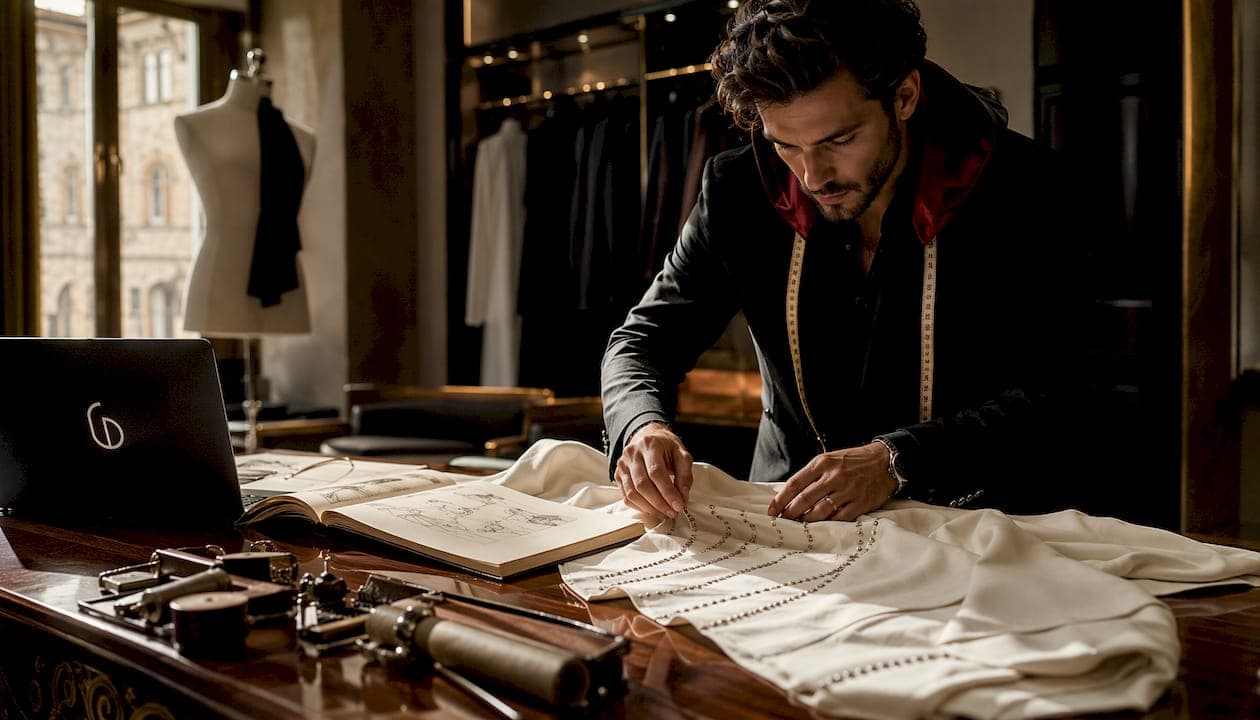
Evaluating artisan fashion craftsmanship is the process of critically assessing the quality, authenticity, and technique behind handmade luxury garments. It requires reading a garment the way a trained eye reads a manuscript: for logic, discipline, and evidence of genuine human skill. The criteria are specific and observable. Stitch density, seam construction, fibre integrity, and maker transparency each tell a distinct story about how a piece was made and by whom. Jeeyodee, as a luxury maison producing strictly limited, individually numbered garments in Italy, operates precisely within these standards. Understanding what craftsmanship endures in fashion begins with knowing exactly what to look for.
What are the key technical markers in evaluating artisan fashion craftsmanship?
Stitch density is the first and most telling signal of garment quality. High-quality artisan stitching runs at 10–12 stitches per inch (SPI) on natural fabrics such as cotton, viscose, and silk. Fast fashion typically delivers 6–8 SPI. That difference determines whether a seam holds its shape under tension or begins to gape after a season's wear.
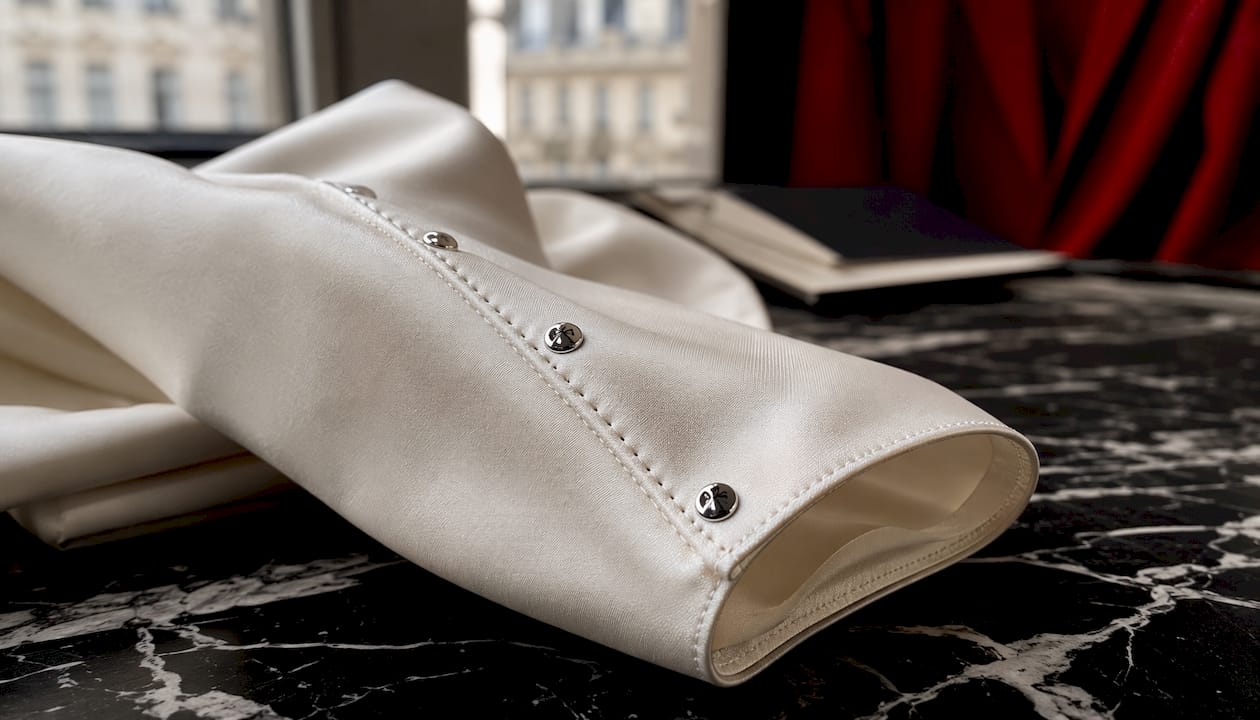
Seam construction reveals the second layer of quality. Artisan garments use French seams or bias binding to enclose raw fabric edges within the garment's interior. These methods require more fabric and significantly more labour than the machine overlocking found on mass-produced pieces. The result is a cleaner finish, greater durability, and a visible commitment to the interior of the garment, not just its exterior presentation.
Fabric quality speaks through touch before it speaks through sight. Handwoven textiles carry natural irregularities in texture and tension that improve breathability and drape. Mill-produced fabrics are uniform, which sounds like a virtue but is actually a limitation. Uniformity in a woven textile means the hand of the loom was never present.
Hardware and finishing details complete the picture. Keyhole buttonholes, shanked buttons, and hand-finished edges each require individual attention from a skilled maker. These are not decorative choices. They are structural ones. A garment built with this level of care at every junction is one built to last.
Pro Tip: Use a structured 3-minute evaluation at the point of purchase: spend 60 seconds on fabric handfeel, 60 seconds on internal seams and construction, 30 seconds on hardware and lining, and 30 seconds on symmetry and drape. This rapid assessment workflow surfaces quality signals without requiring specialist tools.
- Check stitch density by holding the seam up to light and counting stitches per inch.
- Turn the garment inside out and examine seam finishing for French seams or bias binding.
- Assess fabric handfeel: does it have weight, warmth, and natural variation in texture?
- Test hardware by pressing buttons and examining buttonholes for hand-finishing.
- Check pattern alignment across seams, particularly at the shoulder and side seams.
How do you recognise genuine artisan work versus marketing claims?
True artisan work carries evidence of the human hand. Handcrafted goods possess subtle, controlled variations in texture, finish, and alignment that machine production cannot replicate. These variations are not flaws. They are proof of origin. A garment where every stitch is mechanically identical was not made by a craftsperson; it was produced by a process.
Named traditional techniques are a reliable authenticity signal. Processes such as lost-wax casting in metalwork, Kundan setting in jewellery, and hand-embossing in leather goods each require years of training and cannot be meaningfully accelerated. When a brand names the technique and the region, that specificity is credible. When a brand uses the word "artisan" without naming a process, a maker, or a location, the claim is marketing, not craft.
Production timelines matter. Genuine artisan brands disclose exact production times and name the stages involved. Hand-cast brass work, for example, requires 22–25 days across seven distinct handcrafting stages. Immediate, unlimited availability is incompatible with that reality. If a piece described as handmade is always in stock and ships within 24 hours, the production claim deserves scrutiny.
The Nest Verified Handcrafted Mark is the most credible third-party certification currently available in the sector. It certifies that products are made predominantly by human skill rather than machine-dominated processes, within the £427 billion global handicraft sector. Machine-aided goods do not qualify. Its presence on a product is a meaningful signal, not a decorative badge.
"True craftsmanship is defined not just by production method but by transparent maker logic, material integrity, and intentional design variation. The vague phrase 'artisan quality' is marketing. The specific phrase 'hand-bound buttonholes, finished in Naples over three days' is evidence."
- Look for named techniques, not category descriptions.
- Verify production timelines against claimed availability.
- Seek maker identity: a named artisan, atelier, or region of production.
- Check for the Nest Verified Handcrafted Mark or equivalent third-party certification.
- Treat "limited availability" as a signal worth investigating, not accepting at face value.
How to assess artisan garment quality in-store and online
A structured evaluation requires the right conditions. In-store, natural or bright white light reveals colour consistency, weave density, and surface finishing far more accurately than the warm, diffused lighting most retail environments use by design. Carry a small torch if you evaluate frequently. Your fingertips are equally important: run them across the fabric surface, along seam lines, and over hardware to detect finishing quality that photographs cannot convey.
The stepwise assessment follows a logical sequence from exterior to interior.
| Evaluation stage | What to assess | Quality indicator |
|---|---|---|
| Fabric handfeel | Weight, drape, surface texture | Natural variation, warmth, substance |
| Seam construction | Interior finishing method | French seams or bias binding present |
| Stitch density | Stitches per inch along seams | 10–12 SPI on natural fabrics |
| Pattern alignment | Matching across seams and panels | Precise alignment at shoulder and side |
| Hardware quality | Buttons, fastenings, zips | Shanked buttons, keyhole buttonholes |
| Lining and finishing | Interior presentation | Clean, finished edges throughout |
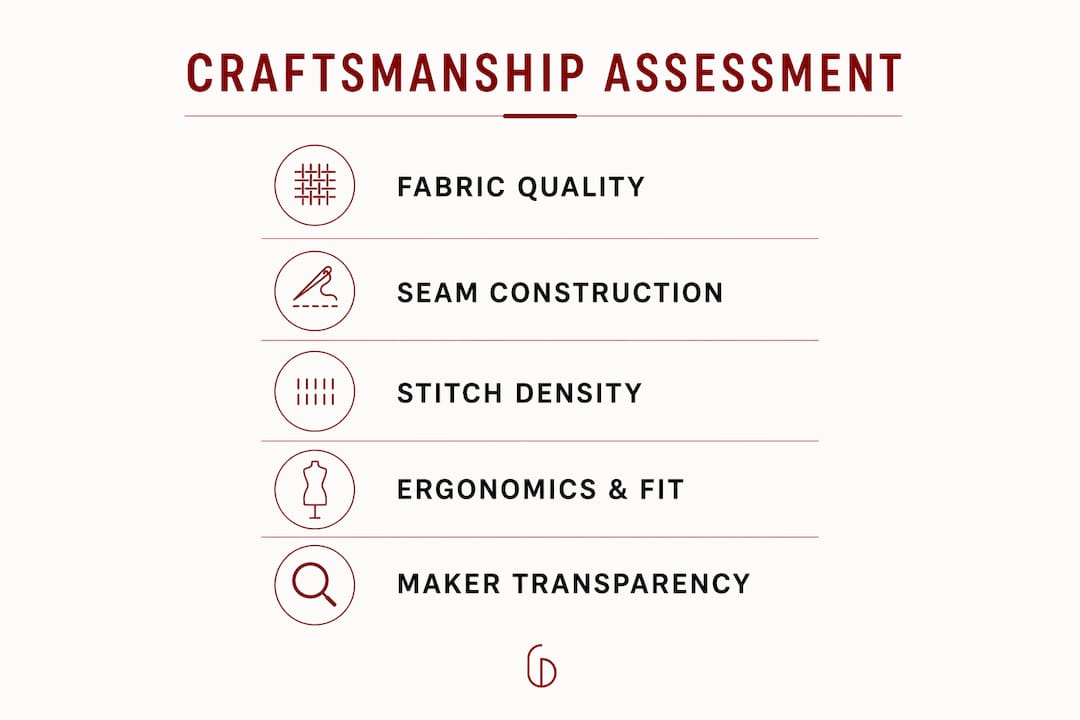
Online evaluation demands a different discipline. Scrutinise product photography for evidence of natural variation in texture, unique surface detail, and depth of finish. Mass-produced goods photographed well look identical across every unit. Genuine artisan pieces, even in professional photography, carry subtle differences between shots. Read the product description for specificity: named materials, named techniques, named origins, and stated production timelines are all credibility markers.
Pro Tip: When evaluating online, request close-up photographs of interior seams and hardware before purchasing. A brand confident in its construction will provide them without hesitation. Reluctance to share interior detail is itself informative.
Ergonomics and fit also carry craftsmanship information. A well-constructed garment sits correctly on the body without pulling at seams or distorting at the shoulder. Pattern pieces cut with precision and assembled with care produce a silhouette that holds its shape. A garment that twists, pulls, or gaps under normal movement was not assembled with the attention its price may suggest.
Why do cultural and ethical dimensions matter in artisan quality assessment?
Craftsmanship valuation extends beyond construction. Systematic valuation accounts for the artisan's time investment, the rarity of the technique employed, and the cultural significance of the tradition being practised. A garment produced using a regional weaving method that has been refined over generations carries a value that no price tag fully captures. That value is part of what you are assessing when you evaluate artisan work seriously.
Ethical transparency is a direct quality signal. Transparent pricing breakdowns that reveal the proportion of cost paid directly to artisans indicate a production model built on genuine craft relationships. Opaque supply chains, by contrast, typically conceal poor labour conditions and inflated margins. A brand unwilling to discuss how its makers are compensated is a brand with something to conceal.
The artisan economy is not a romantic abstraction. It is a network of skilled individuals whose livelihoods depend on whether consumers choose to prioritise responsible luxury over convenient imitation. When that network is sustained, rare techniques survive. When it is undermined by unchallenged marketing claims, those techniques disappear within a generation.
- Seek brands that name their artisans, ateliers, or production regions.
- Favour pricing transparency over aspirational vagueness.
- Treat cultural technique rarity as a component of value, not a marketing flourish.
- Recognise that sustainability in artisan fashion means sustaining the maker, not just the material.
Jeeyodee's model reflects these principles directly. Every piece is produced in Italy, individually numbered, and never repeated. The garment's provenance is not a story told after the fact. It is built into the production process from the first stage.
Key takeaways
Evaluating artisan fashion craftsmanship requires reading construction, material, maker transparency, and cultural context as a unified set of evidence, not as separate considerations.
| Point | Details |
|---|---|
| Stitch density signals quality | Artisan garments use 10–12 SPI on natural fabrics; fast fashion uses 6–8 SPI. |
| Seam finishing reveals intent | French seams and bias binding indicate labour investment; overlocking does not. |
| Variation confirms handwork | Subtle inconsistencies in texture and alignment are proof of origin, not defects. |
| Certification adds credibility | The Nest Verified Handcrafted Mark certifies genuine human skill over machine production. |
| Transparency is non-negotiable | Named techniques, production timelines, and artisan identity separate craft from claim. |
The standard is rising, and so must the consumer
We have watched the conversation around artisan fashion shift considerably over recent years. Consumers are no longer satisfied with the word "handmade" printed on a swing tag. They want to know who made it, where, using which technique, and over how many days. That is not cynicism. That is maturity.
The most encouraging development is that well-informed evaluation does not diminish the pleasure of acquiring a beautifully made garment. It deepens it. When you understand that a piece required 22 days of skilled labour across seven distinct stages, you do not simply own a garment. You hold a permanent chapter of someone's discipline and attention.
At Jeeyodee, we have built our entire philosophy around this conviction. Each numbered piece is a record of what was made, when, and how. The Egyptian silk lining, the meticulously aligned Italian cone studs, the heavyweight cotton shell: these are not features listed for marketing purposes. They are the evidence. We believe the discerning collector deserves nothing less than full transparency, and we believe that transparency is itself a form of luxury.
The role of luxury maisons in this moment is to hold the standard, not follow the trend. Informed consumers make that possible.
— Jeeyodee
Craftsmanship you can verify, pieces you can keep
The principles covered here are not abstract. They apply directly to every garment Jeeyodee produces.

Each piece from Jeeyodee is handcrafted in Italy, individually numbered, and produced in a strictly limited run that is never repeated. The construction follows the standards outlined here: interior finishing, material integrity, named techniques, and full provenance. The Thorns collection exemplifies this approach, combining heavyweight cotton with a deep red Egyptian silk lining and hand-applied Italian cone studs. These are garments built to be assessed, not simply admired. If you are ready to own something made with genuine conviction, the current collection is available now at Jeeyodee.
FAQ
What stitch density indicates artisan quality in garments?
Artisan garments on natural fabrics such as cotton, viscose, and silk use 10–12 stitches per inch (SPI). Fast fashion typically uses 6–8 SPI, which reduces seam durability and resistance to stress over time.
What is the Nest Verified Handcrafted Mark?
The Nest Verified Handcrafted Mark is a third-party certification confirming that a product is made predominantly by human skill rather than machine-dominated production. It operates within the global handicraft sector and does not certify machine-aided goods.
How do I evaluate artisan craftsmanship when shopping online?
Examine product photography for natural variation in texture and finish across different shots. Look for named materials, techniques, production timelines, and artisan or atelier identity in the product description. Request interior seam photographs if they are not provided.
What seam types distinguish artisan garments from fast fashion?
Artisan garments use French seams or bias binding to enclose raw edges, requiring more fabric and labour. Fast fashion relies on machine overlocking, which is cost-effective but not a mark of quality construction.
Why does production timeline matter when assessing artisan fashion?
Genuine artisan production takes time. Hand-cast or hand-finished pieces require days or weeks across multiple stages. Immediate, unlimited availability contradicts the reality of true handcraft and is a reliable signal that production claims warrant closer examination.