TL;DR:
- Innovative luxury fashion now emphasizes human craftsmanship, rarity, and verified provenance, not loud technology. Maison Jeeyodee produces exclusive, numbered pieces in Italy, focusing on permanence, repairability, and sustainability. Industry advances involve discreet AI tools, material engineering, secure serialization, and slow, made-to-order scarcity to ensure genuine progress.
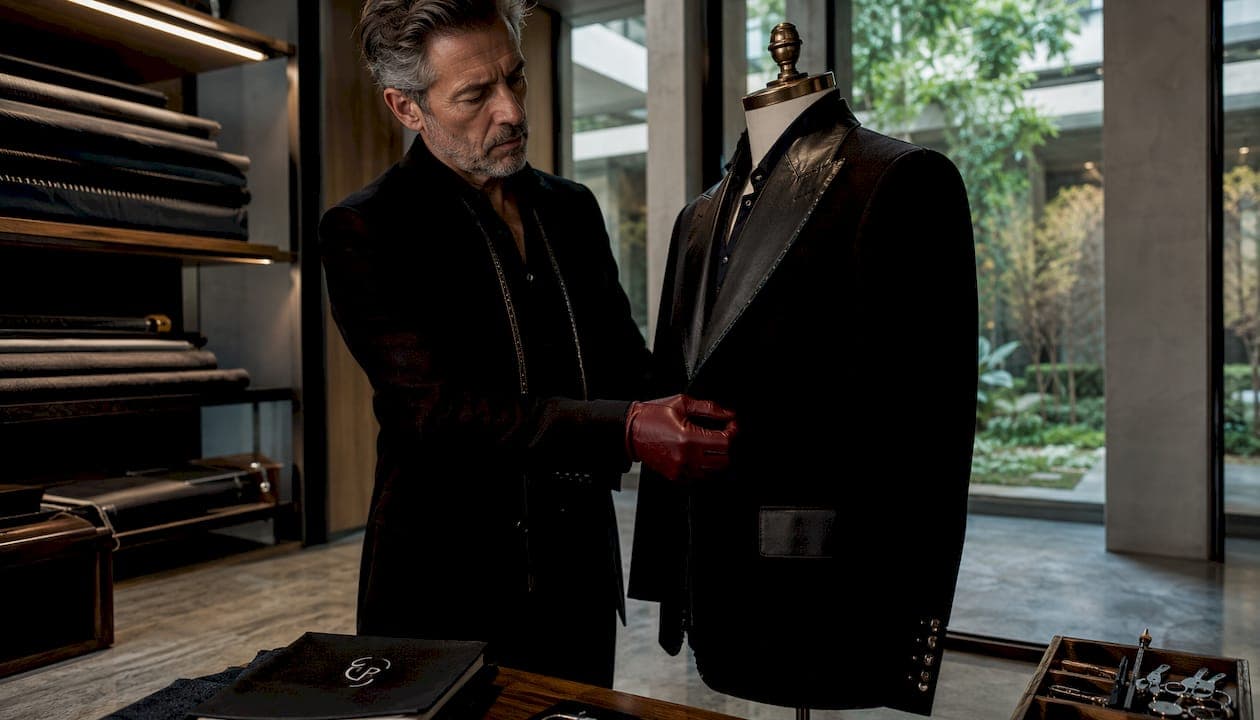
For the discerning collector, fashion innovation means one thing above all others: human-crafted rarity, supported by discreet technical mastery, verified provenance, and sustainability that endures beyond a single season. It is not the loudest technology in the room. It is the discipline to use every available tool in service of a garment that outlives its moment.
Maison Jeeyodee embodies this precisely: each numbered piece is produced once, made in Italy, and never repeated. That permanence is itself a form of progress.
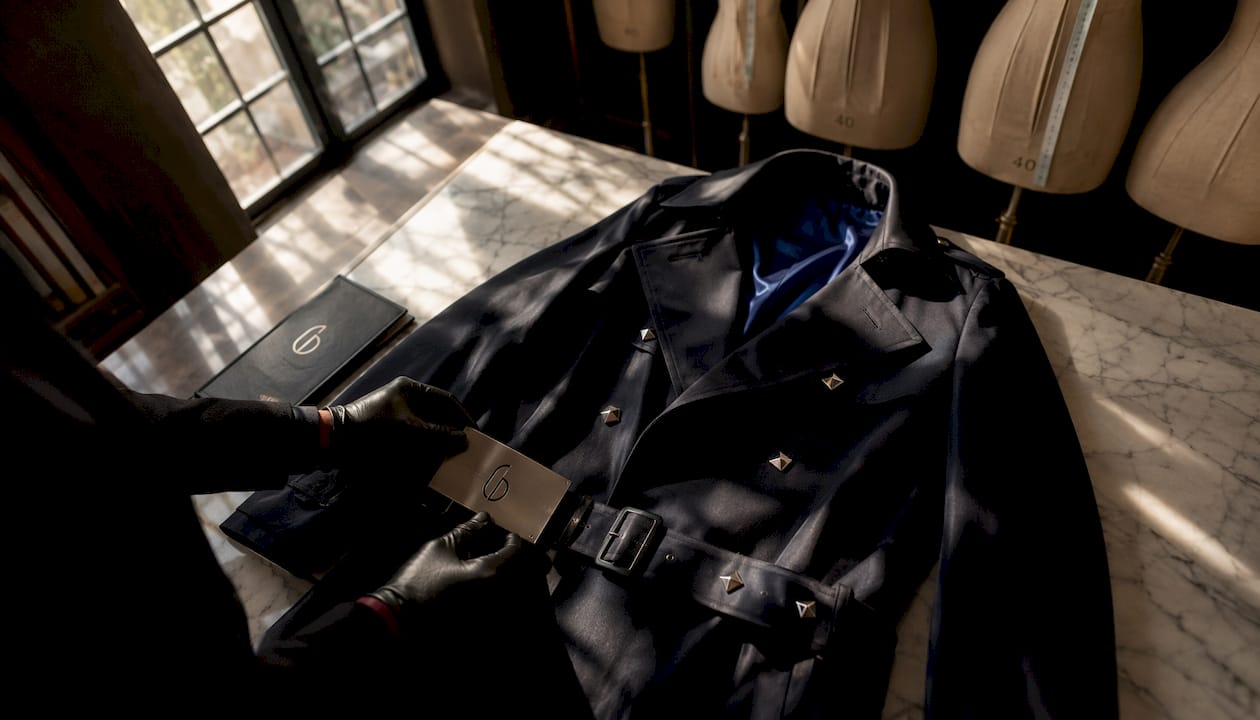
Reports from Fashion for Good and McKinsey confirm that the industry's most consequential advances are operational, not aesthetic. The collector who understands this distinction will always buy with greater conviction.
Table of Contents
- The four forces reshaping luxury fashion innovation now
- How to recognise genuine innovation in a limited-edition piece
- How technology enhances luxury without displacing the human hand
- What sustainability and circularity actually mean for limited-edition luxury
- Maison Jeeyodee: how a numbered drop is made
- Why collectors can trust this guide
- How emerging materials are changing what luxury feels like
- How digital experiences shape the way collectors perceive innovation
- What UK luxury collectors are demanding in 2026
- The maisons and makers setting the standard in the UK
- Key takeaways
- Craftsmanship is not a constraint on progress
- Commission or view a numbered piece from Maison Jeeyodee
- Selected reports and further reading
- FAQ
The four forces reshaping luxury fashion innovation now
The industry is moving on four fronts simultaneously, and each one carries a different implication for collectors.
- Discreet AI and intelligence tools. Over 35% of fashion executives now use automation with generative AI in select functions such as image creation and product discovery. The creative vision remains human; the technology refines timing and validates decisions.
- Material and zero-waste textile engineering. AI pattern optimisation can materially reduce the 10–15% of fabric typically lost during cutting, without altering a single sewing process.
- Provenance and serialisation. Secure ledgers and documented numbering are becoming the standard by which collectors verify authenticity and resist counterfeiting.
- Slow-made scarcity. Single-drop, made-to-order production is the most credible sustainability claim a maison can make.
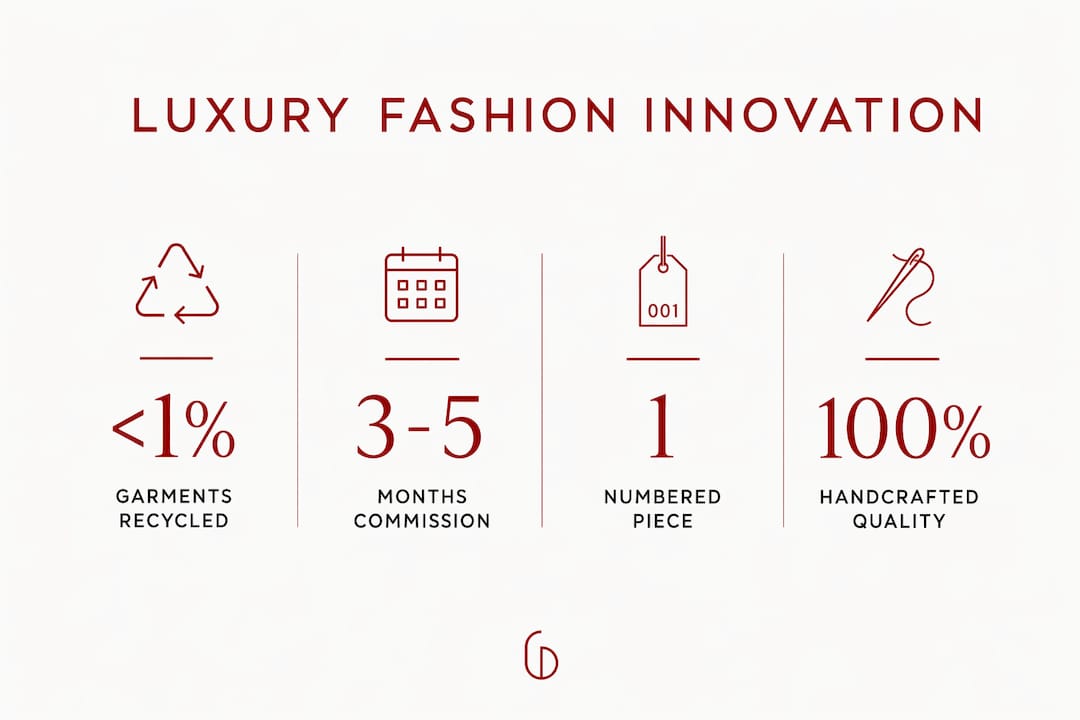
Less than 1% of garments produced annually are recycled into new clothing. Circularity at scale remains a distant aspiration. For collectors, longevity and repairability are the only honest alternatives.
| Metric | Figure | Source |
|---|---|---|
| Garments recycled into new clothing | Under 1% | Fashion for Good, 2025 |
| Fabric lost in cutting (industry estimate) | 10–15% | Fast Company / SXD |
| Fashion executives using generative AI | Over 35% | McKinsey State of Fashion 2026 |
| Resale market growth vs primary market | notably faster growth than the primary market in the coming years | McKinsey State of Fashion 2026 |
Pro Tip: When a product page uses the word 'sustainable' without citing a specific material standard, a repair programme, or a production-volume figure, treat it as marketing copy, not a verifiable claim.
How to recognise genuine innovation in a limited-edition piece
Not every 'limited edition' is limited in any meaningful sense. These are the signals that separate conviction from copy.
- Serial numbering with accompanying paperwork. Each piece should carry a unique number and a certificate that names the atelier, the production run, and the date. Learn what tags reveal about a garment's provenance before you buy.
- Named atelier provenance. The maker's location and, ideally, the artisan's name should be traceable. "Made in Italy" is meaningful only when the specific workshop is identifiable.
- Material sourcing specificity. Egyptian silk linings, Italian cone studs, heavyweight cotton with a documented origin: these are not decorative claims. They are verifiable facts.
- A demonstrated repair and traceability programme. A maison that will not repair its own work does not believe in its permanence.
Before placing a deposit, ask: What is the production timeline? Can this piece be repaired, and by whom? Is this run truly single-drop, or will it return in a future season?
Red flags to avoid: vague provenance ("crafted with care"), unverifiable certificates, mass-production language on a supposedly limited drop, and sustainability claims with no supporting data.
For a fuller checklist, the guide to evaluating artisan craftsmanship offers nine concrete indicators.
How technology enhances luxury without displacing the human hand
The most consequential technologies in luxury are the ones you never see. Their value is tactile, not visual.
- Intelligence AI for palette and timing validation. Used to confirm that a creative direction resonates with a collector audience before production commits, not to generate the design itself.
- AI pattern interlocking to reduce cut waste. Designer Shelly Xu's approach, reported by Fast Company, re-engineers patterns so they interlock during cutting, reducing fabric waste without changing factory sewing workflows.
- 3D and biometric-enabled fit. Physiological data, posture, curvature, skin sensitivity, can now inform garment geometry directly, producing a fit that feels bespoke without requiring multiple physical fittings.
- Blockchain and secure ledger provenance. Authenticated, immutable records of a garment's origin, materials, and production sequence strengthen collector trust and secondary-market value.
"Intelligence AI is best used to validate, time and increase confidence in human creative decisions rather than to generate the creative vision itself." F-Trend, AI in Fashion Design 2026
Vogue's reporting confirms the same principle from the consumer side: AI will become ubiquitous behind the scenes, while the in-person boutique experience becomes luxury's defining apex. Technology that announces itself has already failed the test of genuine luxury.
What sustainability and circularity actually mean for limited-edition luxury
The under-1% recycling rate is not a failure of ambition; it is a structural reality of how garments are currently made and discarded. For collectors, the honest response is not to chase circularity claims but to demand longevity.
| Cost and operational driver | What it means for collectors |
|---|---|
| Made-to-order production | Higher unit price; eliminates overstock and unsold inventory |
| AI pattern optimisation | Reduces 10–15% cutting waste; lowers material cost per piece |
| Artisanal labour and serialisation | Justifies premium; creates documented provenance |
| Resale market growth (2–3× primary through 2027) | Collectible pieces retain and build secondary value |
The cost factors that justify a premium for a collector are straightforward:
- Exceptional materials: Egyptian silk, Italian cone hardware, heavyweight cotton with traceable origin.
- Artisanal labour: hand-finishing, alignment of studs, and construction that cannot be replicated by machine.
- Serialisation and documentation: the administrative discipline of numbering and certifying each piece.
- Repairability: a maison that offers repair is a maison that intends its work to last.
A typical atelier commission follows this sequence: enquiry and design consultation (two to four weeks) → deposit (50%) → sampling and fit approval (four to eight weeks) → final production and serialisation (four to six weeks) → delivery with full documentation. Total lead time: three to five months. That is not a delay. It is the cost of permanence.
For broader context on responsible fashion consumption, the principles of longevity and repairability apply equally to collectors and to the wider market.
Maison Jeeyodee: how a numbered drop is made
Jeeyodee does not produce collections. It produces chapters, each one numbered, each one closed permanently once the run is complete.
The hallmarks that matter to collectors:
- Single-run numbering: every piece carries its unique number, documented from production through delivery.
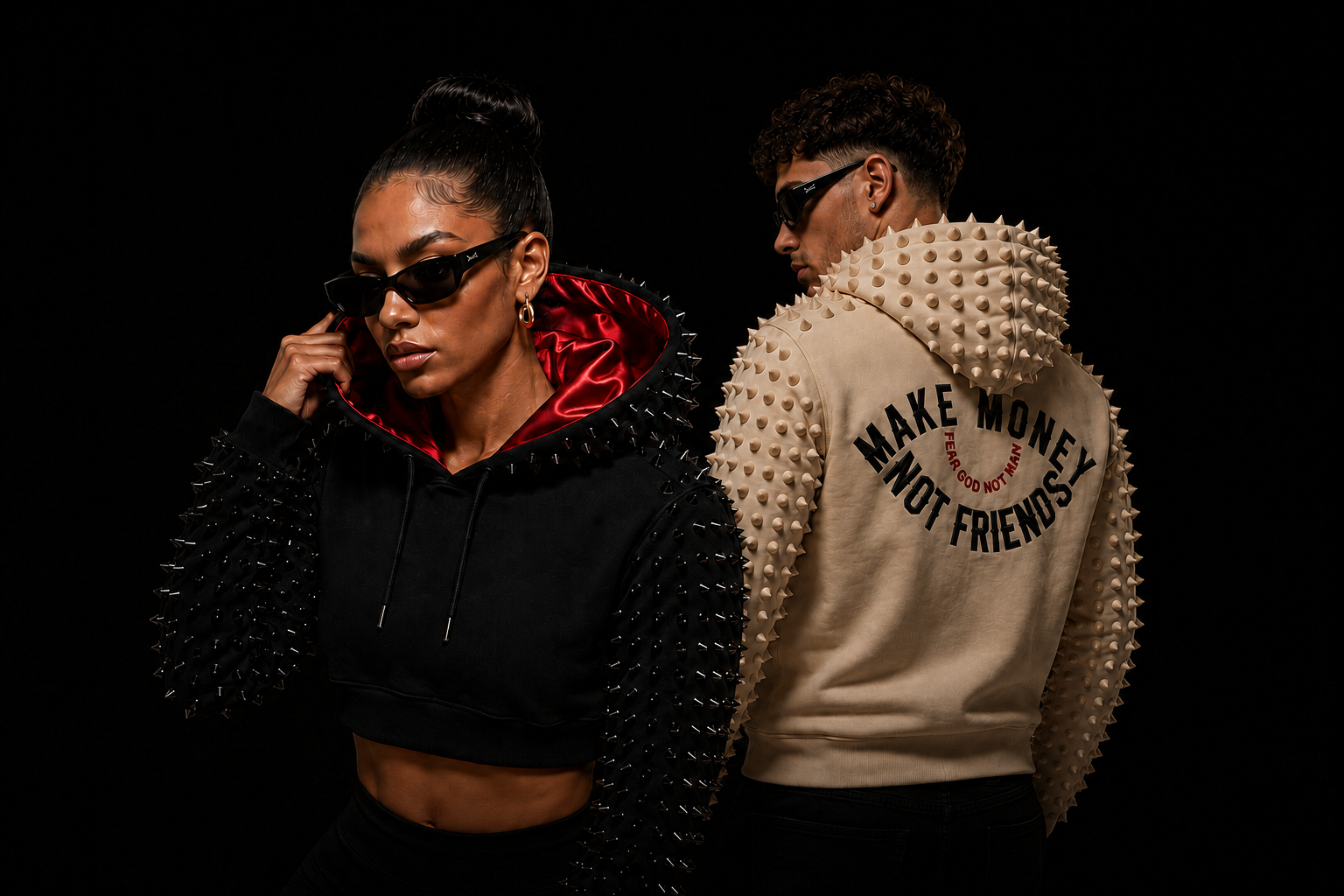
- Egyptian silk hood linings: sourced for tactile distinction and cultural legibility.
- Meticulous Italian cone studs: aligned by hand in the Italian atelier, a detail that cannot survive mass production.
- Made in Italy provenance: the workshop is named, not implied.
- Bespoke commission process: a 50% deposit secures the commission; final pricing is agreed privately.
The commission process at Jeeyodee:
- Initial enquiry and design consultation.
- Deposit placed; materials confirmed.
- Sampling and fit review.
- Final production with serialisation applied.
- Delivery with full provenance documentation.
Collectors who value the enduring role of craftsmanship will recognise in Jeeyodee's process a discipline that most labels only describe. Every drop is produced once and never reproduced.
Why collectors can trust this guide
This guide is written by Maison Jeeyodee, an independent luxury fashion house producing numbered, handcrafted pieces in Italy. Our perspective is grounded in the practice of making garments that are intended to outlast their season.
"Collectors prize secrecy in process and evidence of craft; provenance technologies such as secure ledgers and documented serialisation strengthen trust." WWD, Fashion Future / Consumer Trends
When assessing any maison's credibility, look for:
- Serial numbers with accompanying certificates of production.
- Named atelier and country of manufacture on all documentation.
- A stated materials provenance, not a general claim.
- A published or available repair policy.
Principal sources used in this guide: Fashion for Good (2025), McKinsey State of Fashion 2026, Vogue, F-Trend, Fast Company, WWD.
How emerging materials are changing what luxury feels like
The most significant material shift for collectors is the move away from standardised textiles toward fabrics engineered for a specific body or purpose. Biometric-informed construction, where physiological data shapes geometry rather than a size chart, is moving from research into atelier practice. Designer Laura Civetti's Adaptive System project, developed with Stratasys, demonstrated that a garment built from skin data rather than a standard size run can eliminate the overproduction that standard sizing requires.
For collectors, this matters because personalisation at this level produces pieces that cannot be replicated. A garment shaped to one body's data is, by definition, singular.
How digital experiences shape the way collectors perceive innovation
Virtual fittings and augmented reality tools have changed the pre-purchase experience, particularly for collectors who commission remotely. 3D design software allows a maison to present a full garment digitally before a single physical sample is cut, reducing waste and accelerating the approval process without diminishing the intimacy of the commission.
Augmented reality try-on tools, now standard across luxury e-commerce, give collectors a spatial sense of proportion and drape before committing. The technology does not replace the physical fitting; it prepares the collector for it. That distinction matters to any maison that values the in-person moment as the apex of the luxury experience.
What UK luxury collectors are demanding in 2026
WWD's reporting on consumer trends identifies 'chosen affiliation' as the dominant force in luxury consumption: collectors seek belonging to a meaningful community, not merely ownership of a logo. This is particularly pronounced among UK buyers, where the secondary market for collectible pieces is growing in line with the global resale forecast of two to three times the primary market's growth rate through 2027.
UK collectors are also drawn to what researchers describe as 'postalgia': a preference for pre-digital, hand-finished qualities that signal human scarcity. The numbered, repairable, atelier-made piece is not a nostalgic choice. It is the most forward-facing one available. For practical guidance on building a collection with longevity, the sustainable luxury wardrobe guide addresses curation and repair directly.
The maisons and makers setting the standard in the UK
The UK luxury market rewards makers who can demonstrate provenance with specificity. Independent luxury labels that name their workshops, number their pieces, and publish their material sourcing are gaining ground over heritage houses that rely on reputation alone.
Jeeyodee operates within this context as an independent luxury fashion house: no seasonal collections, no repeats, no ambiguity about where or how each piece is made. The signs of authentic exclusive fashion that UK collectors increasingly demand align precisely with the maison's founding discipline.
Key takeaways
Genuine fashion innovation for luxury collectors is defined by serialised provenance, repairable construction, and technology deployed in service of human craft, not in place of it.
| Point | Details |
|---|---|
| Demand serialisation | Every collectible piece should carry a unique number with accompanying production documentation. |
| Recycling reality | Under 1% of garments are recycled into new clothing; longevity and repairability are the credible alternative. |
| Technology's proper role | AI and precision tools add value when they reduce waste and refine fit, not when they replace creative vision. |
| Resale value | The resale market is forecast to grow 2–3× faster than the primary market through 2027, rewarding documented provenance. |
| Jeeyodee's approach | Maison Jeeyodee produces single-run, numbered pieces in Italy with Egyptian silk linings and Italian cone studs, never repeated. |
Craftsmanship is not a constraint on progress
We believe the most radical act in fashion today is to make something once, make it with full conviction, and refuse to repeat it. Every material we select, every stud we align by hand, every number we assign to a finished piece, is a declaration that permanence is possible. Technology, used with discipline, makes that permanence more precise. It does not make it less human. The garments we produce are not products of a season. They are permanent chapters, written in silk and cotton and Italian craft, for collectors who understand that true scarcity is always made, never manufactured.
Commission or view a numbered piece from Maison Jeeyodee
Each Jeeyodee piece is produced in a single, closed run. Once a drop is complete, it does not return. For collectors who wish to commission a bespoke piece or view current numbered works, the process begins with a private enquiry.
Bespoke commissions require a 50% deposit, with final pricing agreed privately following a design consultation. The process moves from initial enquiry through sampling, serialisation, and delivery with full provenance documentation.
- Submit an initial enquiry via jeeyodee.store.
- Design consultation and materials confirmation.
- Deposit placed; production scheduled.
- Sampling and fit approval.
- Final production, serialisation, and delivery with documentation.
View current numbered pieces and begin your enquiry at Jeeyodee.
Selected reports and further reading
The claims in this guide are drawn from the following primary sources. Publication years are included for verification.
- Fashion for Good: The Fashion Innovation Overview 2025 — Verifies the under-1% garment recycling figure and the state of circularity at scale.
- McKinsey: The State of Fashion 2026 — Source for AI executive adoption rates and resale market growth projections through 2027.
- Vogue: Where will AI take fashion in 10 years? — Analysis of AI's role behind the scenes and the primacy of the in-person luxury experience.
- F-Trend: AI in Fashion Design 2026 — Establishes the principle that intelligence AI validates human creative decisions rather than replacing them.
- Fast Company: Shelly Xu / SXD on zero-waste AI patterning — Documents the 10–15% cutting waste figure and AI pattern interlocking as a practical solution.
- WWD: Fashion Future / Consumer Trends — Source for 'chosen affiliation', 'postalgia', and provenance as collector priorities.
FAQ
What does fashion innovation mean for luxury collectors?
For collectors, fashion innovation means verifiable provenance, serialised production, and technology used to perfect craft rather than replace it. The most credible innovations are the ones you feel in the garment, not the ones announced on a product page.
How can I verify that a limited-edition piece is genuinely limited?
Ask for the production number, the total run size, and written confirmation that the design will not be reproduced. A maison that cannot provide these details in writing has not committed to the claim.
Why does a bespoke luxury commission take three to five months?
The timeline reflects sampling, fit approval, hand-finishing, and serialisation. Compressing it means compromising one of those stages. Jeeyodee's commission process follows this sequence from enquiry through documented delivery.
Does AI threaten the authenticity of handcrafted luxury?
No, when used correctly. F-Trend's 2026 analysis confirms that intelligence AI validates and times human creative decisions; it does not generate them. The hand remains the author.
Is the resale market for collectible fashion growing in the UK?
McKinsey projects the resale market will grow two to three times faster than the primary market through 2027. Documented provenance and serialisation are the primary drivers of secondary-market value for collectible pieces.