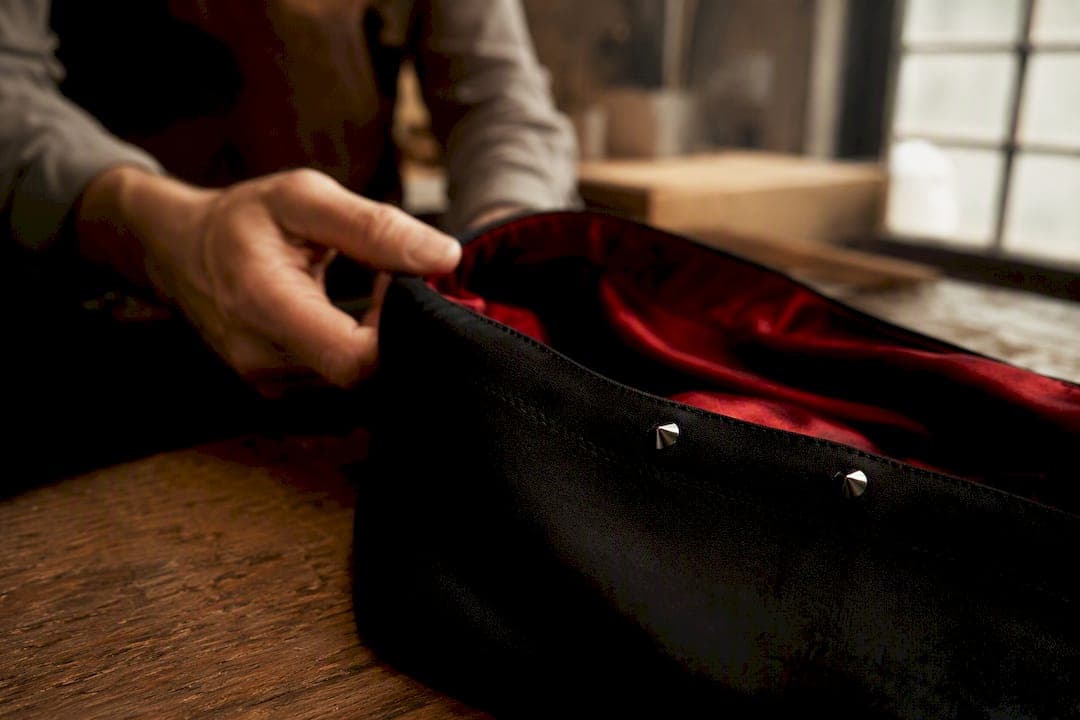
A reinforced hood is a deliberately engineered hood, built from a heavyweight shell, internal interfacing and refined linings such as Egyptian silk, then finished with targeted stitching for shape, longevity and a distinct hand-feel. For a collector, that engineering is the difference between a hood that softens after a season and one that holds its silhouette for years. At Maison Jeeyodee, this begins with a fabric weight above 450 GSM and stitch density in the region of 18 to 20 stitches per inch, a benchmark that separates atelier work from mass production. Reinforcement is not decoration. It is the architecture beneath the garment's posture.
Key Takeaways
A reinforced hood earns its structure from heavyweight fabric, internal interfacing, silk lining and precise stitching, not from a single fabric weight figure.
| Point | Details |
|---|---|
| Weight is not the whole story | Fabric density and knit quality matter more than a raw GSM figure for long-term shape. |
| Stitch density signals craft | Around 18 to 20 SPI is a luxury benchmark, well above the 10 to 12 SPI typical of mass production. |
| Panel geometry shapes silhouette | Three-panel hoods hold a sculpted line better than simpler two-piece cuts. |
| Reinforcement dictates care | Double-lined hoods need gentler drying and periodic checks at tape junctions to avoid distortion. |
| Jeeyodee builds for permanence | Egyptian silk linings, heavyweight cotton shells and hand-aligned hardware, made in Italy in individually numbered drops. |
Table of Contents
- What makes a hood reinforced?
- How do ateliers engineer a durable hood?
- How do you assess a reinforced hood before buying?
- Does GSM alone guarantee hood quality?
- Care, repair and how reinforcement affects longevity
- Why do reinforced hoods hold their value?
- How Jeeyodee builds a reinforced hood
- How does a reinforced hood feel when worn?
- What innovations are shaping hood reinforcement?
- Own a piece built to last, not just to launch
- Sources
- FAQ
What makes a hood reinforced?
A reinforced hood is not one clever seam. It is a stack of decisions, each one small, each one deliberate.
The outer shell carries the first burden. Heavyweight three-end fleece, typically 450 GSM or above, gives the hood enough body to stand rather than fold. Beneath that sits internal interfacing or a stabiliser layer, a hidden skeleton that stops the fabric collapsing under its own weight. A self-lining or silk lining adds a second skin, improving drape and, in the finest pieces, transforming how the hood feels against the neck.
Several structural details work together:
- Herringbone neck tape, which spreads the hood's weight across the shoulder yoke instead of loading it onto the neckline stitching alone
- Bar-tacks at every stress point, where hood meets body or pocket meets seam
- Structured ribbing, usually elastane-integrated, for consistent recovery after wear
- Bespoke hardware, from cone studs to toggles, aligned by hand rather than machine-set
Look closely at product photography for edge binding along the hood opening, visible panel seams where fabric pieces meet, and lining stitches that track precisely with the outer shell. Misalignment here is the first sign of a shortcut.
How do ateliers engineer a durable hood?
Durability in a hood is decided long before the first wash. It is decided at the sewing machine, stitch by stitch.
Mass-market hoodies are typically stitched at 10 to 12 stitches per inch. Luxury construction pushes that to 18 to 20 SPI, a density that prevents what patternmakers call seam grin, where fabric pulls apart at the thread line under tension. It is a meaningful signal, though never the only one worth checking.
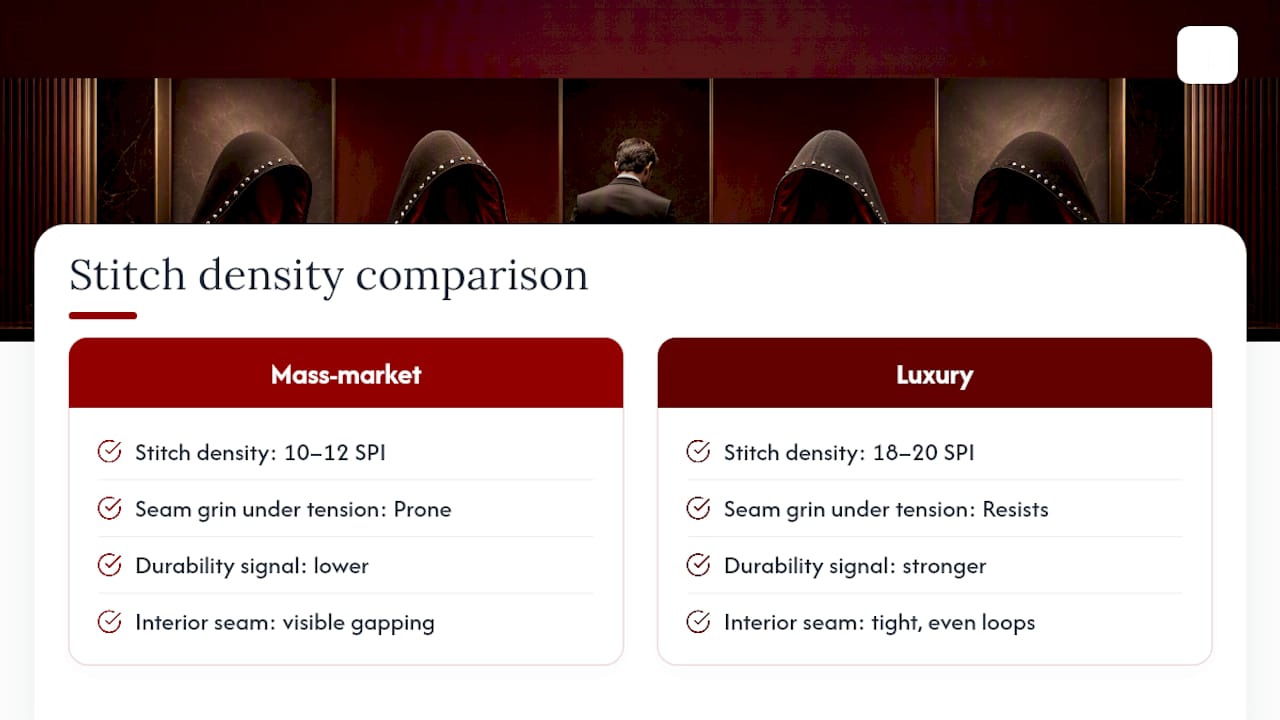
Panel geometry matters just as much as thread count. A three-panel hood, cut from three separate pieces rather than folded from two, produces a more sculpted, upright silhouette that frames the face consistently whether worn up or down. A two-piece hood is faster to produce and cheaper to cut, but it tends to sit flatter and lose shape sooner.
Internal reinforcement does the quiet work. Herringbone tape at the neck anchors the hood's weight to the shoulder yoke rather than the collar stitching alone, which is what stops heavy hoods from stretching the neckline over time. Lightweight fusible supports at the hood opening keep the edge crisp. Miniaturised bar-tacks, executed in tonal high-tenacity thread, reinforce the junctions between hood and body without ever announcing themselves visually.
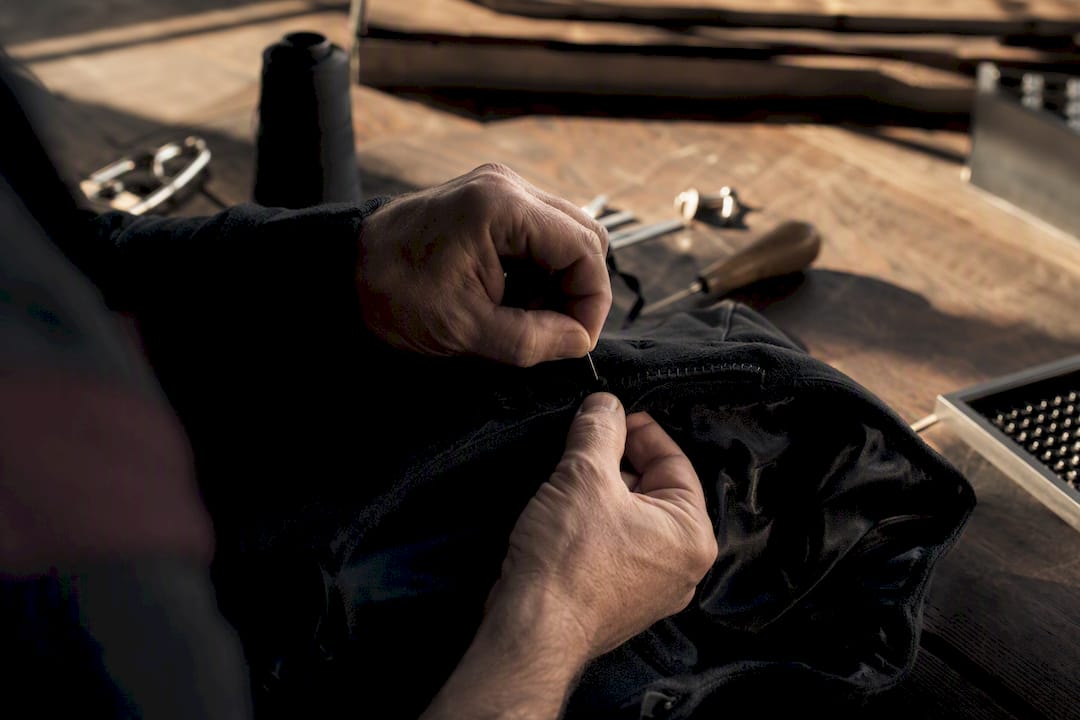
Finishing tells the rest of the story: tonal reinforcement stitches that disappear into the fabric, flatlock seams that lie true against the skin, and rib trims with enough elastane to recover their shape after stretching.
Pro Tip: Photograph a hood's interior seam at an angle under strong light before buying. Genuine high-density stitching shows tight, even loops with no visible gapping; a magnified look at seam flatness reveals more about quality than any label ever will.
How do you assess a reinforced hood before buying?
Evaluating a hood, whether from a product page or in a showroom, rewards a method rather than instinct alone.
- Examine the neckline first. Trace where the hood meets the shoulder and look for herringbone tape or a visible reinforcement layer beneath the outer fabric.
- Check panel construction. Three visible seams running from crown to face opening suggest three-panel geometry; a single fold suggests the simpler two-piece cut.
- Assess the lining. A self-lined or silk-lined hood should sit smoothly against the shell with no bunching at the curve of the hood.
- Handle the fabric, if possible. Heavyweight cotton should feel dense and stable, not merely thick.
- Inspect stitch lines under magnification or strong light for consistency and tightness.
Certain signals should give any collector pause:
- Fleece that feels loose or hollow despite a high stated GSM
- A neckline that stretches visibly when the hood is pulled without springing back
- Puckering or rippling at thick seam junctions, a sign of poor tension control
- A single-layer hood paired with heavyweight body fabric, an imbalance that suggests cost-cutting
Ask direct questions before committing: What is the fabric's knit specification? What stitch density is used? Is the hood double-lined? Where are the linings and tapes sourced? A maison worth its reputation will answer without hesitation, and its labelling should confirm production origin, note whether the piece belongs to a numbered drop, and reference the atelier batch it came from.
Does GSM alone guarantee hood quality?
No. GSM measures weight, not structure, and a heavy fabric with a loose knit can feel flimsier than a lighter one with dense construction.
Fabric density and yarn quality, rather than weight in isolation, determine how a hoodie holds its shape, wash after wash. Two hoods can share the same GSM figure and behave in entirely different ways: one keeps its posture through years of wear, the other sags within months. Manufacturers who chase a headline GSM number while neglecting knit density are optimising for a specification sheet, not for how a garment actually performs on the body.
A collector who understands this stops asking "how heavy is it?" and starts asking "how dense is the knit, and how is it engineered?" That single shift in questioning separates buyers who accumulate garments from those who build a considered wardrobe. Our guide to 500 GSM hoodies explores this distinction in more depth, including how nominal weight and genuine structure diverge in practice.
Care, repair and how reinforcement affects longevity
Reinforced components change how a hood should be handled, not just how long it lasts.
Low-temperature specialist laundering preserves both the shell and any internal interfacing, which can distort under high heat. Heavy tumble drying is the fastest route to hood collapse in a heavyweight piece, and professional pressing does more to restore silhouette than any home iron. Double-lined hoods deserve particular care, since outer shell and lining can shrink at different rates if dried aggressively, leaving the hood puckered rather than smooth.
Routine maintenance is straightforward but easy to neglect:
- Check tape junctions at the neckline periodically for early signs of loosening
- Repair a loosening bar-tack promptly, before the stress spreads to surrounding stitching
- Store numbered or limited pieces flat, or on a padded hanger, to prevent the hood collapsing under its own structure
Pro Tip: If a hood shows visible puckering at a seam junction, that is cosmetic and usually reversible with pressing. If the neckline stretches and fails to recover, or a bar-tack has fully released, that signals structural failure and calls for atelier repair rather than home mending.
Why do reinforced hoods hold their value?
Scarcity and structure work together. A hood built to last is also a hood worth preserving, and that logic underwrites much of what collectors are willing to pay for.
Hand-placed cone studs, silk linings and individually numbered production runs all support collectibility, but the technical reinforcement beneath them is what makes preservation possible in the first place. A hood that keeps its shape for a decade retains far more of its original character than one that softens within a year, and that difference shows the moment a garment changes hands.
- A hood with intact structure and no neckline distortion holds resale value better than an equivalent piece showing collapse or fraying
- Documentation such as a tech pack excerpt or atelier construction notes strengthens provenance for future buyers
- Condition grading should assess reinforced zones specifically: neckline, hood base and panel seams, not just overall fabric wear
Collectors researching this further will find our heavyweight hoodie guide useful for understanding how construction quality tracks with long-term desirability.
How Jeeyodee builds a reinforced hood
Every Jeeyodee hood begins with a choice most manufacturers skip: an Egyptian silk inner lining, set against a heavyweight compact cotton shell that carries genuine density rather than a headline weight figure. High-density stitching runs throughout, and cone studs are aligned by hand, piece by piece, rather than machine-positioned in bulk.
Production happens entirely in Italy, in small atelier batches, with each garment individually numbered and never repeated once a drop concludes. Neck reinforcement and hood geometry are tested on samples before a single unit reaches production, because a hood that collapses at the crown undermines everything else the garment promises.
- Egyptian silk linings paired with heavyweight cotton shells for structure and hand-feel
- High-density stitching and hand-aligned cone-stud hardware
- Made in Italy, individually numbered, produced once per drop
Readers wanting the full craft story can consult our handcrafted hoodie guide, and those curious about broader finishing choices will find context in our luxury garment finishing guide.
How does a reinforced hood feel when worn?
Reinforcement changes the way a hood behaves on the body, and that difference is felt within the first few minutes of wear.
A hood with proper internal structure sits with intention. It frames the face rather than collapsing sideways, and it stays there whether pulled up in wind or left resting on the shoulders. Weight distribution matters enormously here: when herringbone tape anchors the hood to the shoulder yoke, the neckline carries none of the load, which means the collar never digs in or drags at the throat during long wear. Without that reinforcement, a heavy hood pulls directly on the neck seam, and the discomfort compounds over a full day.
Comfort and structure are not opposing goals. A well-lined hood, particularly one finished in silk, reduces friction against the skin and regulates temperature better than a raw cotton interior. The double-layer construction that gives a hood its shape also softens its interior contact, so structure and comfort reinforce each other rather than trading off. Fit consistency matters too: a three-panel hood keeps its proportions whether the wearer has the hood up, down, or half-raised, avoiding the lopsided sag that a simpler two-piece cut develops after repeated wear. For a collector, this is the detail that separates a hood admired on a hanger from one worn confidently for years.
What innovations are shaping hood reinforcement?
The craft is not static. Ateliers working at the top of the market continue to refine how reinforcement is engineered, often borrowing precision from adjacent industries.
Miniaturised bar-tacking, once a purely industrial technique for workwear and technical outerwear, has been adapted at smaller scale and executed in tonal thread so it strengthens stress points without disrupting a garment's visual restraint. This lets a hood carry genuine load-bearing reinforcement at the pocket and hood junctions while looking, from any normal distance, entirely seamless.
Panel engineering has also advanced. Three-panel hood patterns, once reserved for technical outerwear, now appear increasingly in luxury casualwear because the sculpted silhouette they produce photographs and wears better than a flat two-piece cut. Elastane-integrated ribbing continues to improve as well, giving cuffs and hood openings recovery that holds through years of use rather than months. None of these innovations replace craftsmanship. They extend what a skilled hand can achieve, letting reinforcement stay invisible while doing more structural work than ever before. Our neoprene hood guide covers one such technical approach in detail, for readers who want to see where hood engineering is heading next.
A maison-first view on why reinforcement matters
We build structure because a garment's posture tells the wearer's story before a word is spoken. A hood that holds its shape protects silhouette the way a well-cut collar protects a jacket's line, quietly, permanently, without seeking attention. That discipline is not incidental to Jeeyodee. It is the same restraint that governs every limited drop: nothing repeated, nothing rushed, every structural choice earning its place. Reinforcement, to us, is simply permanence made tangible.
Own a piece built to last, not just to launch
The construction principles covered here, dense stitching, panel geometry, herringbone reinforcement, silk lining, are not theoretical for Jeeyodee. They are the specification behind every hooded piece the maison releases, built in Italy in small numbered batches that are never reproduced once a drop sells through.

Where other heavyweight hoodies chase a GSM figure on a spec sheet, Jeeyodee starts from the opposite direction: structure first, weight second. Each hood is individually numbered, finished with hand-aligned cone studs, and lined in Egyptian silk rather than a synthetic substitute chosen for cost. If the checklist in this guide has you second-guessing a piece already in your basket elsewhere, it is worth seeing what a genuinely reinforced hood feels like in hand. Visit the current Jeeyodee drop to check availability before the edition closes, since once a numbered run sells out, it does not return.
Sources
- Premium Heavyweight Hoodies: What Makes It High Quality? - Virex Apparel
- What Are Luxury Hoodies Made Of? - Modaknits Apparel
- How NoName Delivered a $1,000 Hand-Feel for <$50 for a Dutch Startup
FAQ
What is a reinforced hood?
A reinforced hood is a structured hood built from a heavyweight shell, internal interfacing and often a silk or self-lining, finished with dense stitching to hold its shape over years of wear.
Is a higher GSM always better for a reinforced hood?
No. Knit density and yarn quality determine long-term structure more reliably than GSM alone, since a heavy but loosely knitted fabric can sag faster than a denser, lighter one.
What stitch density should a luxury hood have?
Look for roughly 18 to 20 stitches per inch, well above the 10 to 12 SPI common in mass-market hoodies, though it should be read alongside panel construction and lining quality rather than in isolation.
How do I care for a reinforced, double-lined hood?
Use low-temperature specialist laundering, avoid heavy tumble drying, and have the piece professionally pressed to preserve its silhouette, since outer shell and lining can shrink at different rates under high heat.
What makes Jeeyodee's reinforced hoods collectible?
Each piece pairs Egyptian silk lining with heavyweight cotton and hand-aligned cone studs, made in Italy in individually numbered drops that are never reproduced once released.