TL;DR:
- Fashion-forward dressing combines avant-garde aesthetics with refined craftsmanship to express genuine personal style.
- It prioritizes quality, fit, coherence, and confidence over fleeting trends and mass-produced pieces.
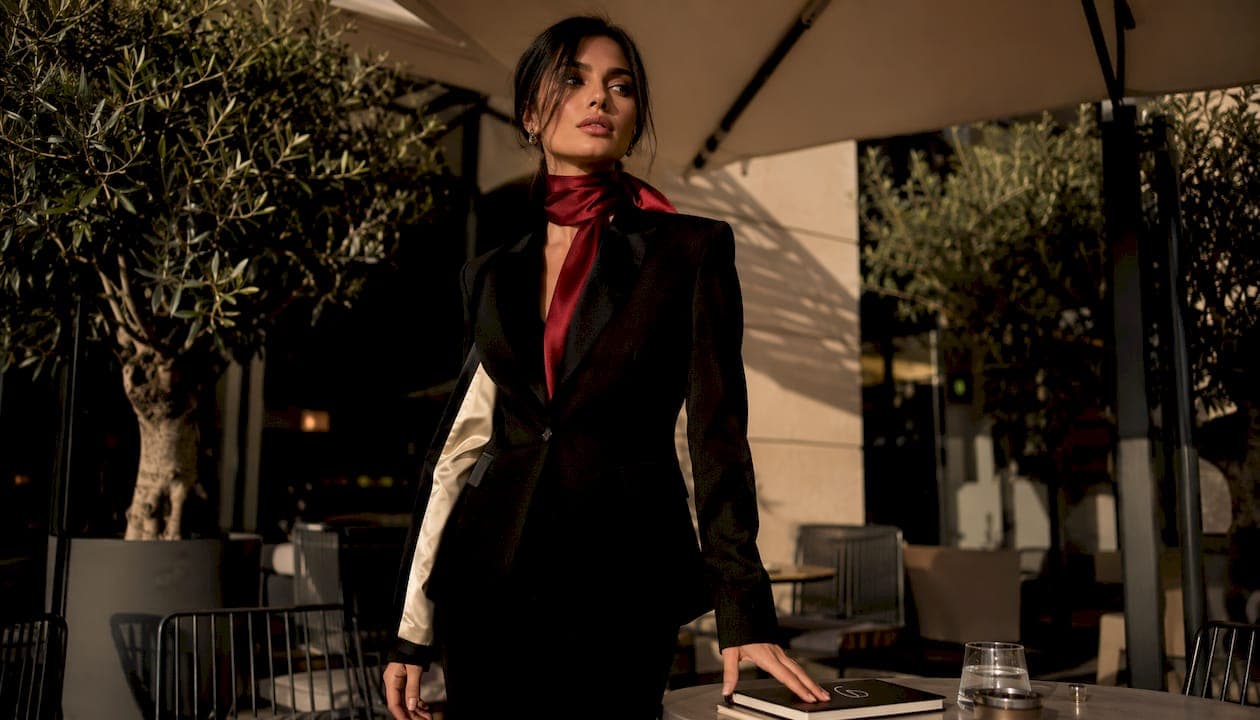
Fashion-forward dressing is the deliberate practice of combining avant-garde aesthetics with refined craftsmanship to articulate a singular, enduring personal style. It is not trend-chasing. It is not the accumulation of expensive pieces for their own sake. At its core, fashion-forward style prioritises enduring quality and sophisticated construction over momentary popularity, separating those with genuine conviction from those simply following the crowd.
The foundations are precise: impeccable fit that honours the body's architecture, coherence across colour palettes and silhouettes, and the visible confidence to wear a considered choice without apology. These are not stylistic preferences. They are the conditions under which a wardrobe becomes something more than clothing.
- Fit transforms any garment from fabric into form.
- Coherence ensures each piece speaks to the others, creating a unified statement rather than visual noise.
- Confidence is the final, irreducible element. Without it, even the most exceptional garment reads as costume.
- Exclusivity and artistry distinguish fashion-forward dressing from mass consumption, anchoring each choice in craft and intention.
Table of Contents
- What are the key pillars of fashion-forward dressing in the UK luxury market?
- What is the philosophy behind truly fashion-forward dressing?
- Common misconceptions about fashion-forward dressing, clarified
- How Jeeyodee embodies craftsmanship and exclusivity in luxury fashion
- How to build and refine a fashion-forward wardrobe in practice
- How UK culture shaped fashion-forward dressing over time
- Fashion-forward dressing from prominent UK luxury designers
- Key takeaways
- FAQ
What are the key pillars of fashion-forward dressing in the UK luxury market?
The UK luxury connoisseur operates within a particular cultural register: restrained in ostentation, exacting in quality, and deeply suspicious of anything that mistakes loudness for authority. Within this context, the three essential pillars of fashion-forward dressing are fit, coherence, and confident personal expression.
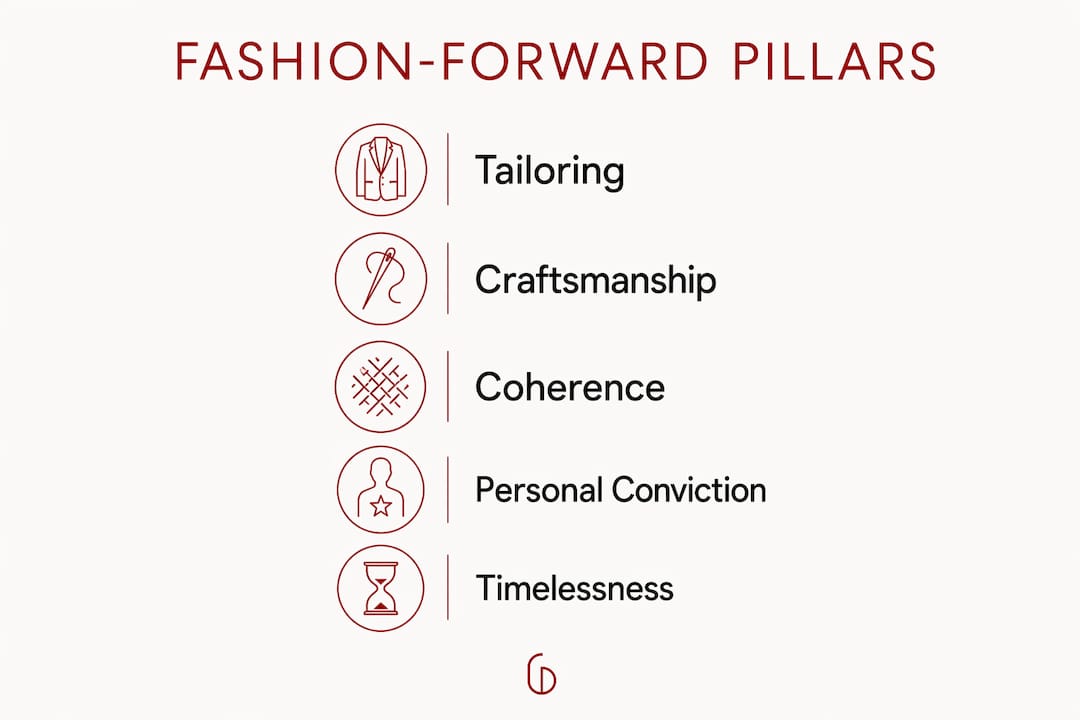
Fit is the foundation. Masterful tailoring ensures that luxury garments maintain their architectural balance on the wearer's body, affirming both the designer's vision and the wearer's discernment. A perfectly fitted piece from a considered atelier will always outperform an ill-fitting one regardless of provenance.
Coherence matters more than individual statements. A wardrobe built around a consistent palette and recurring silhouettes produces outfits of genuine authority, far more than a collection of disconnected statement pieces. Avant-garde or sculptural elements earn their place when they are balanced with wearability, not deployed as spectacle.
- Confident expression is visible. It marks the difference between wearing a garment and inhabiting it.
- UK connoisseurs tend to favour understatement with depth: a single bold silhouette, an unexpected texture, a detail that rewards close attention.
- Signs of authentic exclusive fashion are found in construction and material, not in branding or volume.
What is the philosophy behind truly fashion-forward dressing?
Luxury maisons frame fashion-forward dressing as wearable personal art: a tense, productive interplay between structure and fluidity that produces something private and joyous in the wearer. The Schiaparelli atelier has described the ideal of a collection as evoking "the sensation of dancing alone at home after work — just as liberating, just as private, just as joyful." That framing is instructive. Fashion-forward dressing is not performance for others. It is a form of freedom practised through cloth.
The aesthetic principles follow from this philosophy. Reimagined tailoring, mastery of contrasting textures, and the deliberate juxtaposition of matte surfaces with silk or structured fabrics with fluid ones create visual intrigue without resorting to overt logos or passing fads. Heritage craftsmanship and contemporary innovation are not opposites here; they are in constant, productive dialogue.
Garments conceived this way become permanent chapters. They carry the conviction of their making. What defines truly unique clothing is precisely this quality of intentionality, the sense that every decision, from the weight of a fabric to the angle of a seam, was made with purpose.
Common misconceptions about fashion-forward dressing, clarified
The most persistent misunderstanding is that being fashion-forward requires constant, expensive acquisition. It does not. Expert stylists are clear that true style is achieved through thoughtful re-contextualisation of existing garments and boundary testing, not through perpetual purchasing.
A second misconception conflates fashion-forward dressing with looking flashy. Refined boldness and ostentation are entirely different propositions. One communicates authority through considered choices; the other substitutes volume for conviction.
- Fleeting trends and enduring style are not the same thing. A fashion-forward wardrobe is built on pieces that retain their integrity across seasons.
- Personal resonance matters more than conventional flatteringness. Dressing for who you are, not for a generalised notion of what suits you, is where genuine style begins.
- Re-contextualising a garment, pairing a structured piece with something unexpected, or wearing a classic in a new proportion, can be more fashion-forward than buying something new.
Pro Tip: Before acquiring anything new, ask whether it deepens the coherence of what you already own. If it does not, it is an addition, not an investment.
How Jeeyodee embodies craftsmanship and exclusivity in luxury fashion
Jeeyodee operates as a private luxury maison with a singular conviction: that a garment must be worth keeping for life, or it should not exist at all. Every piece is crafted in Italy, utilising exceptional materials including heavyweight cotton and Egyptian silk hood linings, with meticulously aligned Italian cone studs that are as much a structural statement as a decorative one.
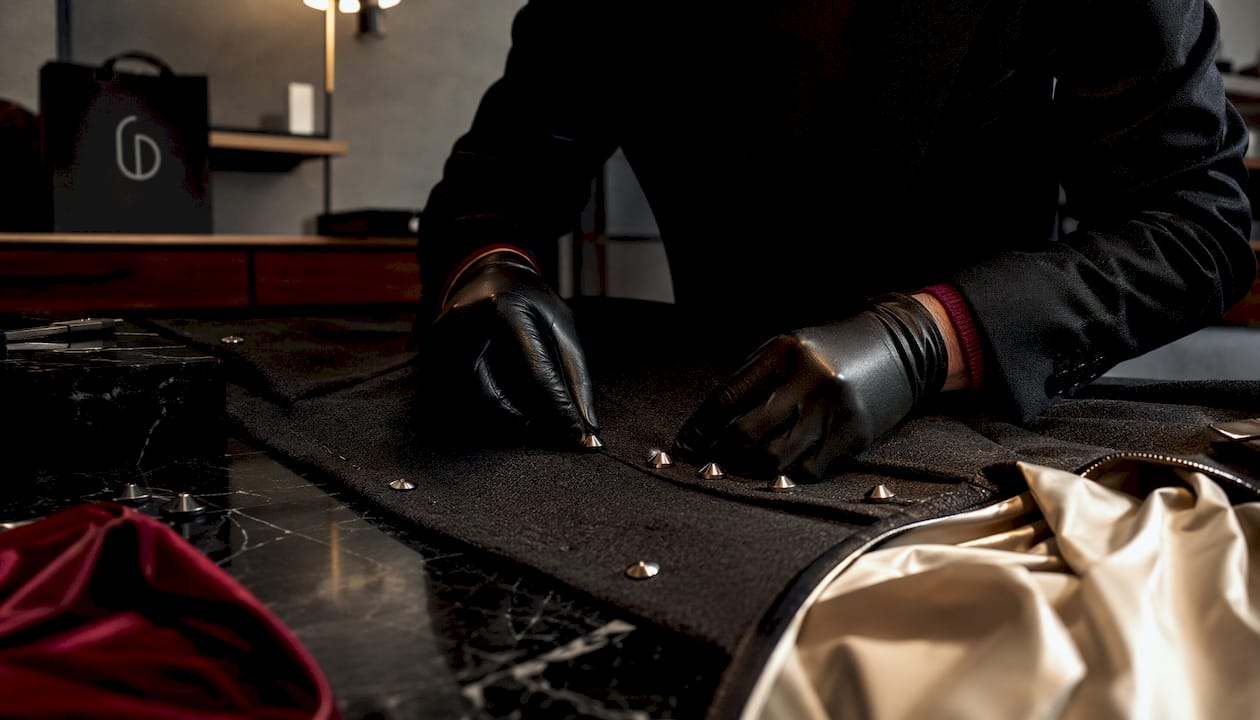
Each creation is individually numbered and produced in a strictly limited drop, never reproduced. This is not a marketing device. It is a philosophical position: that quality over quantity is the only honest relationship between a maison and its wearer. The Thorns variants, for instance, carry symbolism embedded in their construction, protection of identity, permanence of purpose, the understanding that ownership becomes attachment when a garment is made with this degree of intention.
Jeeyodee's approach rejects the transient entirely. Each drop is accompanied by a manifesto that honours the origins of its materials, grounding the garment in a story that survives the season.
Pro Tip: When considering a luxury piece, look beyond the surface finish. The weight of the fabric, the alignment of details, and the precision of the interior construction are where genuine craft reveals itself.
How to build and refine a fashion-forward wardrobe in practice
A fashion-forward wardrobe is not assembled quickly. It is cultivated with discipline, each acquisition considered against the whole. The principles are consistent with what building a handcrafted luxury wardrobe demands: coherence, fit, and the restraint to choose depth over breadth.
- Begin with foundational pieces of exceptional quality: a tailored coat, a precisely cut trouser, a garment whose construction you can feel.
- Introduce one statement piece per outfit. A sculptural silhouette, an unexpected texture, a garment with genuine provenance. One element of visual authority is more powerful than several competing for attention.
- Maintain what you own. Tailoring adjustments, proper storage, and periodic restoration preserve both the craft and the exclusivity of a piece.
- Adopt a mindful acquisition approach. Sustainable, considered purchasing is not a compromise; it is the natural expression of a philosophy that values permanence.
Pro Tip: Mix one avant-garde statement with understated, well-fitted foundations. The contrast is what creates tension, and tension is what makes an outfit memorable.
For the discerning UK buyer, staple pieces worth prioritising include a structured overcoat in a neutral weight, a limited-edition garment with documented provenance, and at least one piece whose interior construction is as considered as its exterior. Practical wardrobe investment principles consistently point to outerwear and tailoring as the highest-return categories for those building with intention.
How UK culture shaped fashion-forward dressing over time
British luxury fashion carries a particular tension at its heart: the collision between institutional tradition and radical reinvention. Savile Row established the global standard for tailored precision, a discipline that remains the structural backbone of fashion-forward dressing in the UK. Against this, the cultural upheavals of the 1960s and 1980s produced successive waves of designers who treated the body as a site of provocation rather than propriety.
That dialectic persists. The UK luxury market continues to produce designers who understand that fashion-forward dressing is not departure from heritage but a conversation with it. The most enduring British contributions to modern dressing, from the precision of the bespoke suit to the architectural experimentation of the late twentieth century, share a common conviction: that clothing carries meaning, and that meaning must be earned through craft.
Fashion-forward dressing from prominent UK luxury designers
British luxury design offers some of the clearest examples of fashion-forward dressing as a living practice. Alexander McQueen built entire collections around the idea that a garment could carry psychological weight, that tailoring could be simultaneously protective and transgressive. The bumster trouser, the elongated silhouette, the use of materials drawn from nature and industry alike: each was a deliberate act of re-contextualisation.
Burberry's evolution from heritage outerwear house to a maison engaging with contemporary silhouette and material innovation demonstrates how a British luxury brand can remain fashion-forward without abandoning its foundational identity. The trench coat, recut in unexpected proportions or unexpected fabrics, becomes something entirely new while remaining entirely itself.
These examples share a quality that defines fashion-forward dressing at its most authoritative: the capacity to make the familiar strange, and the strange inevitable.
Key takeaways
Fashion-forward dressing is the disciplined practice of combining craftsmanship, coherent aesthetics, and personal conviction to build a wardrobe of enduring authority rather than seasonal relevance.
| Point | Details |
|---|---|
| Fit is foundational | Impeccable tailoring adapted to your physique is the single most powerful tool in luxury dressing. |
| Coherence over accumulation | A consistent palette and recurring silhouettes produce more authority than a collection of disconnected statements. |
| Confidence is visible | True fashion-forward dressing is inhabited, not performed; ease with your choices is what others perceive first. |
| Craft signals permanence | Individually numbered, limited-edition pieces made with exceptional materials carry meaning that mass production cannot replicate. |
| Mindful acquisition sustains style | Re-contextualising existing garments and choosing with discipline builds a wardrobe that deepens over time. |
FAQ
What does fashion-forward dressing actually mean?
Fashion-forward dressing means combining avant-garde aesthetics with refined craftsmanship and personal confidence to create a style that goes beyond current trends and reflects enduring quality.
Is fashion-forward dressing only for people with large budgets?
No. Expert stylists confirm that thoughtful re-contextualisation of existing garments and disciplined acquisition matter more than the volume of spending.
How does fashion-forward style differ from following trends?
Trends are cyclical and transient; fashion-forward style is built on fit, coherence, and personal conviction, producing a wardrobe that retains its integrity across seasons.
What role does craftsmanship play in fashion-forward luxury dressing?
Craftsmanship is the foundation. Garments made with exceptional materials and precise construction carry an authority that no amount of branding can substitute, and their quality is legible to those who know what to look for.
How do I start building a fashion-forward wardrobe?
Begin with one foundational piece of exceptional quality, ensure it fits precisely, and build outward from there with coherence and restraint, prioritising depth over breadth at every stage.